‘Pulling Back the Curtain’
The new archaeology center reveals how and why archaeologists work
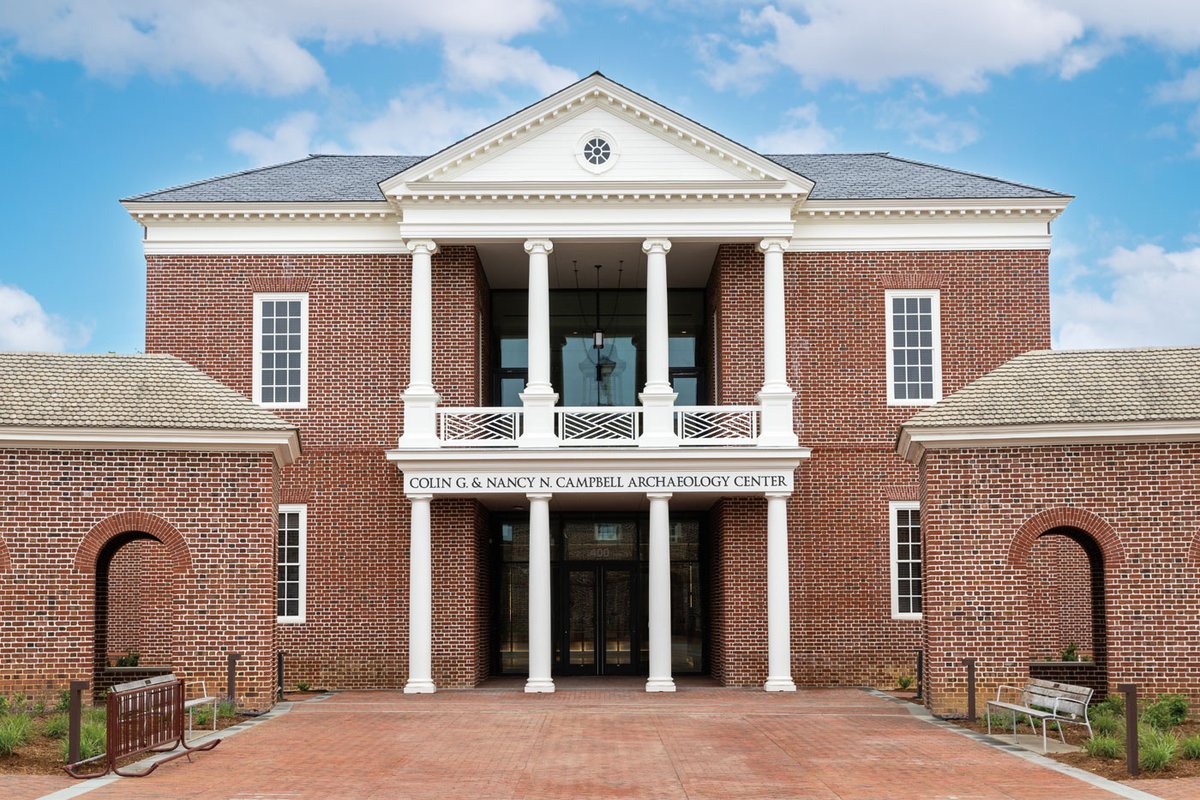
Some organizations have laboratories for archaeologists. Some have space for storing archaeological artifacts. And some can sometimes exhibit those artifacts. With the April opening of the Colin G. and Nancy N. Campbell Archaeology Center, Colonial Williamsburg has combined those three functions into a single 40,000-square-foot building.
“We do not know of an analogue,” said Jack Gary, the Foundation’s vice president of archaeology and historic landscapes. “This is a unique space.”
The center’s state-of-the art laboratories will include the new digital Everette and Catherine P. Byrd X-Ray system in the Helen Zadarlik and Bruce Sogoloff Conservation Lab that enables archaeologists to examine every piece of iron. For instance, looking beneath a large chunk of rust, they’re quickly able to identify a screw that once connected parts of a musket. There’s also the Gary Y. and Debra S. Asano Flotation Lab where archaeologists can use light fraction (micromesh) screens to separate dirt from tiny artifacts and botanical remains that would fall through larger screens.
This kind of technology is appropriate for an organization that’s been a leader in historical archaeology — the field of archaeology that studies eras for which written documents are available — since the 1950s.
Visitors have often been able to witness excavations in progress, with archaeologists willing and able to explain what’s going on. The archaeology center offers more ways to engage visitors.
One of the immediately striking elements of the building is the Wall of Wonder. Visitors entering the building encounter a two-story-high display of more than 80 artifacts.
“The Wall of Wonder is a ‘wow’ moment,” Gary said. “It’s the proverbial jewel box. These artifacts tell the story of what makes a city.”
Behind the wall is the central collections room, known as the Margaret and Conrad M. Hall Family Artifact Keep. Parts of the collection are displayed not only in the Wall of Wonder but also in changing exhibitions on other sides of the Keep. These will feature, for example, artifacts from taverns or from educational institutions like the Wren Building at William & Mary or the Williamsburg Bray School, which in the 18th century educated enslaved and free Black children. Some of the changing exhibitions will be co-curated with community members, such as descendants of the Historic First Baptist Church or school groups.
One exhibition displays artifacts from Martin’s Hundred, a 17th-century English settlement at the site of Carter’s Grove. Those artifacts have not been displayed since a museum there closed in 2003.
Videos on four large screens explain what archaeology is and why and how it’s conducted. One exhibition includes an actual archaeological site: the brick foundation of a late 17th-century or early 18th-century home discovered while the center was being built. The entire foundation of the north wall of that home is on display under a 40-foot-long glass floor. “We can say to guests, you are standing on an archaeological site,” Gary said.
Visitors are also able to witness laboratory work, which is as important as fieldwork but usually less visible. For example, video monitors can reveal the results of X-rays, allowing visitors and archaeologists to see them simultaneously. Another space lets visitors get hands-on experience in a lab.
“Guests get to see us excavate,” Gary said. “But before the center was built, most didn’t get to see what happens behind the scenes. We are pulling back the curtain.”
The Cynthia and Robert Milligan Teaching Lab will get plenty of use, with programs for guests who arrive for a visit as well as those for community members and for students.
Along with the expanded Art Museums of Colonial Williamsburg across Nassau Street, the archaeology center offers a new way for visitors to understand the Historic Area. “If you have seen the center, you have seen artifacts that are the evidence for what you will see in the Historic Area,” said Gary. “And if you come to the center after visiting the Historic Area, you will better understand how the Historic Area came to be.”
Wall of Wonder
The Colin G. and Nancy N. Campbell Archaeology Center’s Wall of Wonder displays more than 80 archaeological artifacts, each with a story to tell. Some speak to particular times and places while others tell stories that span the globe. Some shed light on the powerful and wealthy. Others connect today’s viewers with the men and women whose lives and labor built the foundations of the nation.
“Objects are wondrous because they are the hard bits of history that linger into the present, where they provide knowledge to those of us willing to tease the evidence from the ground,” said Senior Curator for Archaeology Sean Devlin.
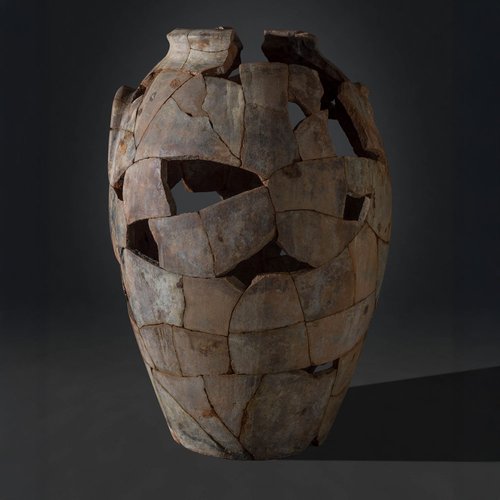
Oil Jar
This truly massive oil jar was produced in the Tuscan region of Italy in the 18th century and traveled the globe before it was discarded near the Chiswell-Bucktrout House site. Global products were common in Williamsburg.
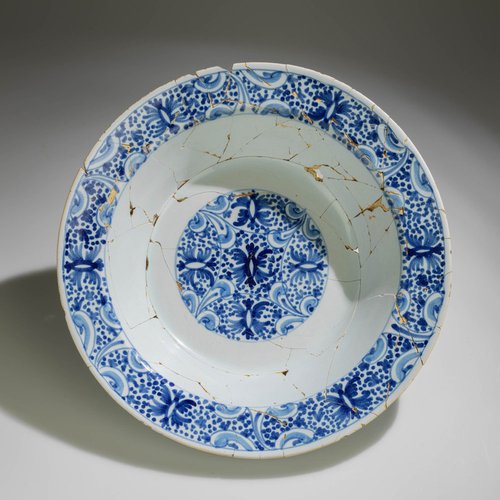
Basin
This tin-glazed earthenware basin, circa 1760, was excavated from the Thomas Everard House site. Virginia Royal Gov. Robert Dinwiddie was an investor in the Delftfield Pottery of Scotland where it was produced.
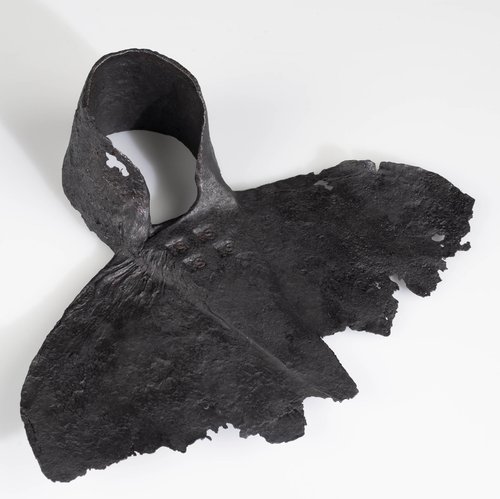
Hoe
This mid-18th-century broad hoe was recovered from the site of Anthony Hay’s house and cabinetmaking shop. While seemingly humble, the hoe and other agricultural tools like it were essential to the tobacco economy on which much of Virginia’s wealth and society were built.
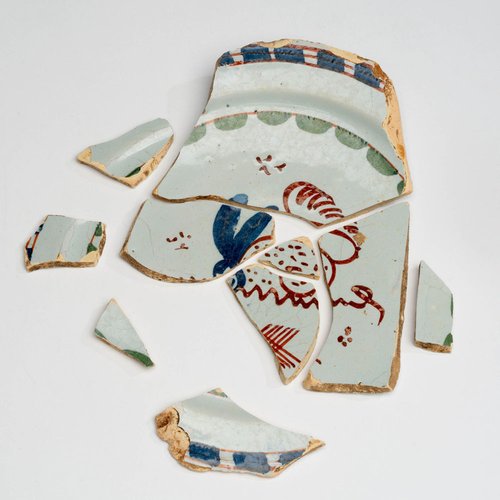
Plate
This vibrantly colored, tin-glazed earthenware plate was made in Bristol, England, in the early 18th century and was recovered below the archaeology center’s foundations. It illustrates the web of transatlantic connections the residents of Williamsburg had.
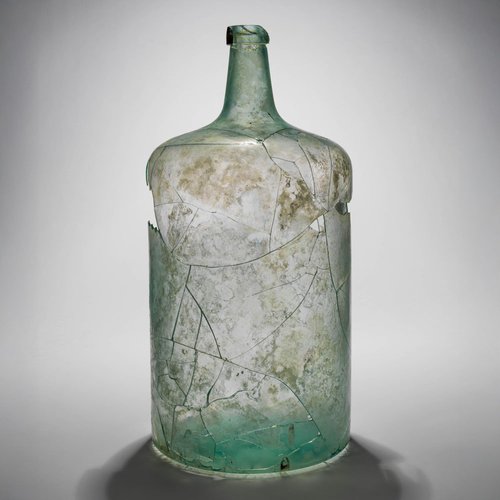
Carboy
This massive glass carboy was found in the storage rooms of the Public Hospital amongst the rubble of a June 7, 1885, fire that created Williamsburg’s own miniature Pompeii. The carboy and a host of other objects were discovered, broken and burned, just where they were left that night.
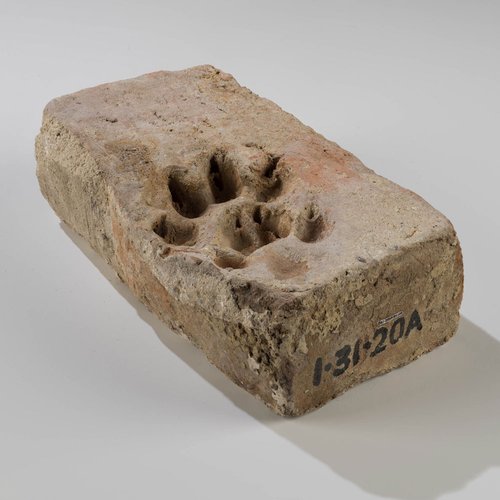
Brick
Recovered from excavations at the Governor’s Palace site, this brick features the paw print of a dog. The animal left the impression when the brick was set out to dry before it was fired in a kiln. Archaeology can unearth even the tiniest moments of life.
More from this Issue