For 2026: A Five-Year Conference Series
October 23-24, 2026
On This page
This Year’s Conference
For 2026 in 2026:
“New Republic, New Worlds”
October 23-24, 2026
Hosted by The Colonial Williamsburg Foundation, the Omohundro Institute of Early American History & Culture, and William & Mary
The American Revolution forged a new nation out of thirteen British colonies, triggering a host of predictable and unexpected consequences. This conference will explore the novel circumstances, challenges, and opportunities of the transitional era that followed victory in the War for American Independence. What were the fresh constitutional and political structures fueled by the Revolution, and what were the possibilities in play then and after? How were families, communities, boundaries, and environments changed in the new era? What were the ambitions of this new nation, and what do we now know about how diverse communities assessed its prospects? How did the various peoples within its borders and beyond respond to this new moment? In addition to proposals focused on the opportunities and obstacles that marked the founding era, the Program Committee invites proposals for sessions and papers exploring all aspects of Vast Early America.
“A New World,” the final meeting of the five-year “For 2026” project, seeks to bring into conversation scholarly and public-facing research exploring the far-reaching effects of the American Revolution. The program committee invites proposals for panels, roundtables, workshops, and individual papers focusing on any aspect of the founding era – broadly conceived. The scope of the conference is not limited to North America nor the Anglophone Atlantic, and the organizers hope to assemble a program that represents the width and breadth of early American studies.
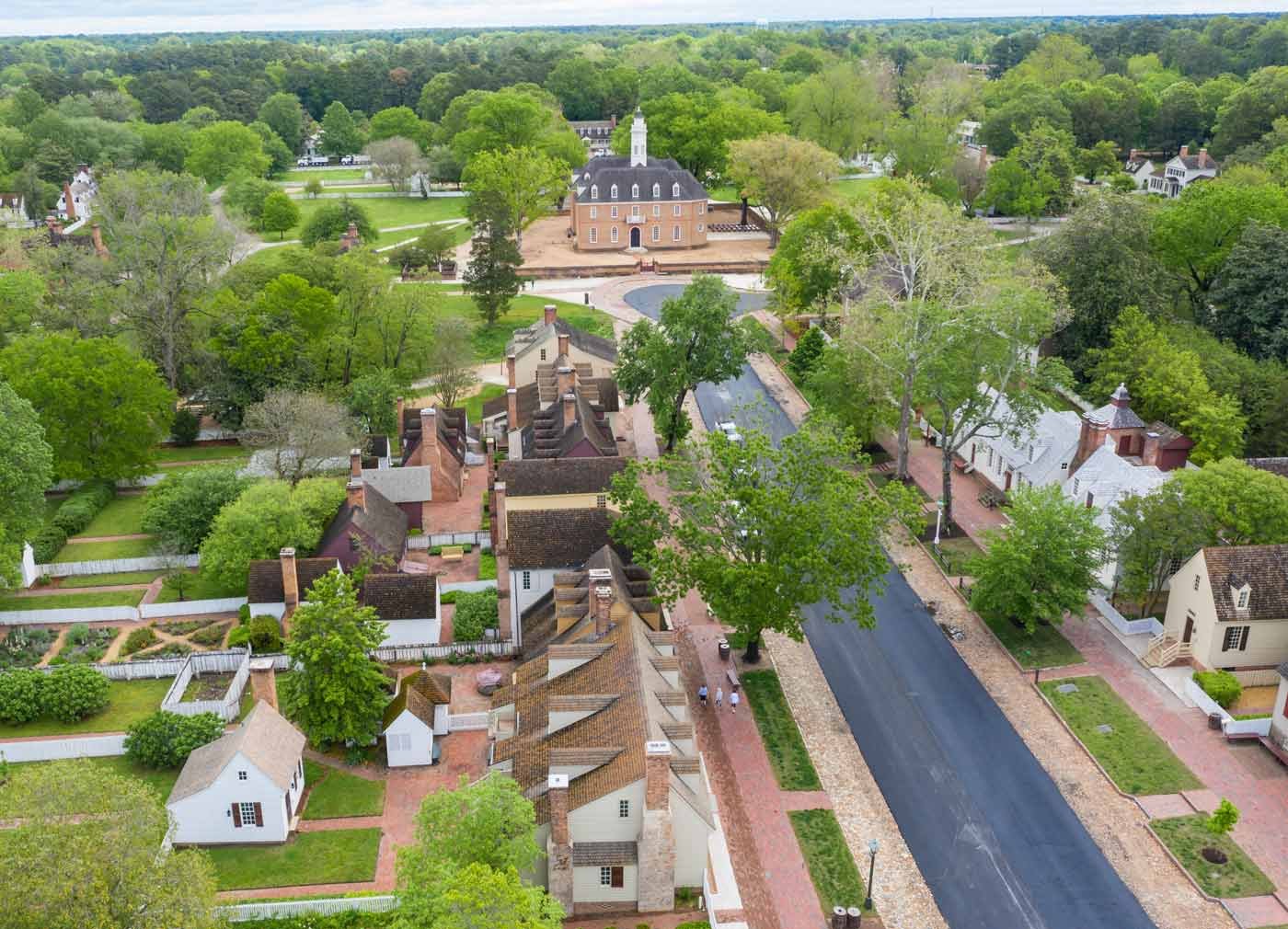
The conference will take place October 23-24, 2026, at the William & Mary School of Education and at Colonial Williamsburg in Williamsburg, Virginia.
Daytime programs will take place on the campus of William & Mary and throughout the Historic Area of Colonial Williamsburg, with two evening plenaries open to the public with no pre-registration required.
K12 teachers and museum educators: Interested in applying for the RevEd conference taking place during the “For 2026” conference?
Evening Plenaries
The Friday & Saturday evening plenaries are free and open to the public, conference registrants, Colonial Williamsburg passholders, staff and volunteers, and William & Mary faculty, staff and students. Seating will be available on a first-come, first-served basis, and the recorded programs will be available online on both William & Mary and Colonial Williamsburg supported pages following the event.
Friday, October 23, 2026
Hennage Auditorium, Art Museums of Colonial Williamsburg
301 South Nassau Street, Williamsburg, Virginia
Seating begins at 4:30pm
Program begins at 5pm
Dr. Ronald Johnson
Entangled Alliances: Racialized Freedom and Atlantic Diplomacy during the American Revolution
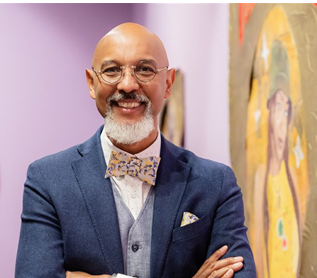
Dr. Ronald Angelo Johnson is the 2026-2027 Mellon Distinguished Scholar in Residence at the American Antiquarian Society and the Ralph and Bessie Mae Lynn Professor of History at Baylor University. He is the author two books: Entangled Alliances: Racialized Freedom and Atlantic Diplomacy during the American Revolution (Cornell University Press, 2025) and Diplomacy in Black and White: John Adams, Toussaint Louverture, and Their Atlantic World Alliance (UGA Press, 2014). He co-edited the volume In Search of Liberty: African American Internationalism in the Nineteenth-Century Atlantic World (UGA Press, 2021). His current book manuscript We Are All Equal: Turmoil and Triumph in the Early United States and Revolutionary Haiti is under contract with Princeton University Press.
Saturday, October 24, 2026
Muscarelle Museum of Art
611 Jamestown Road, Williamsburg, Virginia
Seating begins at 4:30pm*
Program begins at 5pm
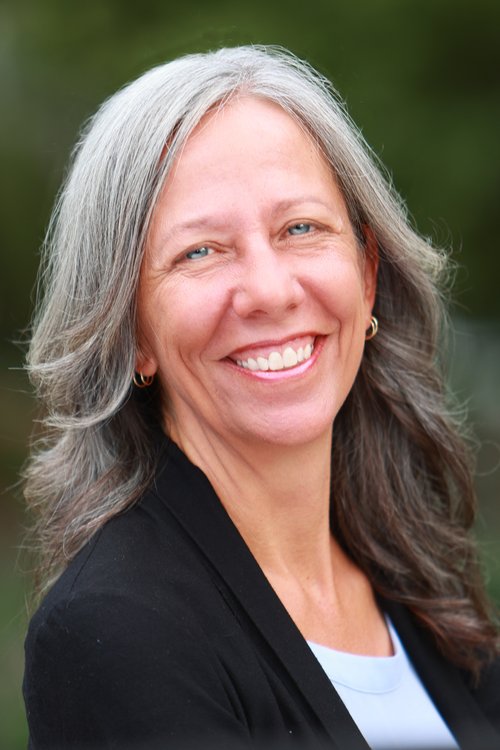
Dr. Kathleen DuVal
The American Revolution and the Survival of Native Nations
The American Revolution brought unprecedented challenges to Indigenous lives, land, and sovereignty in North America. Yet we can also tell the past 250 years of Native history as the story of surviving the creation of the United States. Focusing on Native history can help us put the American Revolution in the longer context of North America’s long past, present, and future.
Dr. Kathleen DuVal is the Carl W. Ernst Distinguished Professor of History at the University of North Carolina at Chapel Hill. She is a Guggenheim Fellow and the author of Native Nations: A Millennium in North America, which won the Pulitzer Prize, the Bancroft Prize, the Mark Lynton History Prize, and the Cundill History Prize. Her other books include Independence Lost: Lives on the Edge of the American Revolution, The Native Ground: Indians and Colonists in the Heart of the Continent, and the U.S. history textbook Give Me Liberty!, co-authored with Eric Foner and Lisa McGirr. DuVal has published in the William and Mary Quarterly, the Journal of the Early Republic, The Atlantic, Time magazine, the New York Times, and the Wall Street Journal, and she appeared in the recent Ken Burns film The American Revolution.
*please note that seating for this program is limited
About the Conference
Marking the 250th Anniversary of American Independence
Hosted By The Colonial Williamsburg Foundation, Omohundro Institute of Early American History & Culture, And William & Mary
In 2026 the United States of America will mark the 250th anniversary of independence. This is an unparalleled opportunity for exploring and reflecting upon the American past, the foundation of the nation, and its legacy into the present. Complex, inspiring, and often violent, this period informs our experience as Americans today. The better we understand that past, the better we are equipped to understand ourselves, address the challenges we face, and seize opportunities for the future.
Colonial Williamsburg, the Omohundro Institute, and William & Mary are joining together to host a series of five annual conferences to spotlight emerging research, connect a diverse public to scholars and research, and convene significant conversations about how and why understanding the early American past is especially meaningful today. The first of these conferences, “For 2026: Revolutionary Legacies,” took place October 28–30, 2022.
About the “For 2026” Conference Initiative
Colonial Williamsburg is the world’s largest living history museum, dedicated to its mission that the future may learn from the past through its expert and distinctive events, collections, programs, and site interpretation. The Omohundro Institute is the leading hub for inquiry into early American history, broadly understood as all points in the Atlantic World between roughly 1450 and 1820, and supports and publishes the leading research into this expansive Early America. William & Mary is the top-ranked university in the nation for its early American history offerings, and a leader in integrated diversity, equity, and inclusion programming and creating opportunities for civic discourse. Together, our three institutions are committed to serving the public good through historical education and research and outreach to the community, the region, the nation, and beyond. This mission has never been more resonant, or more relevant.
The series of annual conferences leading to 2026 builds on our exceptional legacy of convening scholarly discussions, educating a broad range of learners, fostering community engagement, and connecting the public to expert historical interpretation through events and programs. Each installment features a broadly comparative exploration of a theme central to the era of the American Revolution; in addition, sessions exploring all aspects of Vast Early America are welcomed on the program. The CW-OI-W&M conference series is committed to an expansive, inclusive history of early America that accounts for the diversity of people and experiences of the period. The themes of the conferences are designed to facilitate this commitment and amplify significant new knowledge about this essential period.
All five conferences feature a four-module structure incorporating both public facing and scholarly conversations:
- Researcher–to-researcher panels and workshops throughout each day to allow presenters to share their work and benefit from expert peer feedback. These include sessions on the American Revolution as well as sessions on other aspects of Vast Early America.
- Public audience plus researcher events that introduce diverse publics to cutting-edge research. Formats might include scholar roundtables with question-and-answer periods; scholarly presentations of familiar and understudied primary sources from the period; landmark lectures or interviews with award-winning scholars, museum professionals and leaders in this arena.
- Site visits that introduce participants to the Commonwealth’s local and regional resources. In addition to showcasing Virginia’s centrality in the founding of our nation, we leverage these sites to explore questions of evidence and methodology; themes of freedom, democracy and belonging; and strategies for engaging historic sites, collections, exhibitions and resources in academic and public learning and programming.
- Workshops focused on how museums and other public history sites can incorporate new research, featuring both scholars who presented research at the conference and public history experts and practitioners.