Robert Carter Nicholas
George Nicholas had been convicted of forgery and sentenced to hang. But his father pled his case, and the King commuted the sentence. His new punishment? Moving to Virginia.1
Less than two years after arriving in the colony, George married Elizabeth Carter Burwell, the daughter of Robert “King” Carter, one of the wealthiest and most well-connected men in Virginia. Overnight Nicholas rose to become a member of Virginia’s ruling class, the gentry. When their son Robert Carter Nicholas was born in 1729, he was already at the nexus of power in colonial Virginia.2
Nicholas was raised as a member of the gentry. He attended the College of William & Mary in Williamsburg, the colony’s capital city. He then studied to become a lawyer. In his early 20s, he married Anne Cary, a member of another prominent Virginia family. The couple lived in Williamsburg and had 10 children together.3
A deeply religious man, Nicholas’ devotion to the Church of England defined him. Thomas Jefferson would later note that he had a “grave & religious character.”4 His son-in-law would write that he led a life of “propriety and purity.”5 These traits made him highly trusted among his peers, and would guide his public life and how he navigated the turbulent politics of the American Revolution.
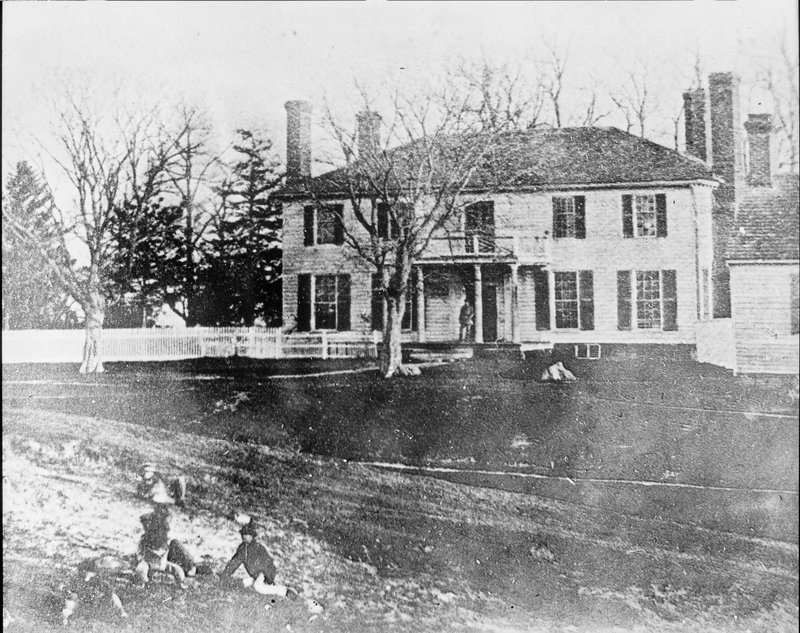
The Nicholas family lived in this home in Williamsburg, which was later owned by President John Tyler and burned down in 1873. It is pictured here in the nineteenth century. Image: The Colonial Williamsburg Foundation.
Slavery
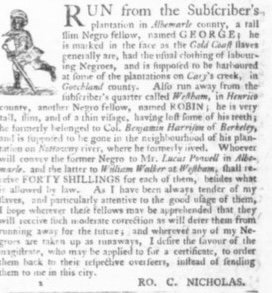
Virginia Gazette (Purdie & Dixon), January 15, 1767. See the full issue of the Virginia Gazette [30].
Through inheritance and marriage, Nicholas came to own several plantations in addition to his home in Williamsburg. On these plantations, enslaved people grew and processed crops like tobacco.6 While records for most counties where he owned land are lost, in 1782 there were 120 people enslaved at the Nicholas family’s property in Albemarle County. He also enslaved over a dozen people at his home in Williamsburg.7 They performed the tasks that kept the home running: cooking, cultivating gardens, cleaning, laundry, and tending to the family's needs.8
In 1767, Nicholas advertised for the return of two people he enslaved on two separate plantations, George and Robin. The advertisement reveals how he saw himself as an enslaver. He wrote that he had “been always tender of my slaves, and particularly attentive to the good usage of them.” George "was out near two Years,” before being apprehended. He ran away again in 1770.9
The Williamsburg Bray School
In 1761, Robert Carter Nicholas became a trustee of the Williamsburg Bray School and was the local coordinator of the school.10 The England-based Associates of Dr. Bray created and funded the school with the intention of spreading Christianity by providing a Christian education to enslaved and free Black children.11 In Nicholas’s view the school’s aim was to have the children “instructed in the Principles of Religion, & enabled to instruct their Fellow Slaves at Home.” He believed that “by making them good Christians they would necessarily become better Servants.”12
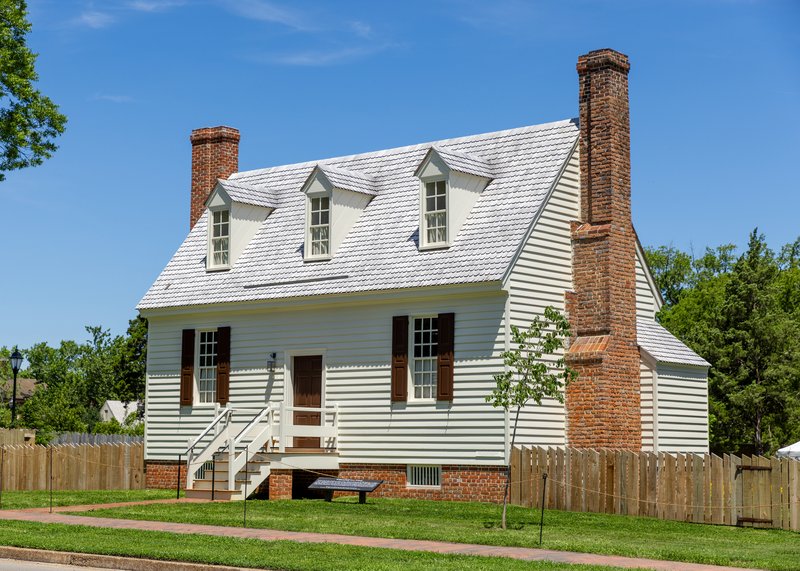
The original Williamsburg Bray School building has been restored and is open to the public in Colonial Williamsburg’s Historic Area.
Nicholas sent at least two children that he enslaved, Hannah and Sarah, to the school.13 But he was skeptical of the school’s ability to fulfill its intended purpose. In one letter to the Bray Associates, he complained that the “good Principles” learned at the school were almost immediately wiped away at home by “bad Examples.” He provided an example from his own household, describing a girl he sent to the school “upwards of three Years” who “made as good a Progress as most, but she turns out a sad Jade, notwithstanding all we can do to reform her.”14
Nicholas remained a trustee of the school until its teacher, Anne Wager, died in 1774, prompting its permanent closing.15
Politics and Revolution
As a member of the gentry, Robert Carter Nicholas held several public offices. He was a Bruton Parish vestryman, Williamsburg city councilman, James City County justice of the peace, and a member of Virginia’s colonial assembly, the House of Burgesses.
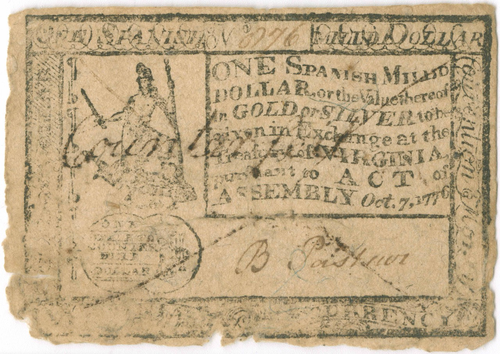
Counterfeit Virginia $1 bill, October 7, 1776 issue. As treasurer, Nicholas alerted the public when counterfeit money was found in circulation. Courtesy of The Colonial Williamsburg Foundation. Learn more about this object [31].
In 1766, he became treasurer of the colony.16 By the eve of the Revolution, Nicholas’s political experience and status positioned him to play a key role in Virginia’s response to Parliament’s overreach. His contributions to the growing protests against Parliament included co-authoring a letter protesting the Stamp Act in 1765, formally proposing a resolution to protest the Coercive Acts in 1774, and publishing a political pamphlet in response to a pamphlet written by local loyalist John Randolph.17
But Nicholas was no radical. He was among a group of revolutionaries who felt driven to protest British policies because they yearned for a return to normalcy, not because they wanted radical change in their society.18
Let things but return to their old channel, and all will be well; we shall once more be a happy people.
— Robert Carter Nicholas [19]
Independence
In May 1776, delegates to the Fifth Virginia Convention, Virginia’s governing body in the absence of royal government, met in Williamsburg. In addition to their legislative tasks, the convention debated a resolution on whether to instruct Virginia’s delegates in the Continental Congress to declare independence.
The lone voice against independence at the convention, Robert Carter Nicholas was “dubious of the competency of America in so arduous a contest.” In other words, he worried that Virginia was too weak to stand against Great Britain.20 Frustrated, George Washington’s brother wrote that he “took up two days in saying a great deal, proved nothing.”21
While Nicholas opposed independence, his constituents had instructed him to vote for it.22 Perhaps this is why he voted yes on the resolution. According to his son-in-law, “he declared that he would rise or fall with his country and proposed a plan for drawing forth all its energies in support of that very independence.”23
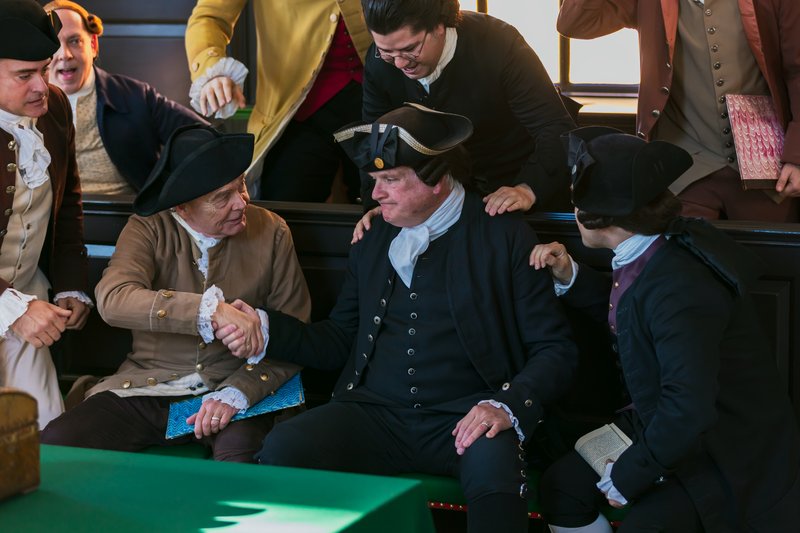
Virginia Declaration of Rights
The Fifth Virginia Convention also created a Virginia Constitution and a Virginia Declaration of Rights. When the draft Declaration of Rights was read in the convention, Nicholas objected to a specific phrase: “That all Men are created equally free and independant.”24 Nicholas suggested that this phrasing could be taken to include enslaved people, and could even lead to the abolition of slavery.25
The delegates addressed this concern by adding “when they enter into a state of society” to the wording of the document.26 Since they argued that enslaved people had not entered into “society,” this phrasing excluded enslaved people from benefiting from the rights laid out in the document.
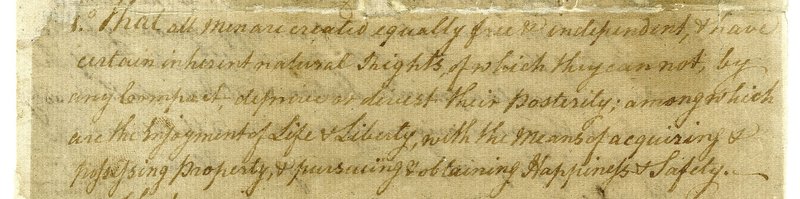
George Mason’s draft Virginia Declaration of Rights. Courtesy of the Library of Virginia. See the full document [32].
Legacy
In 1758 Robert Carter Nicholas had been surprised to receive a letter from George Washington. “I have heard of Letters from the dead, but never had the Pleasure of receiving one,” he quipped in his reply. “It was reported here that Colo. Washington was dead!”27 In November 1780, twenty-four years later, from his headquarters in New Jersey, Washington himself wrote a letter to the dead. Not knowing that Nicholas had died a month prior, Washington wrote Nicholas about a business matter.28
Nicholas resigned his position as treasurer in 1776, served as a delegate in Virginia’s legislature in 1777, and was a judge for Virginia’s Chancery Court from 1778 until his death in 1780.29 While he had loomed large in Virginia’s revolutionary movement, in critical moments he showed a moderation that frustrated his contemporaries and, unlike his friend George Washington, destined his legacy to fade into the background.
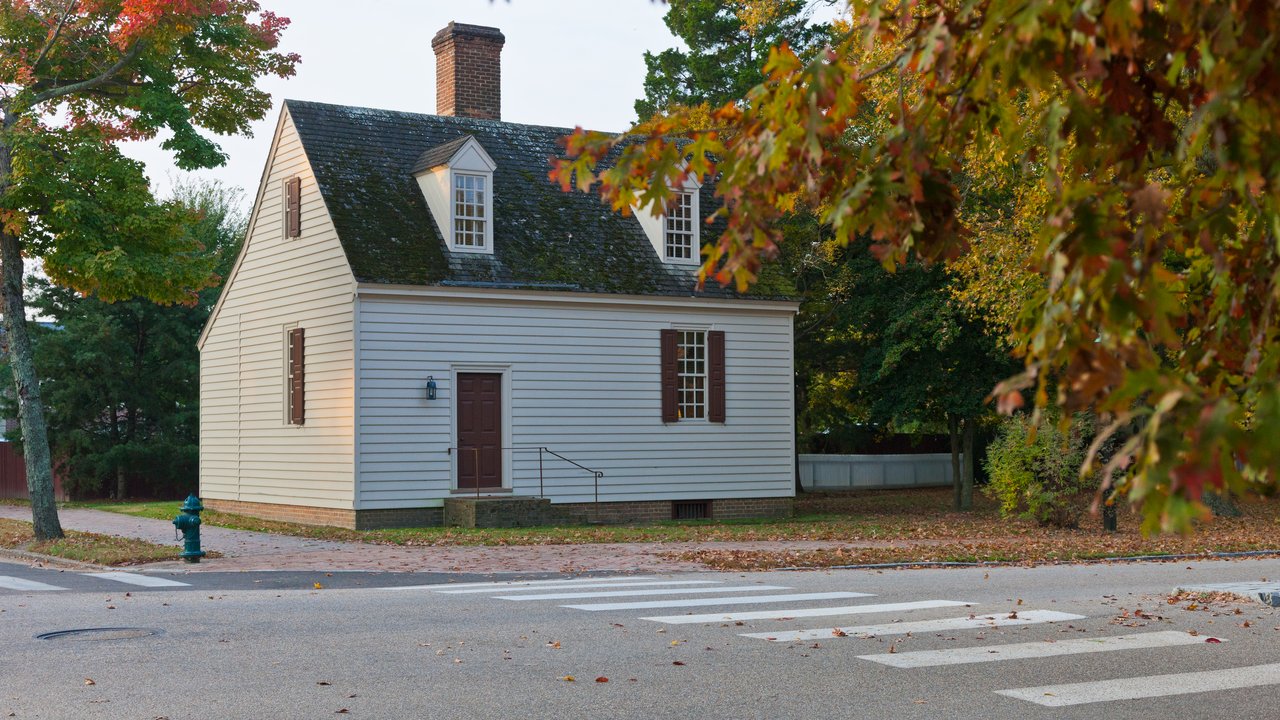
The Nicholas-Tyler Office
Book a stay in the Nicholas-Tyler Office, one of the original outbuildings from the Robert Carter Nicholas property.
Sources
- Brent Tarter, Virginia’s Forgotten Founder: The World of Robert Carter Nicholas (University of Virginia Press, 2026), 5.
- Tarter, Virginia’s Forgotten Founder, 5-6, 9-10.
- Tarter, Virginia’s Forgotten Founder, 17-24.
- Autobiography of Thomas Jefferson: 1745–1790, Together with A Summary of the Chief Events in Jefferson’s Life (New York: G. P. Putnam’s Sons, 1914), 12, link; Tarter, Virginia’s Forgotten Founder, 27, 38.
- Edmund Randolph, History of Virginia, ed. Arthur H. Shaffer (The University Press of Virginia, 1970), 184.
- Tarter, Virginia’s Forgotten Founder, 54-57.
- Enslaving Virginia, The Colonial Williamsburg Foundation, 1998, 577, link.
- Martha B Katz-Hyman, “'In the Middle of this Poverty Some Cups and a Teapot:’ The Material Culture of Slavery in Eighteenth-Century Virginia and the Furnishing of Slave Quarters at Colonial Williamsburg,” Colonial Williamsburg Foundation, 1993, link. Enslaving Virginia, The Colonial Williamsburg Foundation, 1998, link.
- The Virginia Gazette (Purdie & Dixon), January 15, 1767, link; The Virginia Gazette (Purdie & Dixon), February 7, 1771, link.
- Robert Carter Nicholas to Rev. John Waring, September 17, 1761, in John C. Van Horne, ed., Religious Philanthropy and Colonial Slavery: The American Correspondence of the Associates of Dr. Bray, 1717-1777 (Urbana: University of Illinois Press, 1985), 164.
- John C. Van Horne, introduction to Van Horne, ed., Religious Philanthropy and Colonial Slavery.
- Rev. William Yates and Robert Carter Nicholas to [Rev. John Waring], September 30, 1762 in John C. Van Horne, ed., Religious Philanthropy and Colonial Slavery, 184-185.
- “[Enclosure: List of Negro Children], 30 September 1762,” in Van Horne, ed., Religious Philanthropy and Colonial Slavery, 188; “[Enclosure: List of Negro Children], 16 February 1769,” in John C. Van Horne, ed., Religious Philanthropy and Colonial Slavery, 277-278.
- Robert Carter Nicholas to Rev. John Waring, December 27, 1765, in John C. Van Horne, ed., Religious Philanthropy and Colonial Slavery, 240-241. The term “Jade,” originally referenced horses that had become worn out, and evolved to refer to women who engaged in disreputable behavior. Given the girl’s young age, Nicholas was more likely using the term to imply that she was weary or dull. Oxford English Dictionary, “jade (v.),” December 2025.
- Robert Carter Nicholas to Rev. John Waring, November 17, 1774 John C. Van Horne, ed., Religious Philanthropy and Colonial Slavery, 324.
- Tarter, Virginia’s Forgotten Founder, 86.
- Tarter, Virginia’s Forgotten Founder, 140-167.
- Robert Carter Nicholas to Arthur Lee, May 31, 1769 in ”Selections and Excerpts from the Lee Papers,” Southern Literary Messenger 27, no. 5 (November, 1858), 184-5.
- Robert Carter Nicholas to Arthur Lee, May 31, 1769 in ”Selections and Excerpts from the Lee Papers,” Southern Literary Messenger 27, no. 5 (November, 1858), 184-5.
- Edmund Randolph, History of Virginia,ed. Arthur H. Shaffer (Charlottesville: The University Press of Virginia, 1970), 250-251.
- Col. John Augustine Washington, May 18, 1776, Papers of the Lee Family, University of Virginia Library.
- “Instructions to the Delegates for James City County, Virginia,” April 24, 1776.
- Randolph, History of Virginia, 250-251.
- ”The Virginia Declaration of Rights (Mason’s Draft),” Library of Virginia, link.
- John E. Selby, The Revolution in Virginia, 1775-1783 (Colonial Williamsburg Foundation, 1988), 106-108; Thomas Ludwell Lee to Richard Henry Lee, June 1, 1776, in “Selections and Excerpts from the Lee Papers,” Southern Literary Messenger 27, no. 5 (Nov. 1858), 325.
- "The Virginia Declaration of Rights,” National Archives, link.
- “Robert Carter Nicholas to George Washington, 6 February 1758,” Founders Online, link.
- “George Washington to Robert Carter Nicholas, 7 November 1780,” Founders Online, link.
- Tarter, Virginia’s Forgotten Founder, 243, 250-2.
- Virginia Gazette (Purdie & Dixon), January 15, 1767, link.
- "Counterfeit Virginia $1 bill, October 7, 1776," Colonial Williamsburg eMuseum, link.
- "The Virginia Declaration of Rights (George Mason's 1778 Draft)," Library of Virginia, link.