What Clothes Say
Just as people speak to each other to express themselves and convey ideas, they also speak through their clothes. Clothing was a visual language that told a story at a glance. Virginians were particularly apt to judge others by how they were dressed. More than a show of personal taste or style, clothing represented a person’s place in society. Eighteenth-century fashion wasn’t so much about self-expression as it was about expressing society’s values, and reinforcing economic, gender, and racial boundaries.1
Clothing was not just about what or how someone wore an outfit. Materials, cuts, and more defined clothing’s perceived quality. Small details set people’s clothing apart and tell others how they should be treated, or at least how they expected to be treated. The choice, if they had it, between wearing finely woven linens or coarser and cheaper fabrics conveyed whether they spent their days in labor or leisure. In early Virginia, such choices also demonstrated the power one held in society.2
Men's Clothing
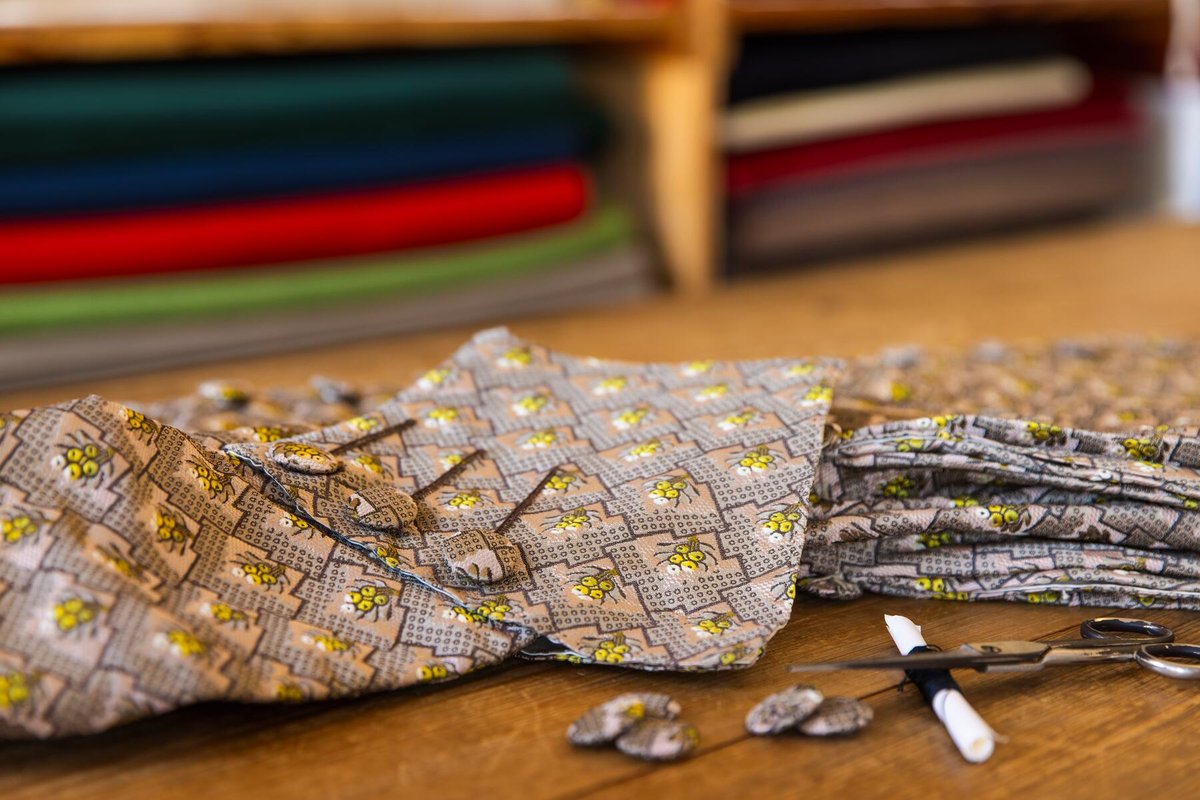
Men’s clothing was meant to reinforce ideas of masculinity. From material to fit, men clothed themselves to present an ideal image of themselves to the world around them. Click through to see pieces that made up men’s outfits.[3]
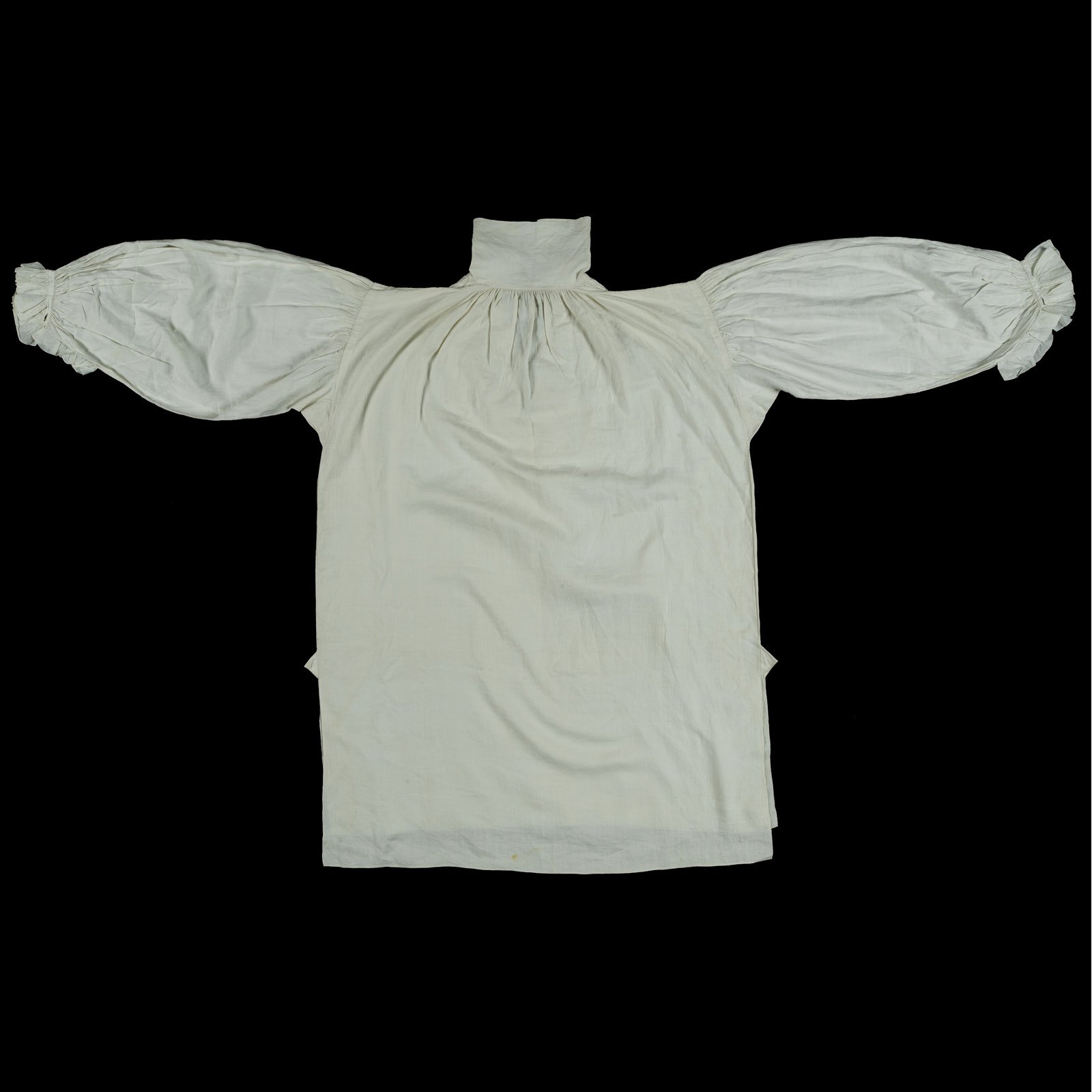
Shirt
A man’s shirt served several practical purposes. It protected the body from rough outer clothing, and in turn protected that clothing from the wearer’s body oils and sweat. They were designed to be worn daily and withstand frequent washing.[4]
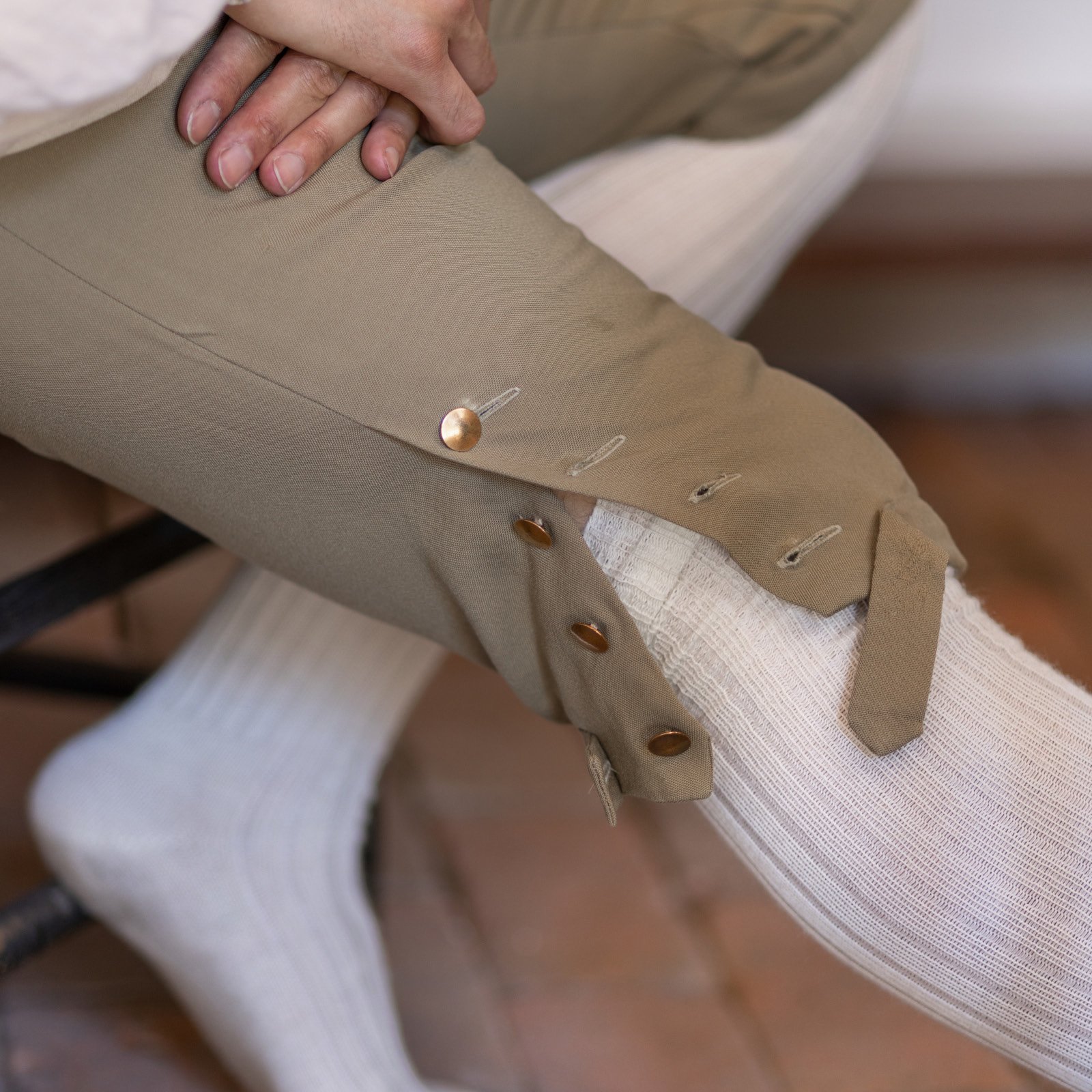
Breeches
Instead of pants that many people wear today, breeches were a standard piece of clothing that was fastened at the waist and stopped just below the knees. Longer and fuller pants, sometimes called trousers, were worn by lower-status men, especially enslaved men.[5]
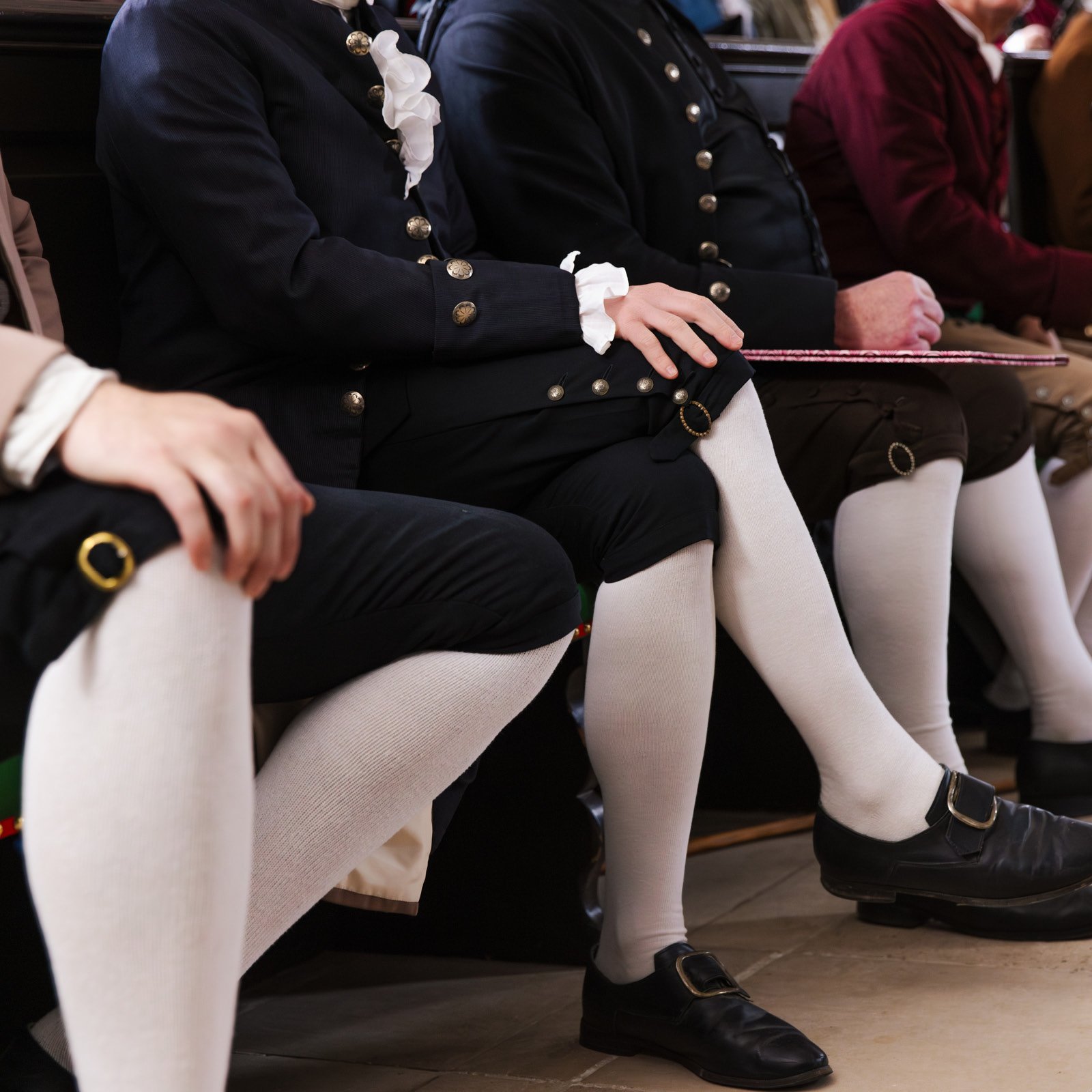
Stockings
Extended up from the feet to be covered by the bottom of breeches, stockings added some warmth and protection to the lower leg, though the relatively thin material meant they could be easily torn, ripped, or worn out.[6]
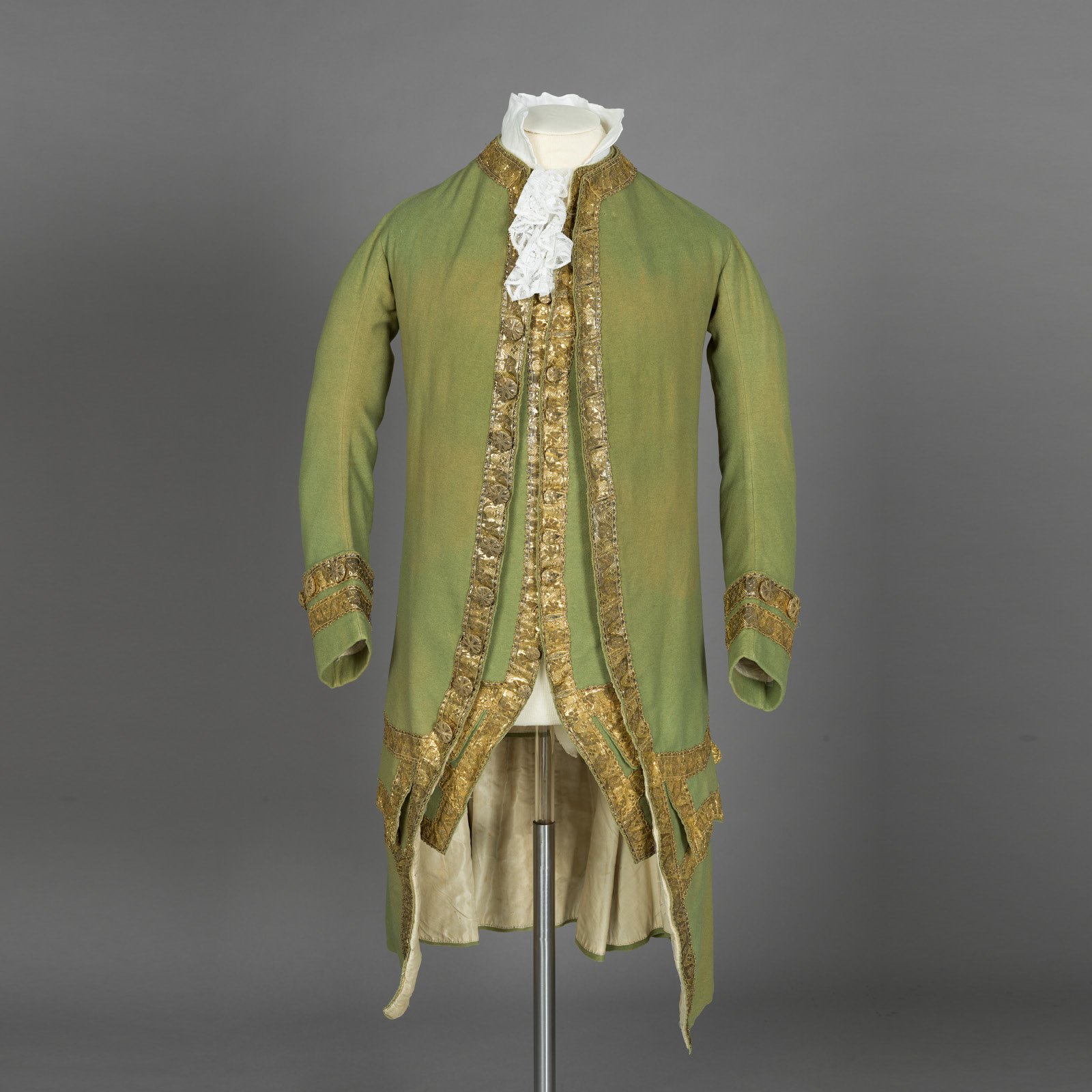
Three-Piece Suit
While variations existed across social status, many men wore some version of a three-piece suit consisting of a coat, a waistcoat (known as a vest today), and breeches. Men of lower status might only wear a jacket and breeches.[7]
Headwear
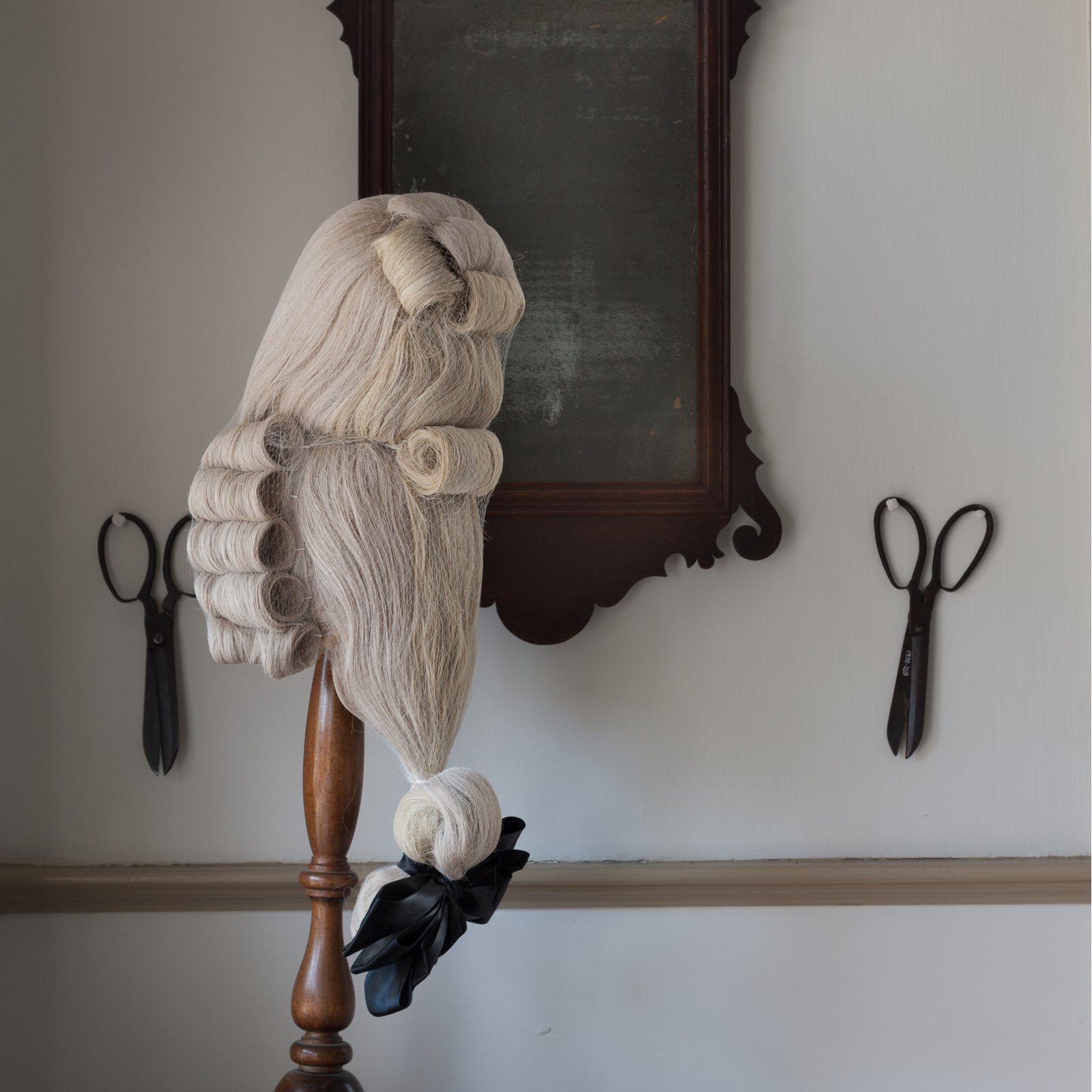
Wigs were costly to buy and maintain, and required skill to properly wear. As such, they were usually a recognizable marker of a gentleman’s station in life. By the mid eighteenth century, however, some individuals, like tradesmen, began wearing wigs to emulate elite fashion. Non-elite men often wore felt hats.[8]
Women's Clothing
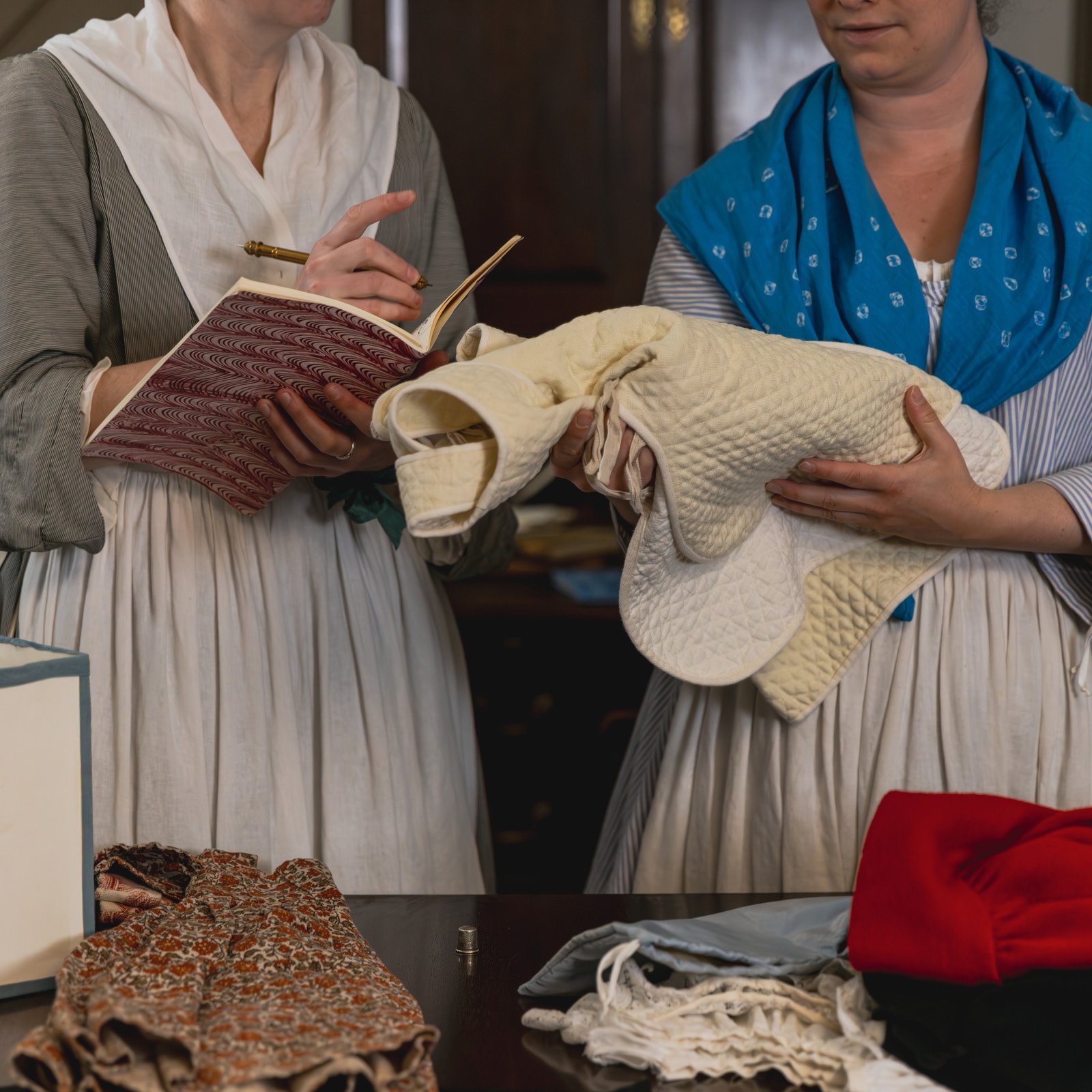
Compared to men’s clothing, women’s fashion was meant to convey femininity, dependence, and their role as nurturers. Click through to see the elements of a woman’s outfit.[9]
Shifts
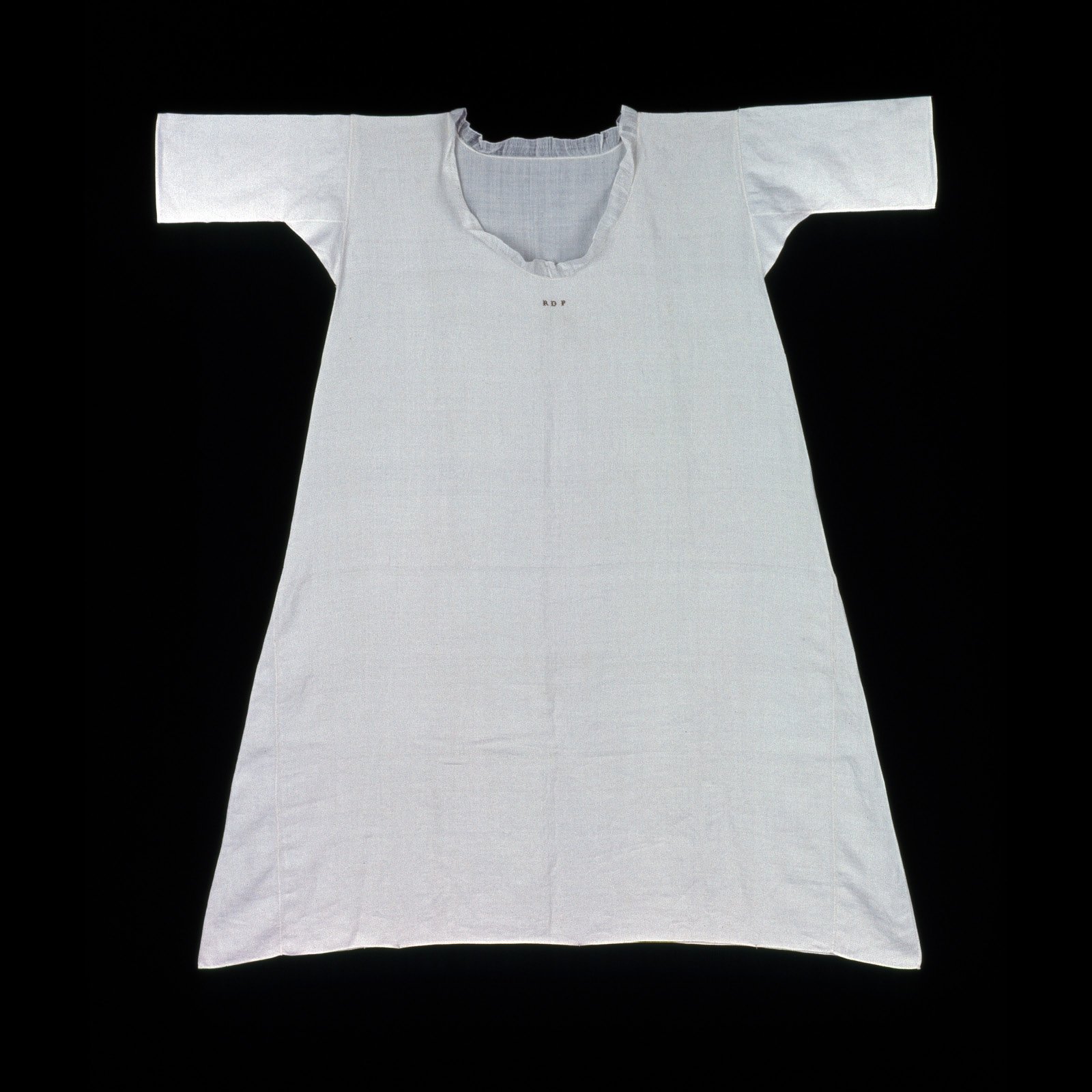
These lightweight and simple pieces of clothing were the first layer of any outfit. Resembling a plain dress, they functioned much the same as a man’s shirt, protecting both the wearer and the clothing, while being durable enough to be washed regularly.[10]
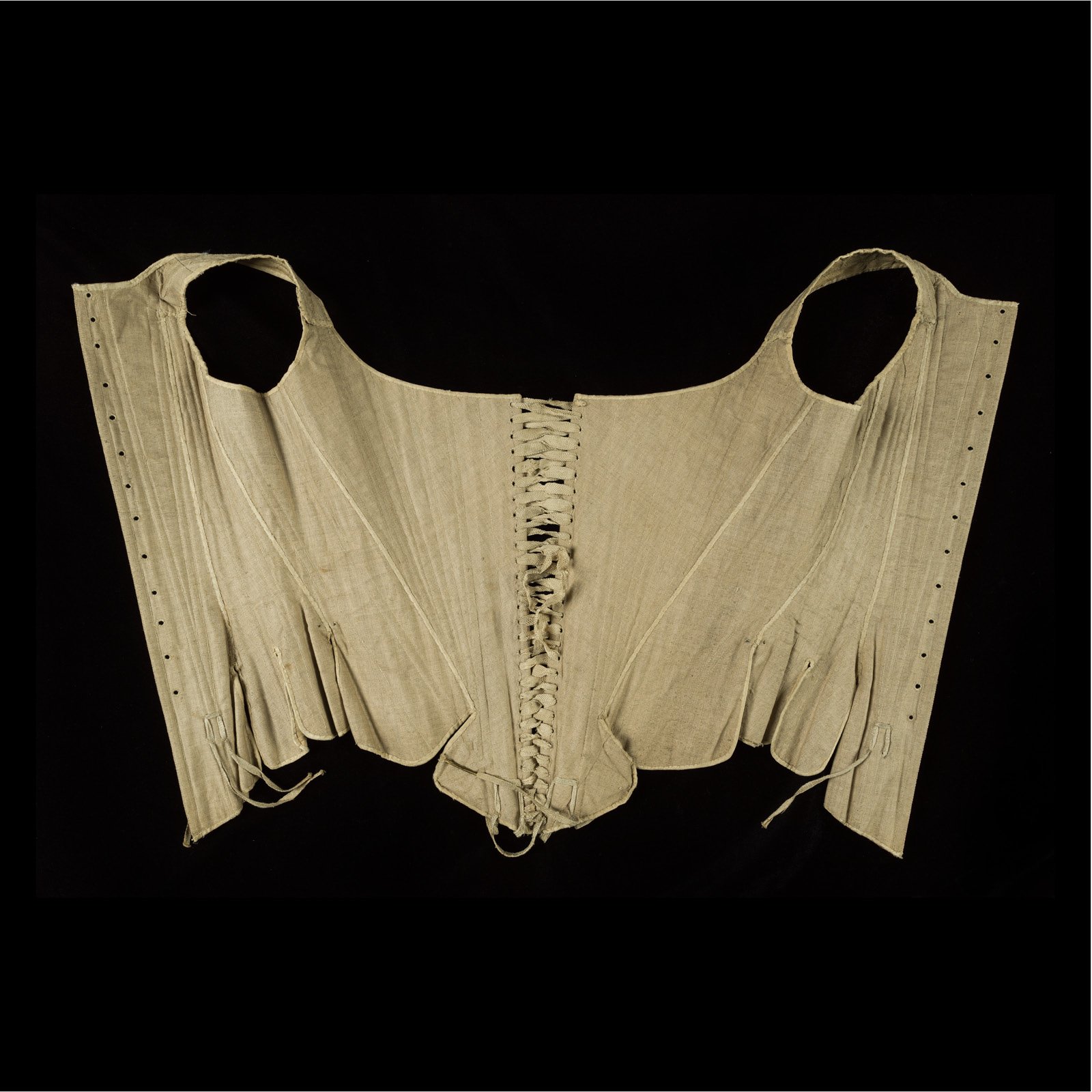
Stays
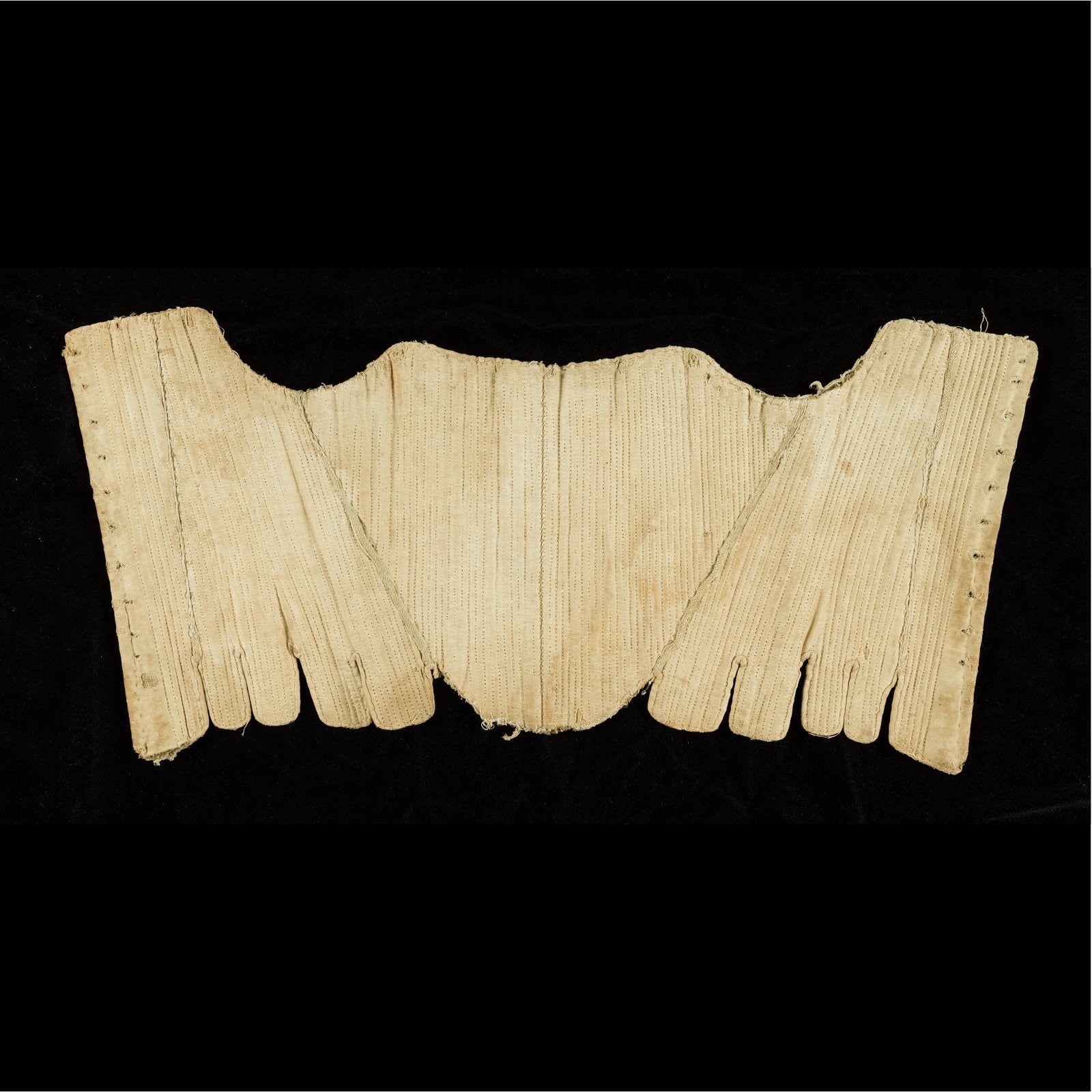
A foundational aspect of women’s attire, stays were stiffened undergarments used to shape the wearer’s torso into a cone shape and force proper, upright, posture, while also providing back support.[11]
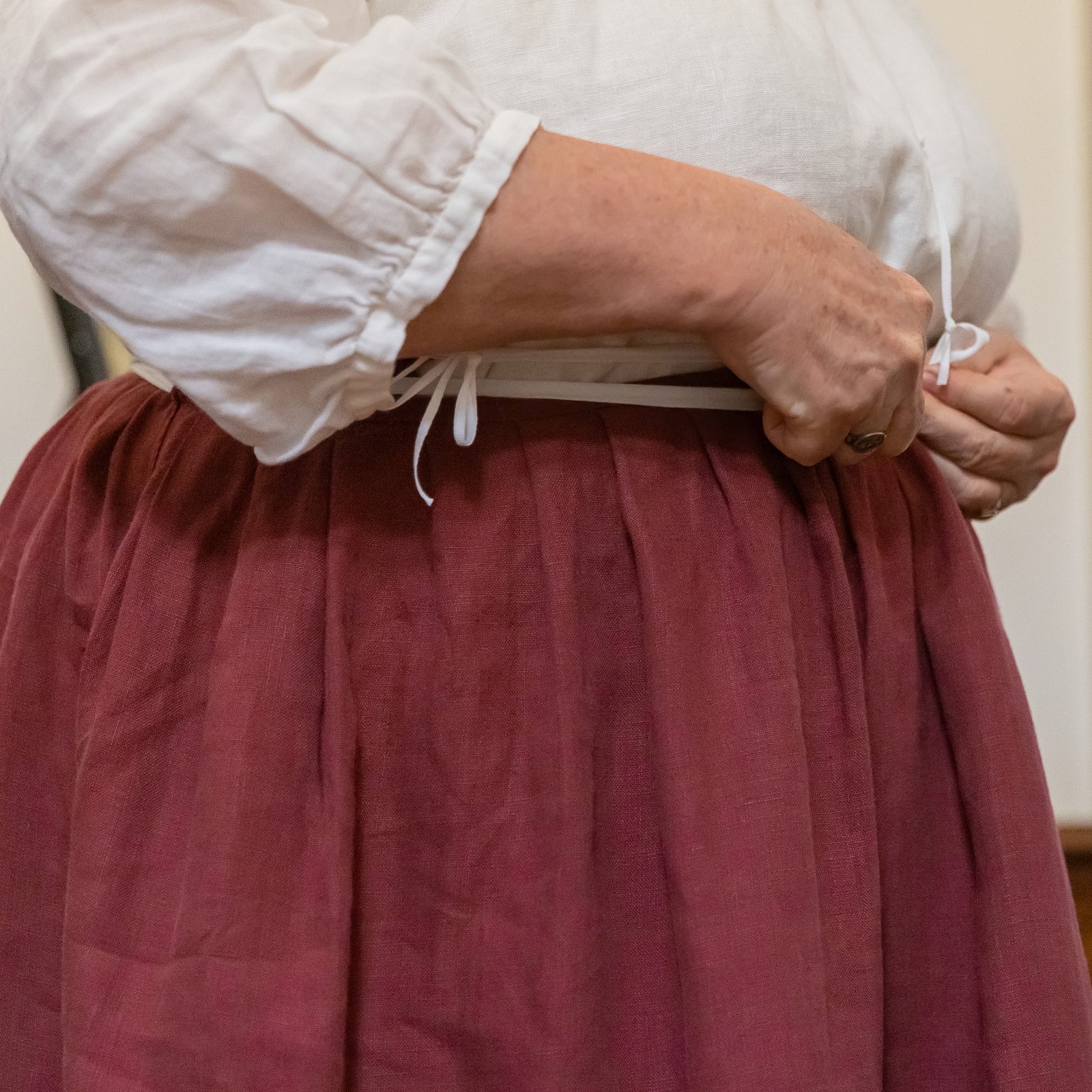
Petticoat
While the word “coat” might suggest cold weather clothing to the modern person, petticoats were full skirts tied at the waist. Sometimes they were layered with under-petticoats, which provided structure, and over-petticoats, which were decorative.[12]
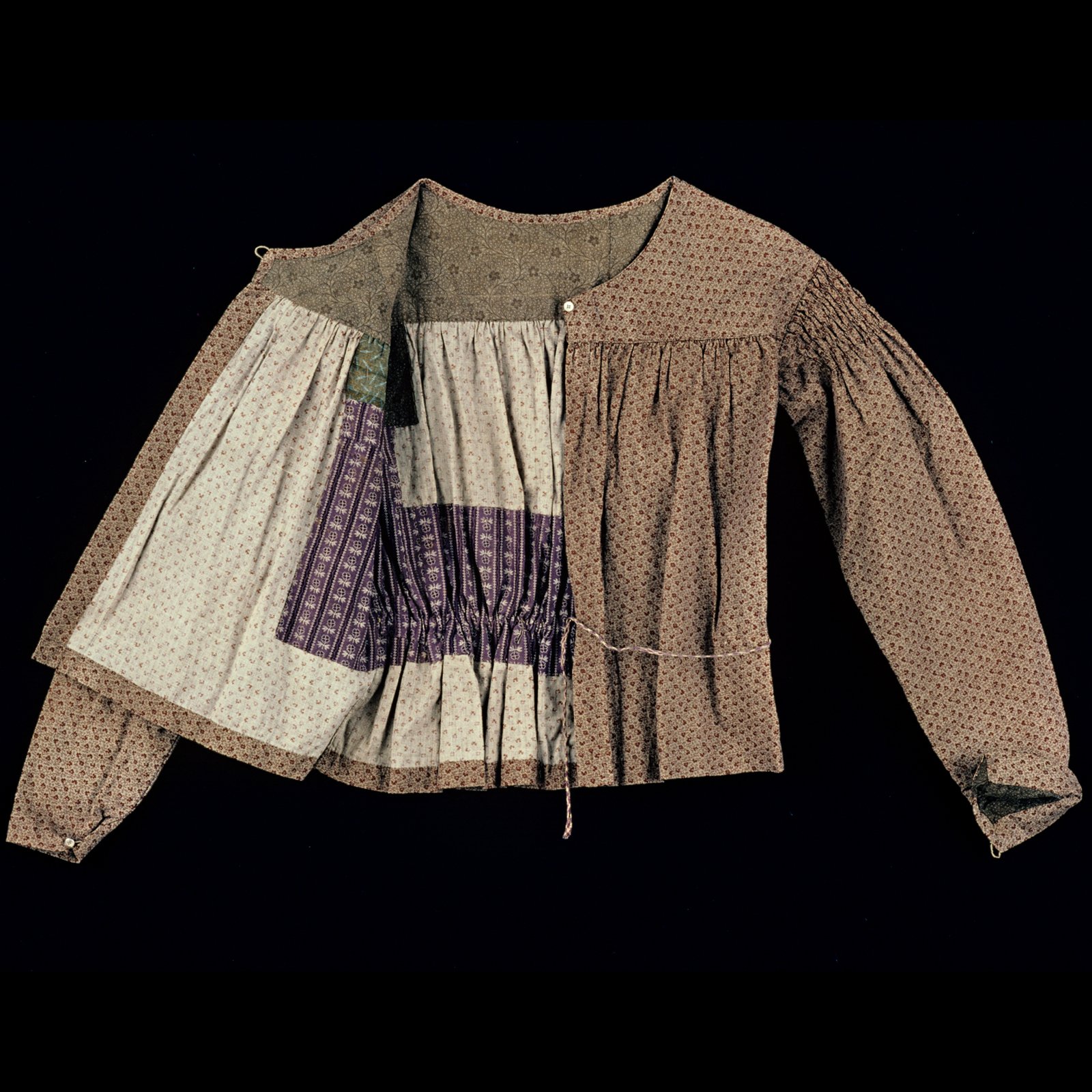
Gowns and Jackets
A common outer layer, gowns and jackets could resemble a shirt. Gowns ranged from full to hip length, and jackets were suitable for wearing in all weathers. These were more casual garments, worn both by working women and at home.[13]
Holding Onto English Identity
Clothing and fashion were an essential way colonists attempted to show they were still British. Colonists, especially the wealthy gentry, closely followed fashion trends in England. When Catherine Rathell advertised her services as a milliner in 1767, she proudly highlighted that she was a recent transplant from London, with direct knowledge and trading partnerships in England. She even periodically traveled to London to hand pick goods. Such connections helped her appeal to Virginians who were deeply invested in staying as fashionable as possible.14
Colonists copied English fashion as much as they could in order to demonstrate their connection to the mother country. Clothing was a way of keeping alive a cultural connection to an identity that most colonists still found meaningful. Nonetheless, the colonies’ distinctive environment forced both compromise and innovation.15
Those on the frontier, for example, adopted different materials or clothing, often relying on leather, to protect themselves when working outside in hazardous environments. Virginia’s summers, in particular, were far hotter, more humid, and generally more unforgiving than England’s. Elite men sometimes dropped their wigs during the summer for simple caps. Layers might be shed in the heat. On particularly hot days, some women even kept their stays off, even though a woman without them on was considered to be undressed. When Philip Vickers Fithian, the personal tutor for the Carter family children, saw Mrs. Carter without her stays on, he thought it noteworthy enough to mention in his journal. Clearly shocked, he exclaimed “To day I saw a Phenomenon, Mrs. Carter without stays!”16
An Imperial Market
Colonists were part of a global trading network of textiles. But British imperial policy meant the colonies could only legally trade with Britain, and relatively low prices meant it was generally cost prohibitive to make cloth domestically, commonly called homespun. In 1768, when George Washington decided to calculate how much it would take to produce homespun on his plantation, he found it was only marginally cheaper than buying materials from Britain. And that was before factoring in additional costs, including the need to purchase at least five more enslaved women for such an operation.17
As a result, colonists imported vast amounts of textiles and clothing. Virginians, particularly the gentry, spent enormous sums each year on their wardrobes. It was not uncommon for an elite household to spend many times the sums that a middling Virginian earned in a year on these products.18
Plain Linen Imports, in Yards (1769–1772)
Linen was just one material used to create a wide range of products, from clothing to bedding. These totals include both Irish and British linen, which would have been used, in part, to make a variety of clothing products in the colonies.[19]
Unfree Clothing
Virginia’s enslavers reinforced the unfree status of enslaved people with the clothing they provided them. Clothing and race distinguished those who were free from those who were not. As such, enslavers usually chose cheaply made osnaburg fabric. This was an inexpensive, unbleached, naturally brown, coarse linen material.20
The widespread use of osnaburg fabric to clothe enslaved people denied enslaved people an identity through clothing, as they all wore similar items. Because only the basic necessities were provided as well, enslaved people lacked the characteristic clothing needed to express one’s gender. Enslaved women were denied stays, something so fundamental to white women’s wardrobes that even the poorest individuals usually had at least one. Men usually didn’t have enough material or clothing to fashion a full three-piece suit. Ill-fitting, quickly made, and untailored clothing further marked their inferior status. As such, enslaved people were often described as being “naked” or “unclothed,” despite wearing clothing, because they lacked the necessary allotment to wear a “full” outfit.21
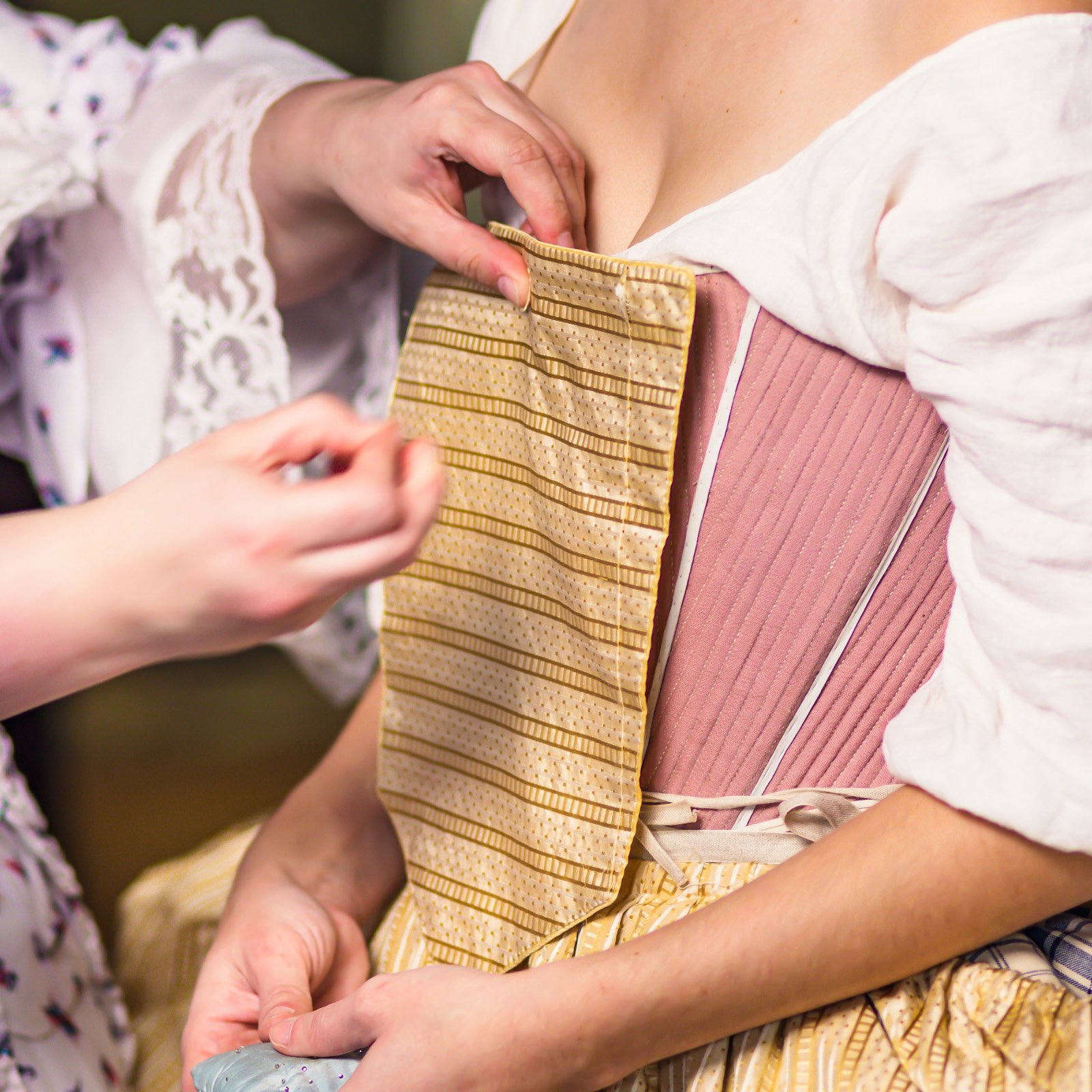
The Importance of a Garment
While stays were a foundational aspect of women’s clothing, they were also important for reinforcing ideas about gender and race.[22]
The Material
Expensive stays could be made of silk and could include a back closure, which required the assistance of someone else to put on. Linen, or even leather, stays were more affordable and easier to maintain. Stays were often reinforced with whalebone.[23]
Children’s Stays
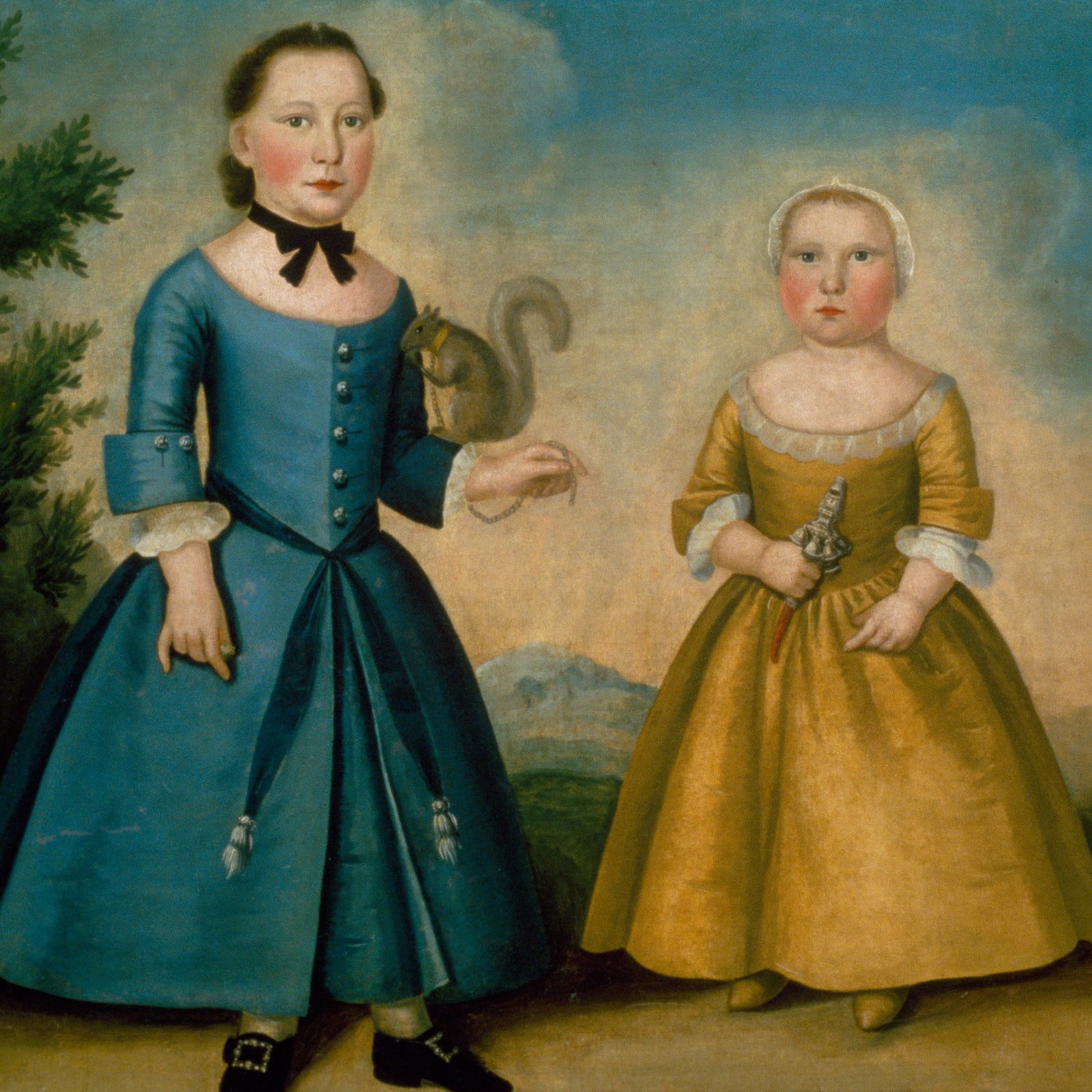
White children, regardless of their sex, wore stays, along with skirts and gowns, until around eight years old. Children’s clothing was meant to show their dependence on the adults around them. Boys, however, stopped wearing these garments during “breeching,” when they began wearing breeches to signal a transition toward masculinity and independence.[24]
The Denial of Stays
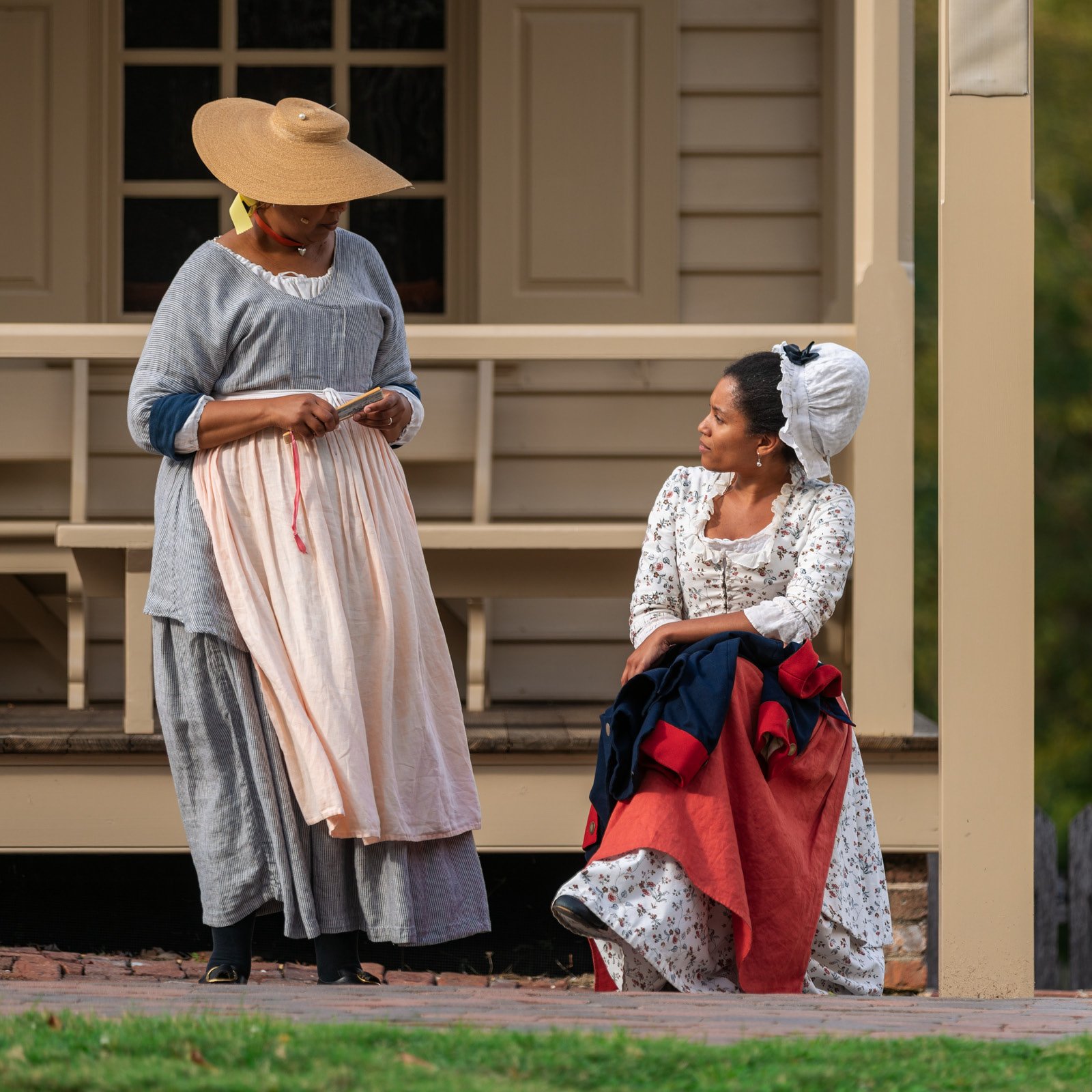
Because stays were an important marker of femininity and an essential part of women’s attire, they were nearly always denied to enslaved Black women. This made enslaved women appear both immodest and unfeminine in how they dressed.[25]
Some enslaved people, especially male domestic servants and personal attendants, were provided a livery, which was a uniform made to resemble a three-piece suit. Liveries were provided to enhance the social image of the enslaver, not the enslaved. However, like the mass of enslaved clothing, these suits were made with inferior material, usually wool, which made them especially uncomfortable to wear in the hot and humid Virginia summers.26
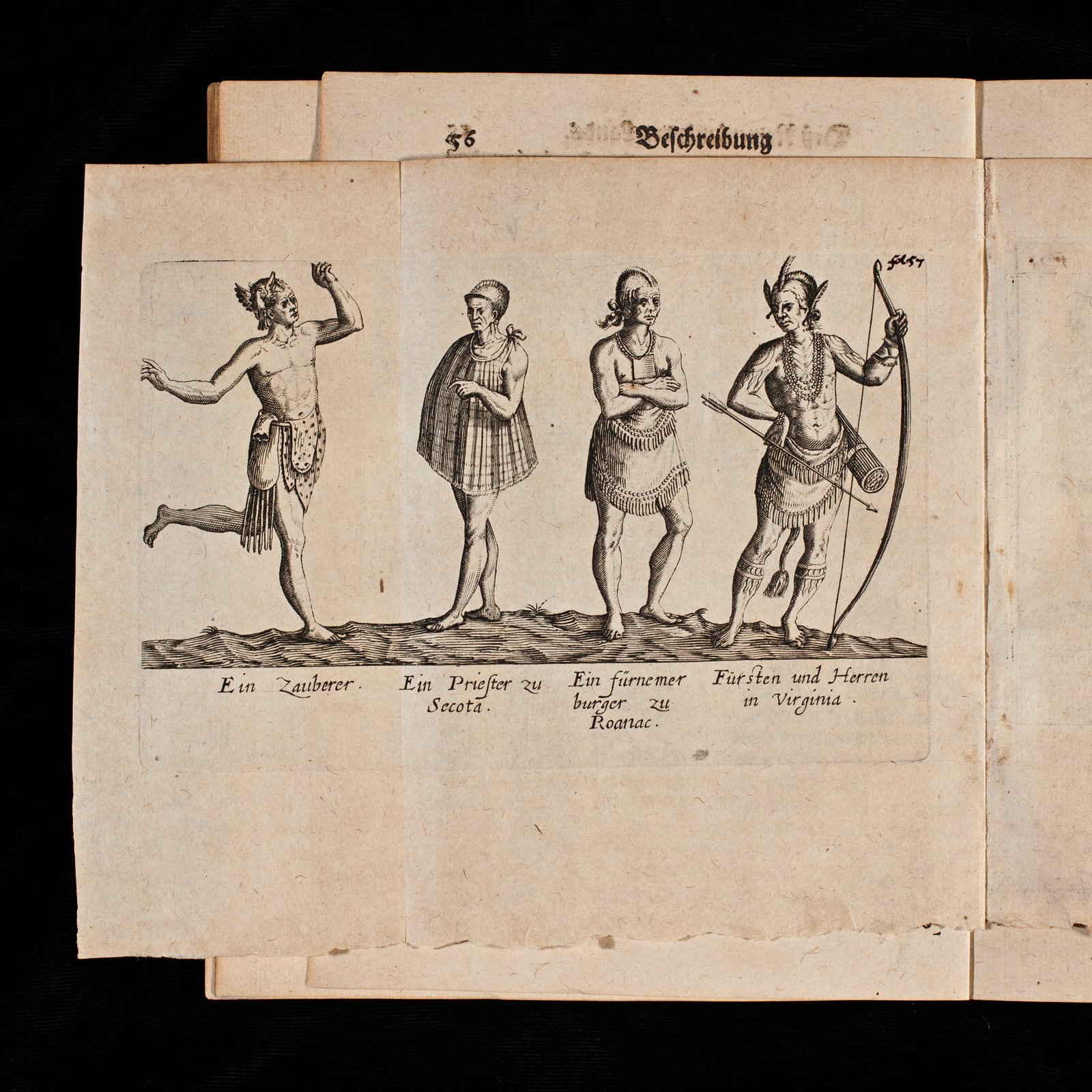
Incorporating European Clothing
It is difficult to get an accurate picture of what Native Americans wore. Many sources are from European perspectives, and not only judge Indigenous clothing by Western standards, but flatten cultural differences between Native peoples.

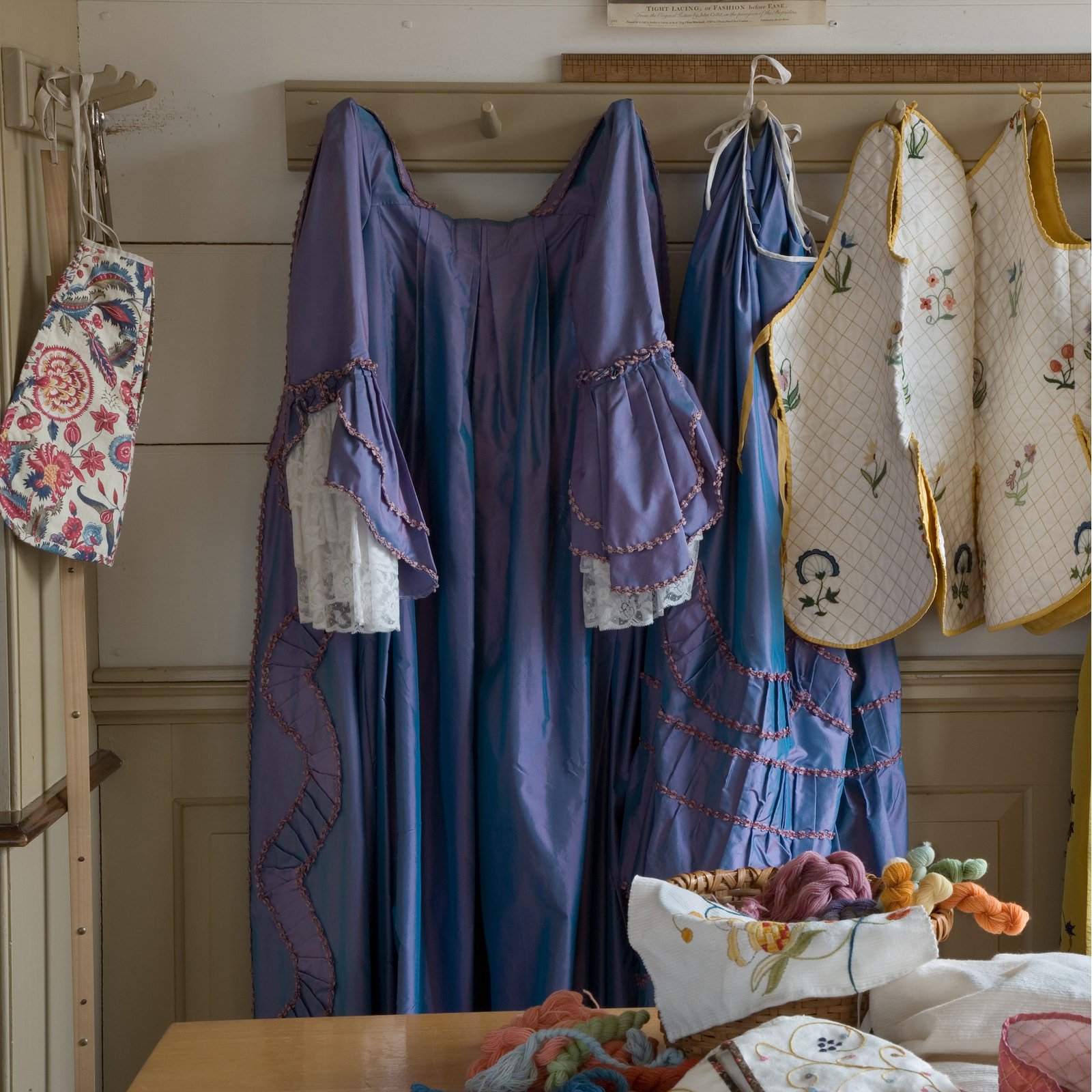
A Stark Difference
Especially in early contact narratives, Europeans often noted how Native Americans wore fewer clothes. Because European fashion focused so heavily on multiple layers of clothing, even fully covered Native people could appear “naked” to an English observer.
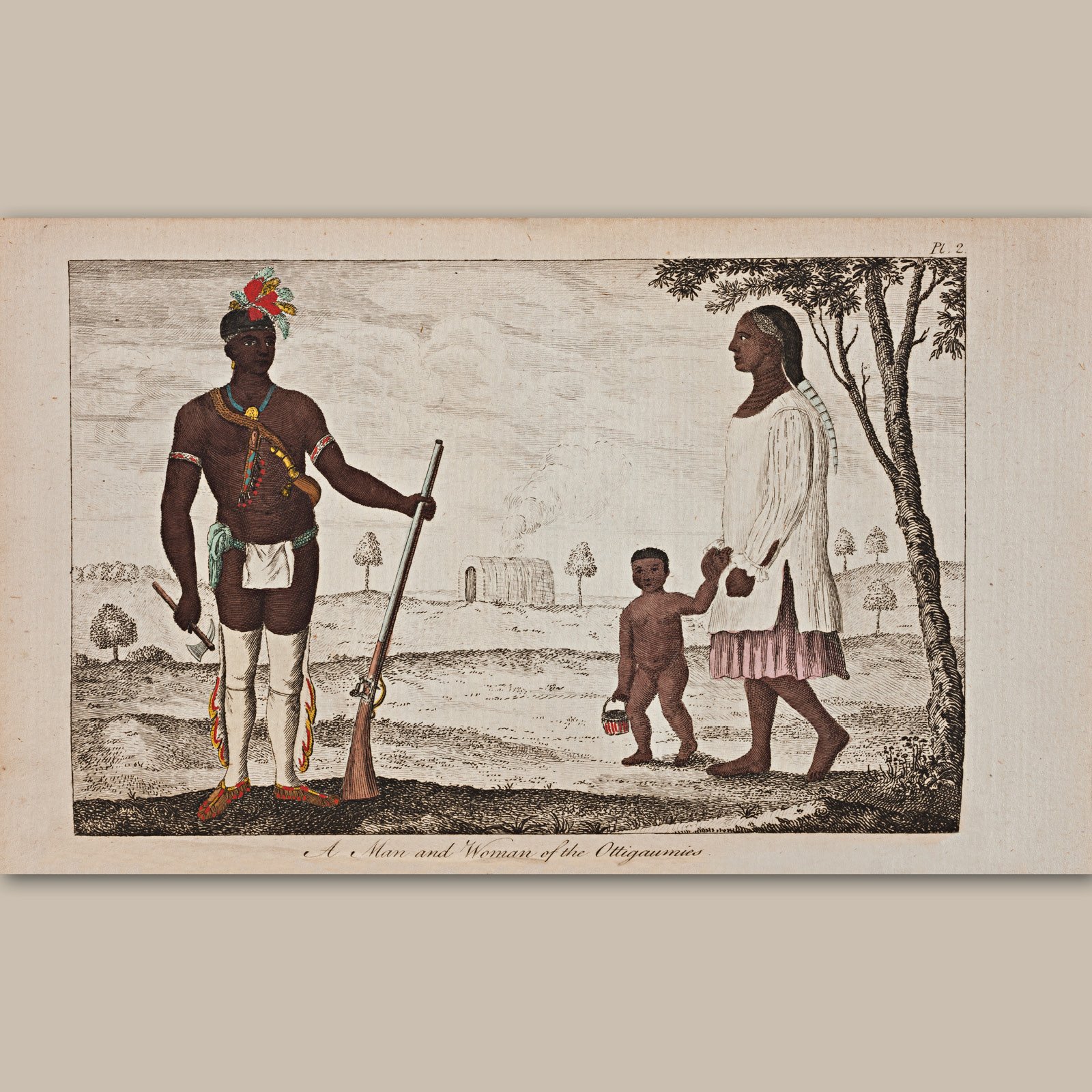
Maps and Books
Native American clothing was sometimes recorded in books and maps of North America. However, these images and descriptions rarely made reference to specific tribal identity, and sometimes reproduced stereotypical imagery associated with Natives.[27]
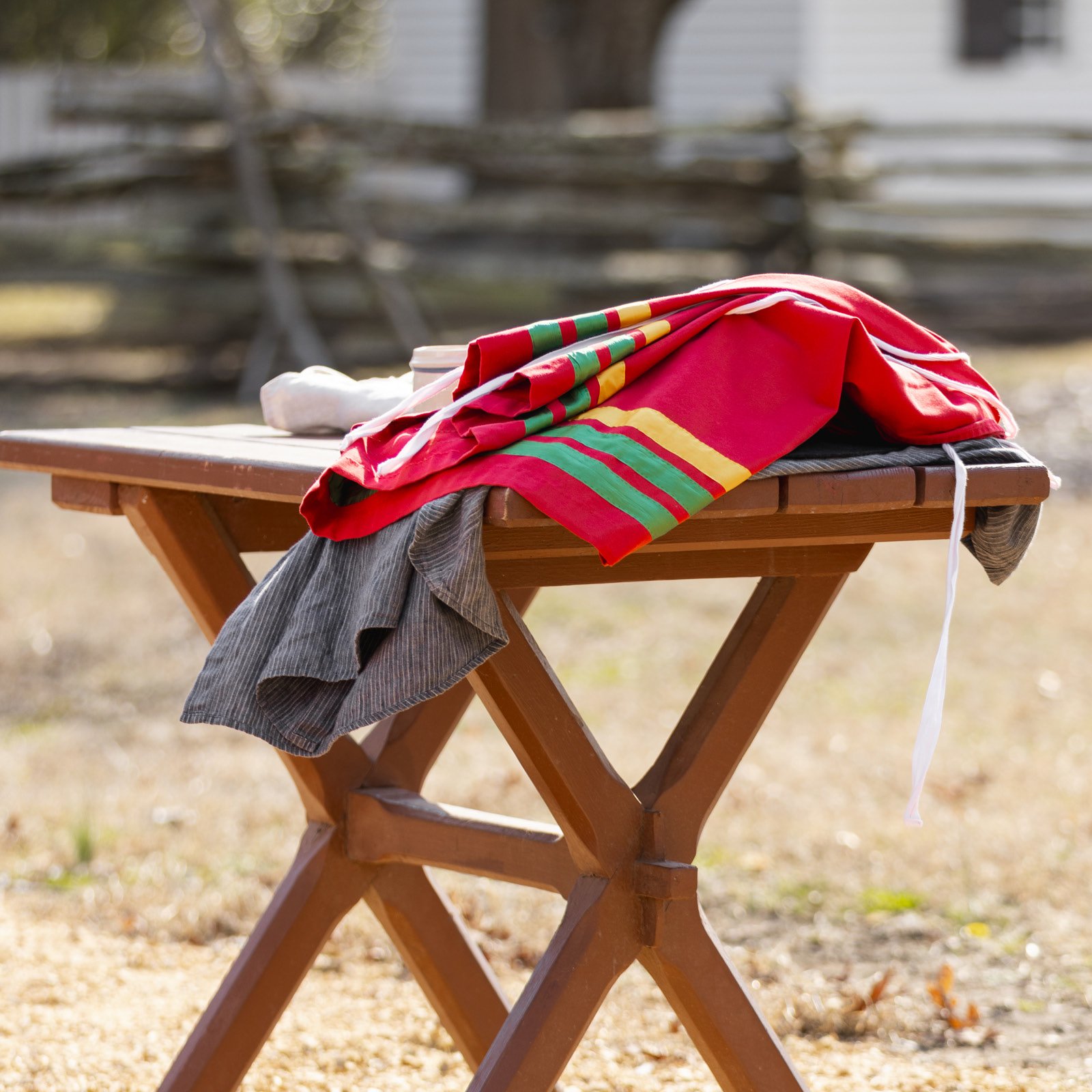
New Materials, Traditional Clothing
Through trade and diplomatic exchange, many Indigenous people incorporated European textiles and clothing into their lives and cultures. However, while they chose to wear some European style clothes, they did so in their own way, sometimes wearing the clothes “incorrectly” from colonists’ perspective.[28]
A New Shirt
While many Native people adopted European-style shirts, they wore them in radically different ways. Europeans wore their shirts, usually long enough to appear like a short gown, tucked into breeches. Indigenous people, however, usually wore them untucked as a sort of overshirt, covering other articles of clothing.[29]
Say No To Breeches
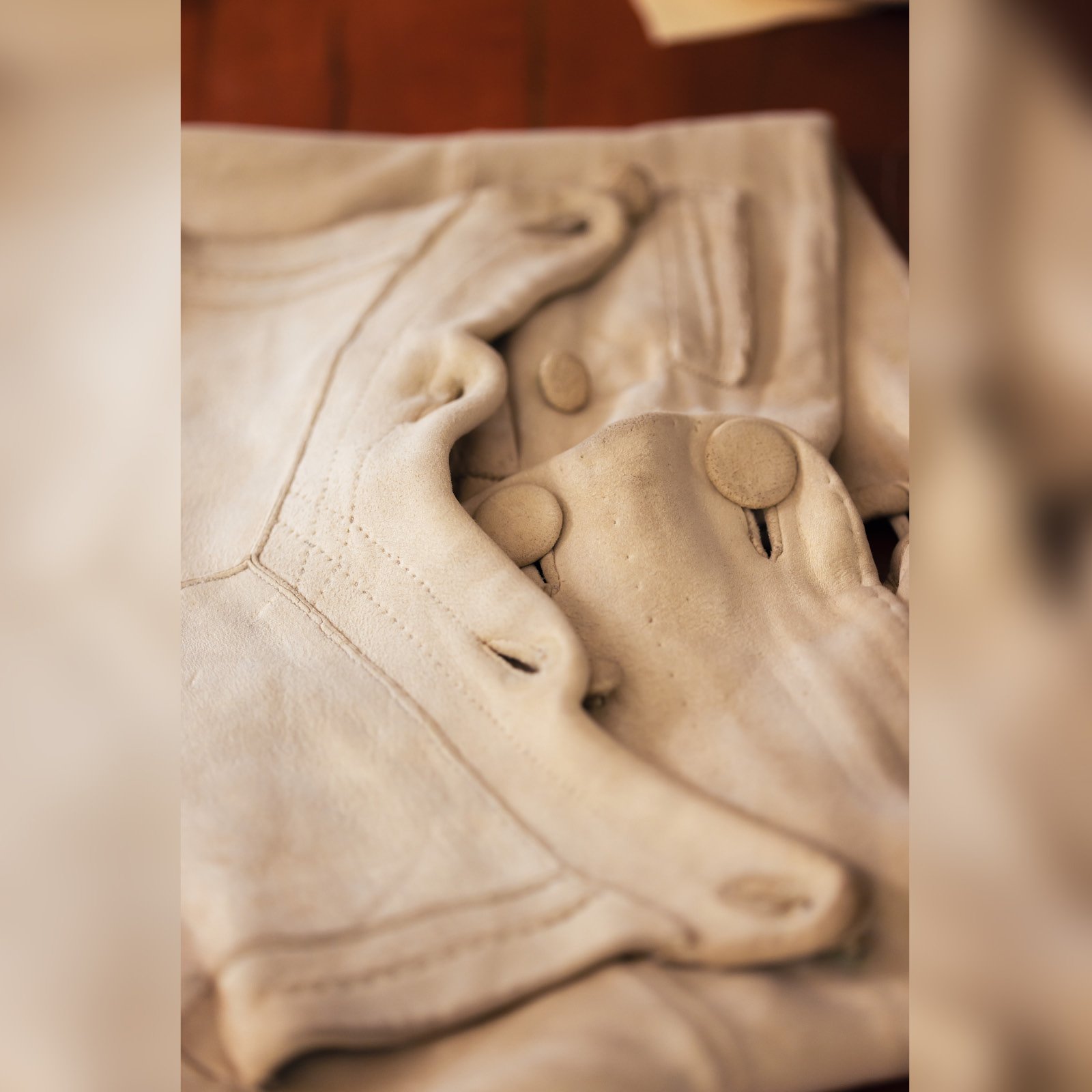
While different Native groups adopted European clothing in a variety of ways, most Indigenous men refused to wear breeches. Instead, they often wore what was referred to as a “breechclout,” which functioned more like a short apron and leggings which covered the legs and were tied around the thigh. Breeches were thought by many to simply be too cumbersome.[30]
Patriotic Fashion
For much of the colonial period, colonists obsessed over English fashion trends, and attempted to import the most popular and stylish textiles and clothing styles. However, at various points throughout the American Revolution, colonists engaged in boycotts of British goods to protest imperial policy. These nonimportation agreements extended to textiles and clothing, which forced colonists to rely on homespun, or domestically created textiles. Coarser and less refined, homespun was associated more with necessity than finery. Yet elite Virginians embraced it as a symbol of colonial resilience, resistance, and later, patriotism.31
Homespun, however, came at a cost. The colonies were nearly completely reliant on British imports of clothing and textiles. Because they were used to buying what they needed, colonists lacked the infrastructure to support large scale homespun operations. During times of protest, and eventually war, Virginians used enslaved labor to quickly and cheaply address the surge in homespun cloth’s popularity. While homespun became the material and fashion of protest and patriotism, its production was only made possible by the colony’s large enslaved population.32
An American Ball
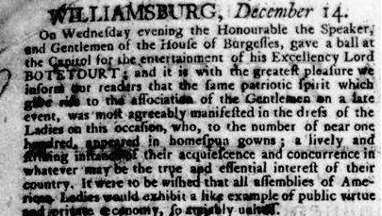
In 1769, almost 100 ladies attended a ball in the Capitol wearing homespun dresses. The account may have been exaggerated, but it highlighted how fashion was used to protest British taxation.[33]
While homespun enjoyed a period of patriotic popularity, it was quickly abandoned following the end of the Revolutionary War. Virginia’s wealthy gentry in particular resumed importing British textiles and clothing, which had always been a better quality, both in their imagination and in reality.34 Nonetheless, the American Revolution had occasioned a period when many Americans had radically reimaged not just philosophical ideas surrounding rights and government, but also how to think about one’s clothing. While temporary, they spoke through their clothes, just as they did in newspapers or treatises, to advocate for a new political order.
Sources
- Kate Haulman, The Politics of Fashion in Eighteenth-Century America (University of North Carolina Press, 2011), 3.
- Linda Baumgarten, What Clothes Reveal: The Language of Clothing in Colonial and Federal America (Yale University Press, 2012).
- Haulman, The Politics of Fashion, 48.
- Baumgarten, What Clothes Reveal, 40.
- Linda Baumgarten, “Clothes for the People, Slave Clothing in Early Virginia,” Colonial Williamsburg Foundation Collections Division – 0409 (Colonial Williamsburg, 1988), 29.
- Baumgarten, What Clothes Reveal, 27; Wendy Lucas and Noel Campbell, “The Economic Significance of Cloth and Apparel: An Analysis of George Washington’s Shipping Receipts, 1754-1772,” Essays in Economic & Business History 34 (2016), 214-215.
- Baumgarten, What Clothes Reveal, 110-112.
- Laura J. Galke, “Tressed for Success,” Winterthur Portfolio 52, No. 2/3 (Summer/Autumn, 2018): 85-135.
- Wendy Lucas Castro, “Stripped: Clothing and Identity in Colonial Captivity Narratives,” Early American Studies 6, No. 1 (Spring 2008), 115.
- Baumgarten, What Clothes Reveal, 40.
- Baumgarten, What Clothes Reveal, 121-122.
- Linda Baumgarten, “‘The Layered Look’ Revisited: New Discoveries in Quilted Petticoats,” Dress 47, No. 2 (2021): 181-198.
- Baumgarten, What Clothes Reveal, 114-122.
- Kaylan M. Stevenson, “‘Until Liberty of Importation Is Allowed’: Milliners and Mantuamakers in the Chesapeake on the Eve of Revolution,” in Barbara B. Oberg, ed., Women in the American Revolution: Gender, Politics, and the Domestic World (University of Virginia Press, 2019): 39-59.
- Laura J. Galke, “Tressed for Success: Male Hair Care and Wig Hair Curlers in George Washington’s Childhood Home,” Winterthur Portfolio52, No. 2/3 (Summer/Autumn 2018), 39.
- Baumgarten, What Clothes Reveal, 54, 110; Hunter Dickinson Farish, ed., Journal and Letters of Philip Vickers Fithian (University of Virginia Press, 1983), 207.
- Baumgarten, What Clothes Reveal, 78, 95.
- Luclas and Campbell, “The Economic Significance of Cloth and Apparel,” 209.
- N. B. Harte, “The British Linen Trade With The United States In The Eighteenth And Nineteenth Centuries,” Textile Society of America Symposium Proceedings (1990), 20.
- Baumgarten, What Clothes Reveal, 133-135.
- Baumgarten, What Clothes Reveal, 133-135.
- Baumgarten, What Clothes Reveal, 121-122.
- Baumgarten, What Clothes Reveal, 121-122.
- Baumgarten, What Clothes Reveal, 162–64.
- Jennifer L. Morgan, Laboring Women: Reproduction and Gender in New World Slavery (University of Pennsylvania Press, 2004); Linda Baumgarten, “Clothes for the People, Slave Clothing in Early Virginia,” Colonial Williamsburg Foundation Collections Division – 0409 (Colonial Williamsburg, 1988), 4.
- Baumgarten, What Clothes Reveal, 132.
- Baumgarten, What Clothes Reveal, 71-72.
- Baumgarten, What Clothes Reveal, 71-72.
- Baumgarten, What Clothes Reveal, 71-72.
- Baumgarten, What Clothes Reveal, 69, 71-72.
- Terrence H. Witkowski, “Colonial Consumers in Revolt: Buyer Values and Behavior during the Nonimportation Movement, 1764-1776,” Journal of Consumer Research 16, No. 2 (September 1989): 216-226.
- Michael Zakim, “Sartorial Ideologies: From Homespun to Ready-Made,” The American Historical Review 106, No. 5 (December 2001), 1564.
- Virginia Gazette (Rind), December 14, 1769.
- Baumgarten, What Clothes Reveal, 84.