Arthur Shurcliff: The Man Who Reconstructed Williamsburg’s Landscapes
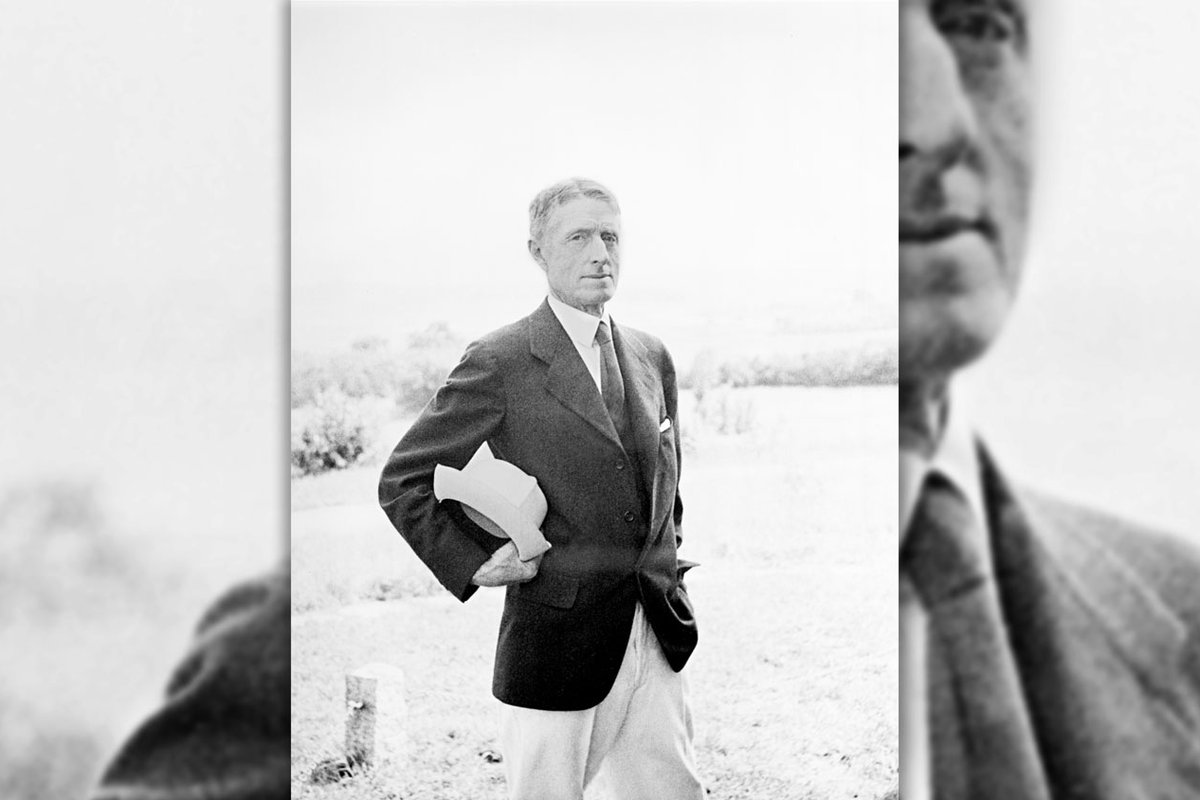
More than anyone else, Arthur Shurcliff was responsible for the design of Colonial Williamsburg’s renowned gardens and landscapes. Shurcliff was a pioneering landscape architect who made his name in Boston before working as the chief landscape architect for The Colonial Williamsburg Foundation from 1928 until 1941.
By all accounts, Shurcliff was single-minded, hardworking, and visionary in fulfilling the project’s goal of accurately recreating the landscapes of eighteenth-century Williamsburg. That deep commitment has defined the experiences of millions of visitors who have enjoyed the peace, fragrance, shade, and beauty of the scenery Shurcliff researched and recreated. His work in Williamsburg helped to define the popular Colonial Revival landscape style in the 1920s and beyond, shaping American horticultural trends for decades to come.
Shurcliff’s Landscape Designs
When Shurcliff presented his designs to Colonial Williamsburg's leaders, he would carry multiple versions. When they raised objections to the first draft, he would unfurl another design.1 This repeated until everyone was satisfied. Special Collections within Colonial Williamsburg’s John D. Rockefeller Jr. Library stewards a collection of many of these beautiful landscape plans.
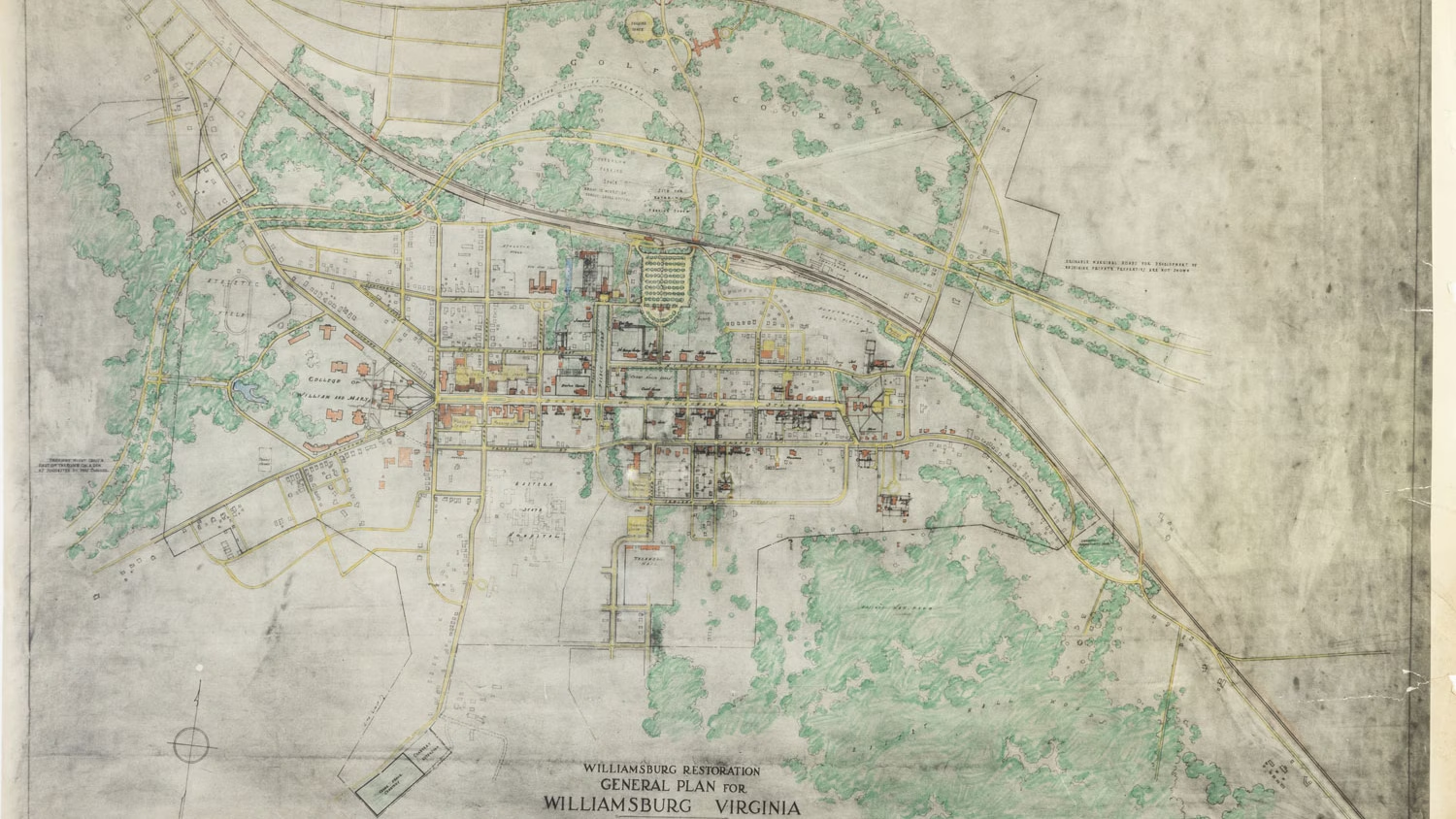
General Plan for Williamsburg
Arthur Shurcliff’s plan for Williamsburg, dated November 1930. All images from CW Special Collections and Corporate Archives, Rockefeller Library.
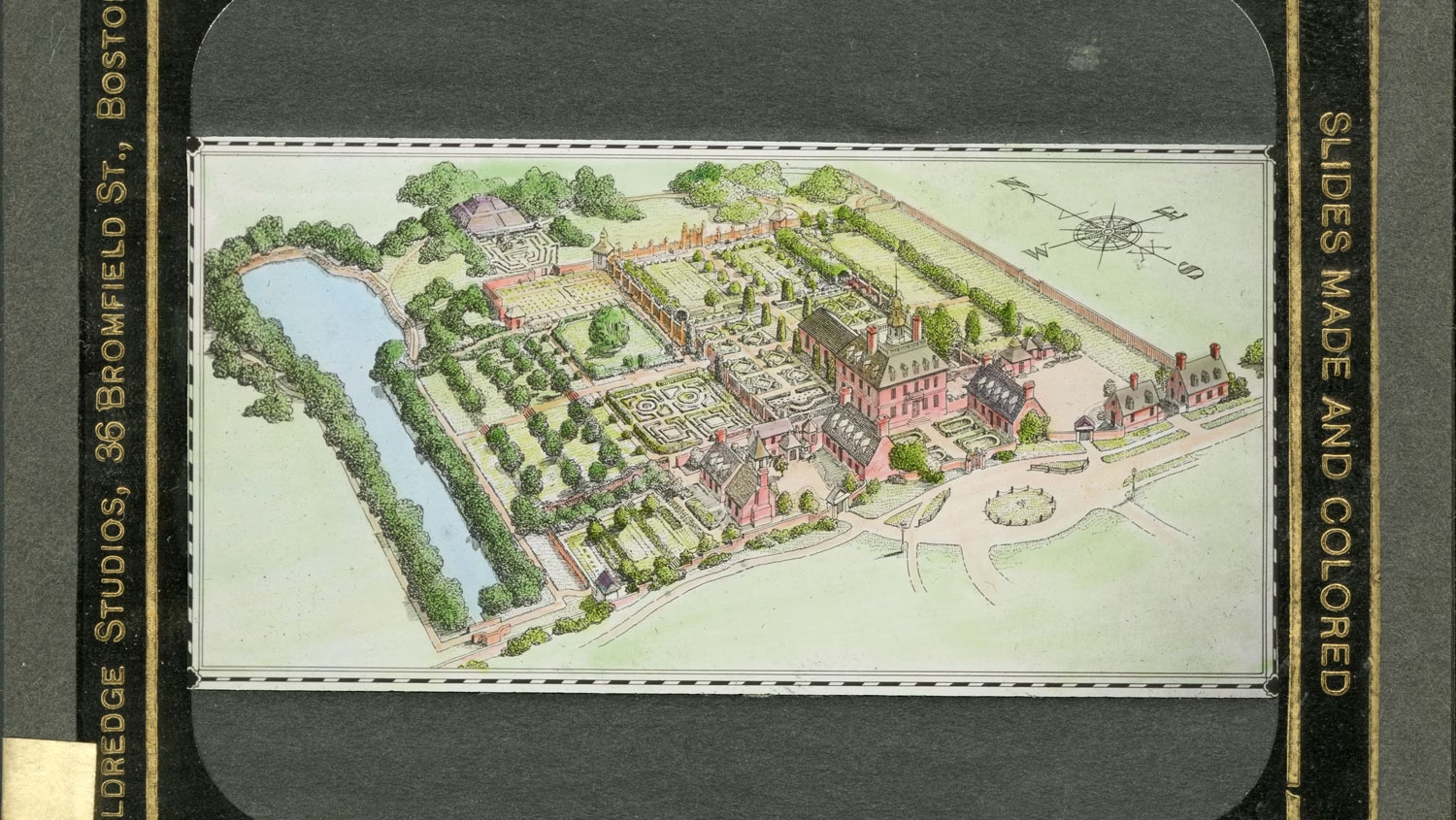
Governor’s Palace Landscape Plan
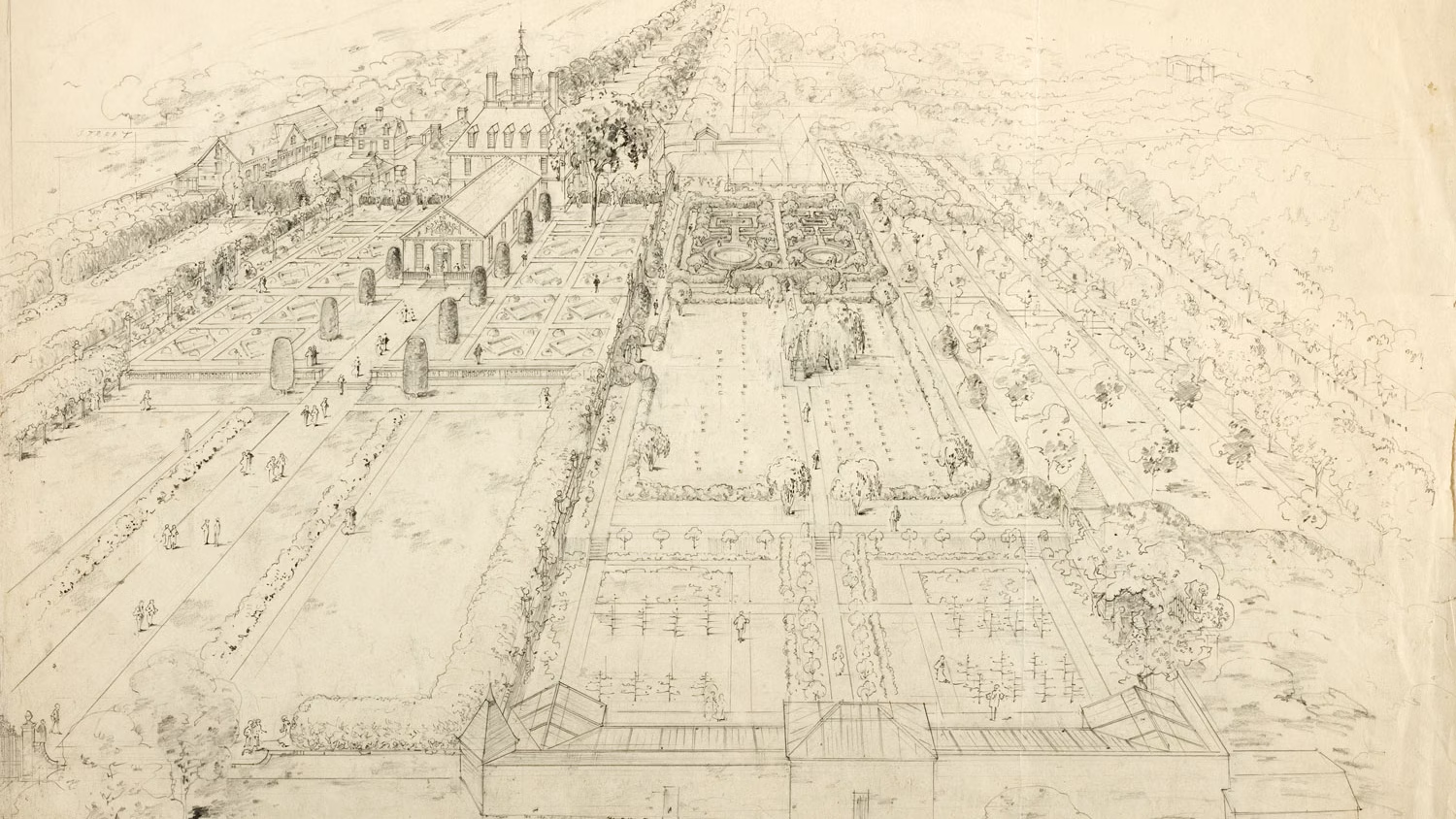
Aerial view of gardens, kitchen garden, canal, terraced gardens, maze, and icehouse in Palace Gardens (ca. 1935).
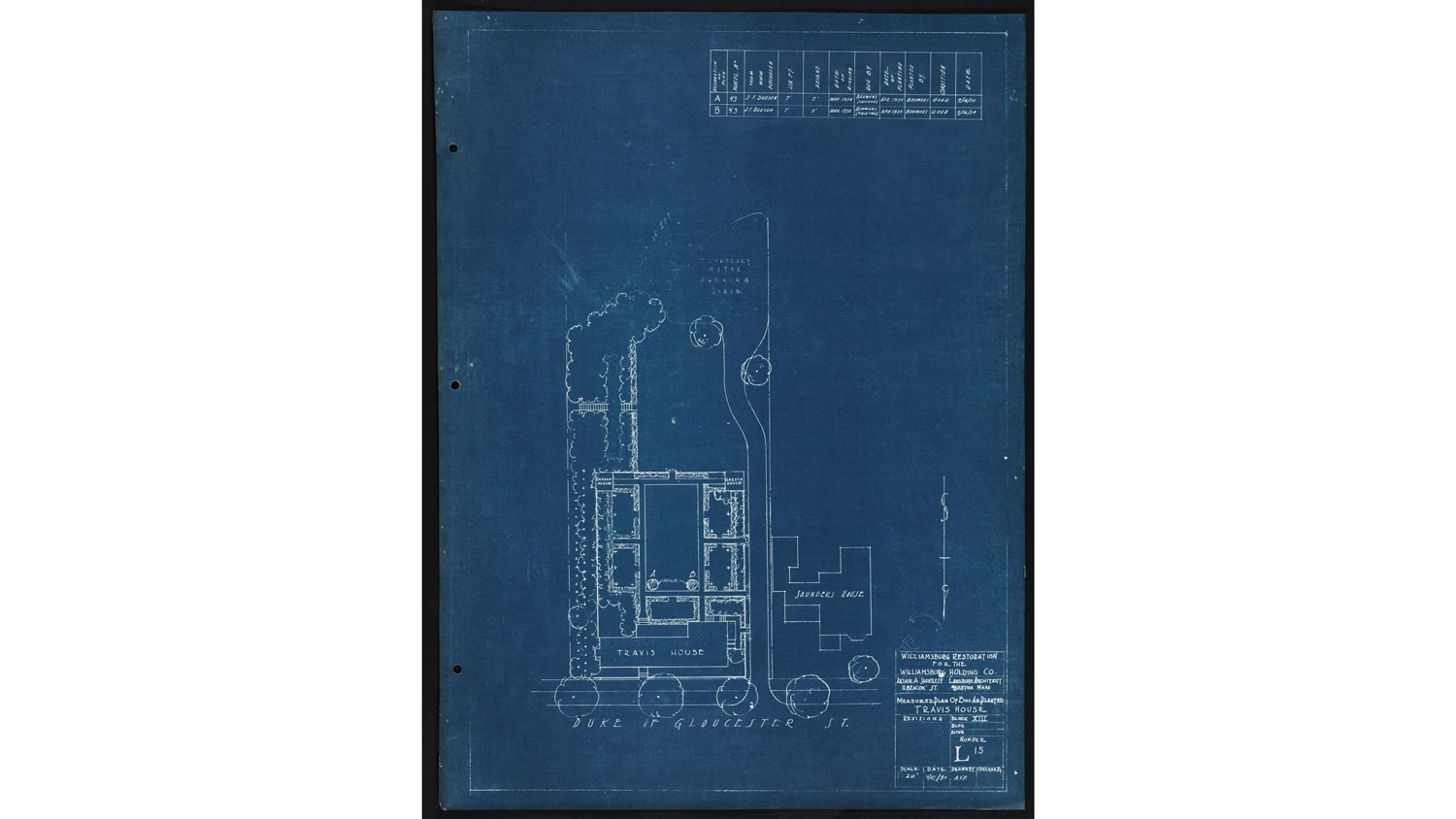
Travis House
Landscape plans for Travis House, a building later moved to its original location at Francis and Henry Streets.
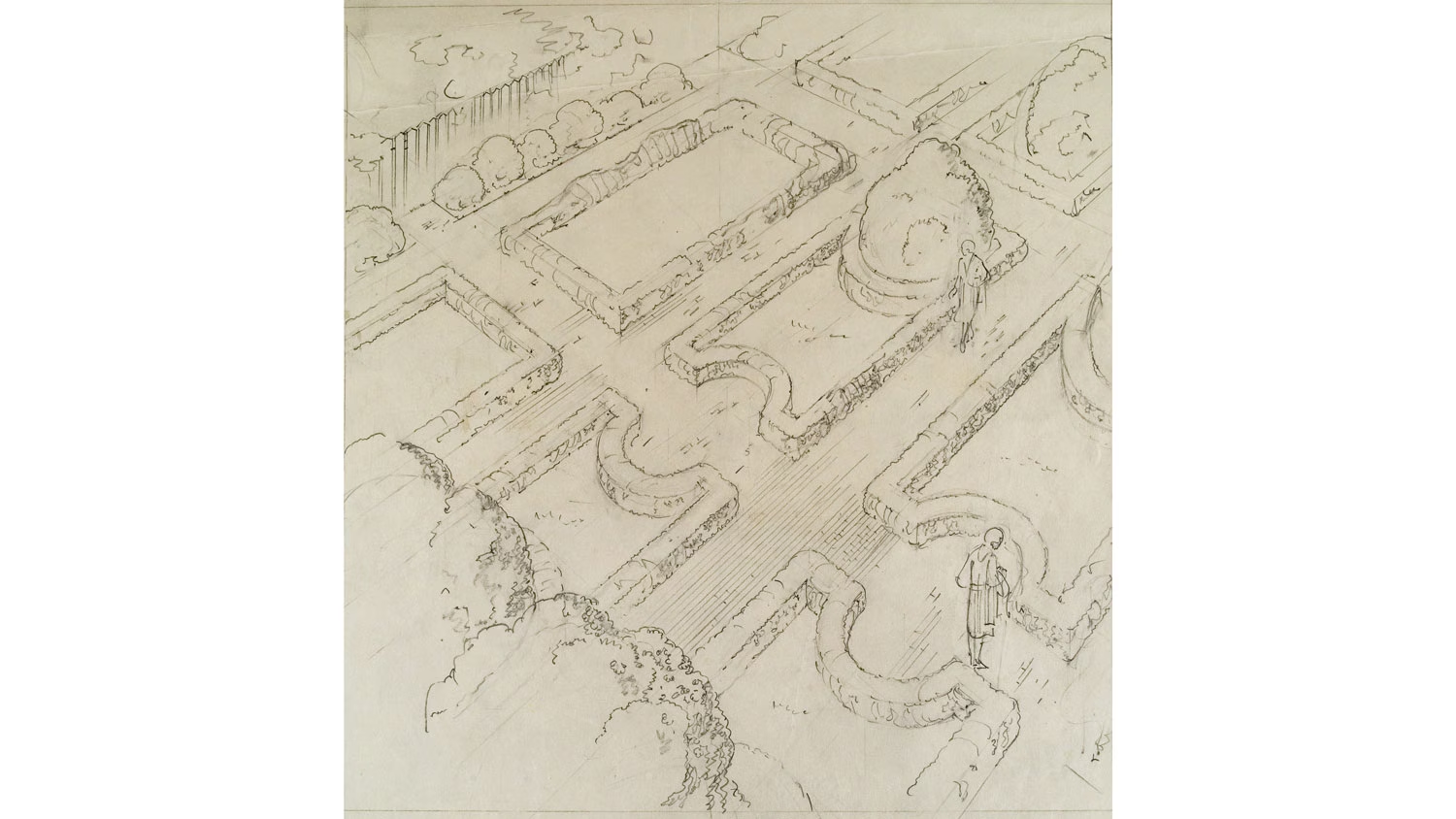
Geddy House
Arthur Shurcliff sketch, aerial view of proposed plantings at James Geddy House (ca. 1934).
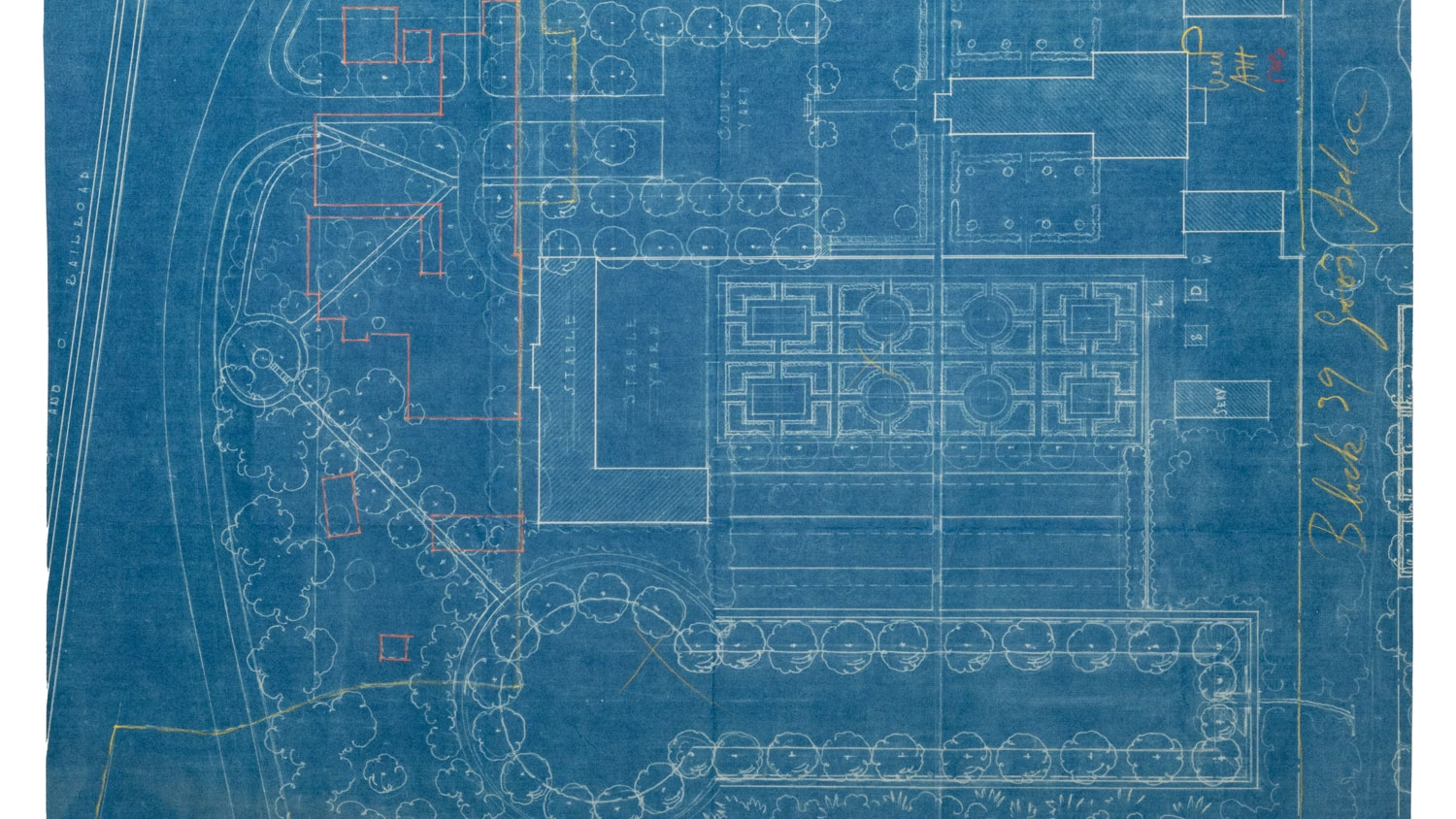
“Preliminary Plan for Garden”
This plan bears the initials of the architects who led the early stages of Williamsburg’s restoration, indicating their approval of the design.
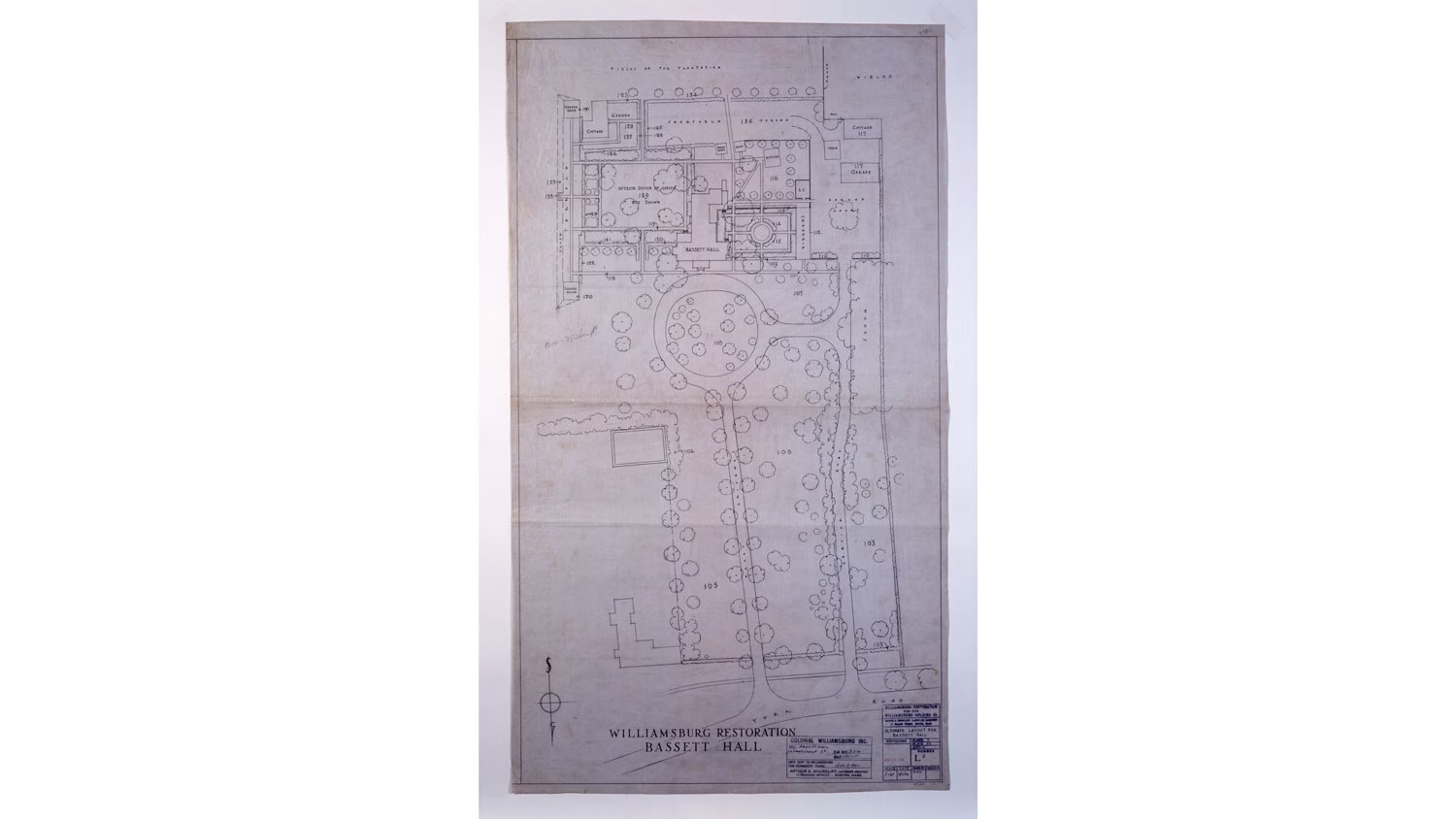
Bassett Hall
Shurcliff also designed the landscape for the Rockefellers’ Williamsburg residence, Bassett Hall, as well as other historic homes in the area.
Early Life and Career
Born in 1870, young Arthur Shurcliff (his birth name was Shurtleff, but he later changed it to Shurcliff) was fascinated by animals and nature. He studied mechanical engineering at the Massachusetts Institute of Technology and landscape design under Charles Eliot at Harvard University. After completing his studies, he joined the world-famous landscape design firm founded by Frederick Law Olmsted Sr., where Eliot was a partner.2
In 1907, Shurcliff opened his own landscape design and town planning firm. He planned numerous parks and towns throughout New England. As chief consultant for Boston’s Parks Department, he played a key role in the design of notable parks such the Franklin Park Zoo, the Charles River Esplanade, and a renovation of the Back Bay Fens.3
Colonial Williamsburg
In 1928, Shurcliff accepted the role of chief landscape architect for the project of restoring eighteenth-century Williamsburg. He threw himself into the daunting task. Shurcliff fought for the use of original materials and landscape designs based in research. He kept a diary during his work in Williamsburg. Its early entries document his ambitions for “replanning Williamsburg.” Ever an outdoorsman though, he also complained that all these meetings were happening indoors while “the peach trees were coming into bloom” outside.4
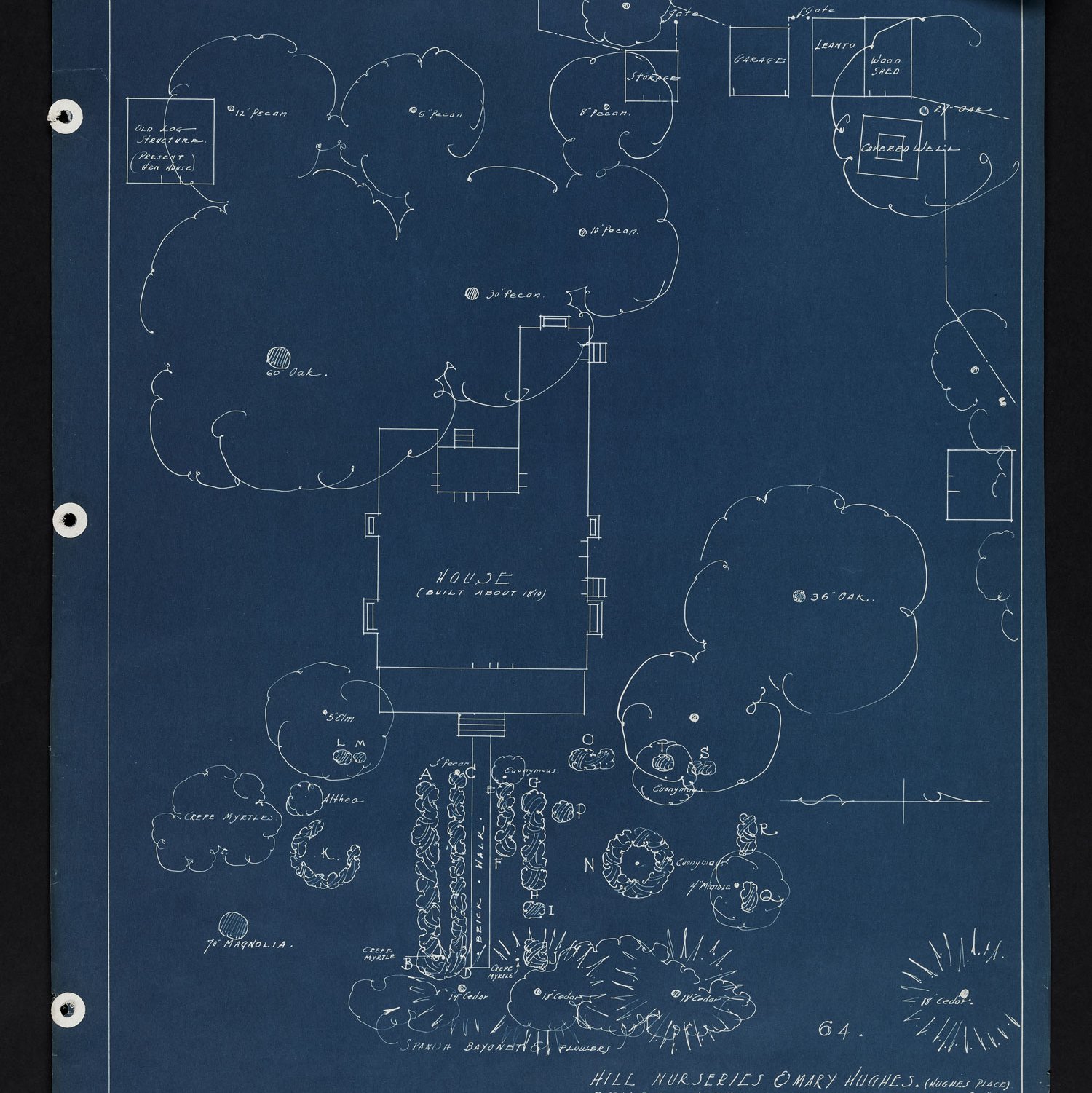
Research Notes
Over years of research, Shurcliff and his associates collected hundreds of photographs, memories, and landscape plans of Anglo-American gardens with deep histories. Scroll to see a few examples of the evidence used to reconstruct Williamsburg.

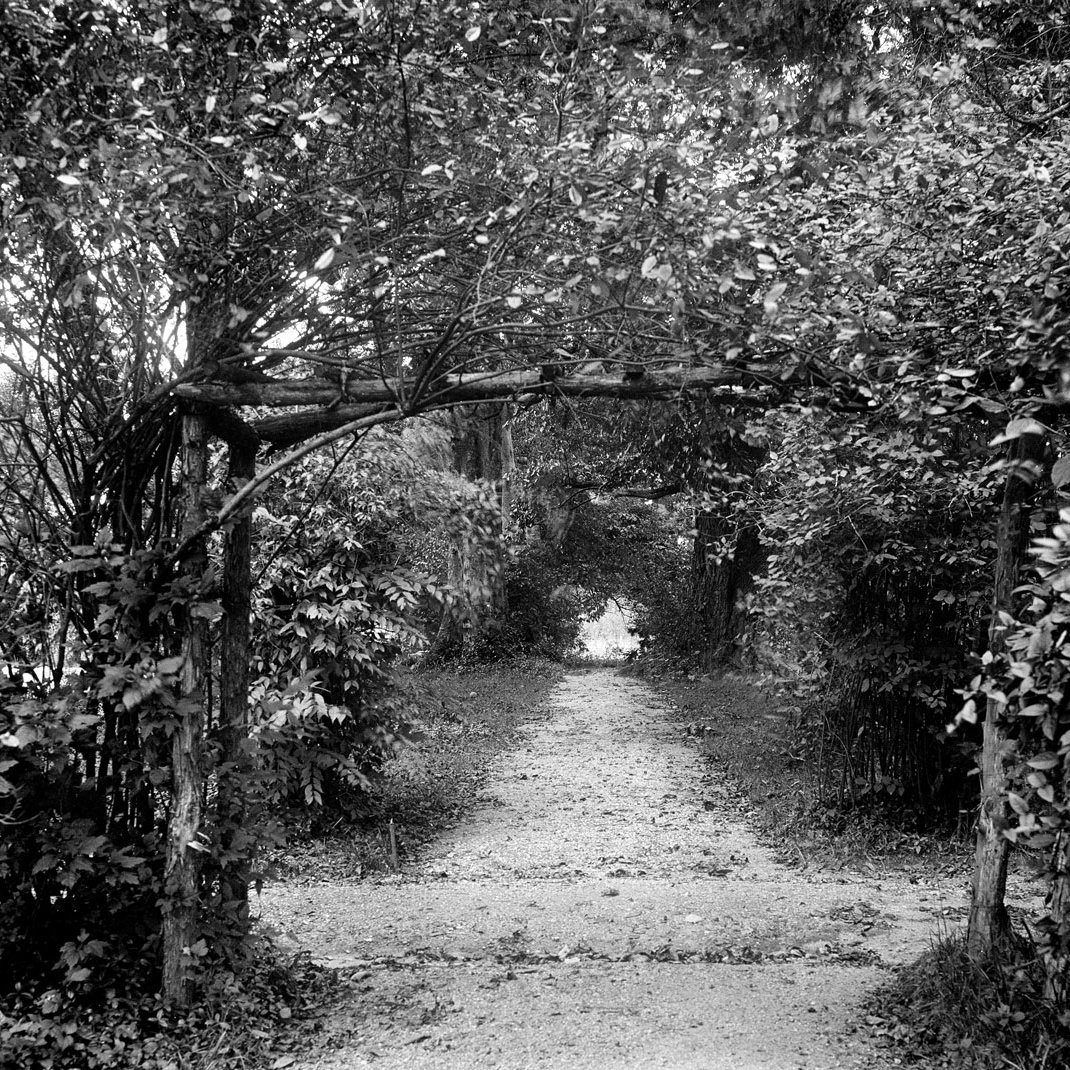
An Ancient Arbor
Shurcliff’s assistants, including his son Sidney, combed through nearby historic homes, interviewing inhabitants and taking photographs and measurements of their historic gardens. This photograph depicts an arbor in Caroline County, Virginia.
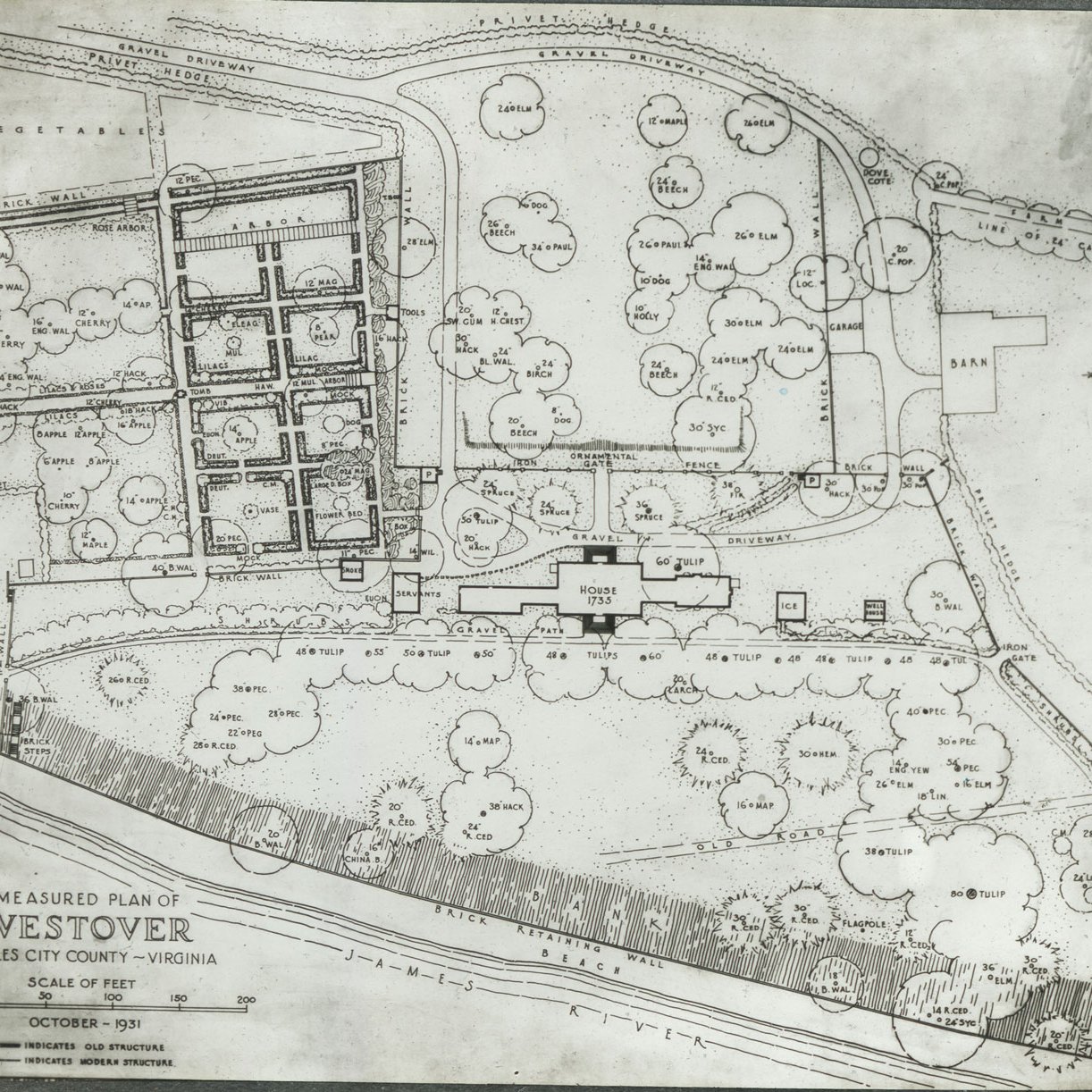
Measured Plan of Westover
Shurcliff’s researchers also surveyed the Byrd family’s Westover estate. William Byrd II, who was often in Williamsburg, kept a well-known pleasure garden at Westover.
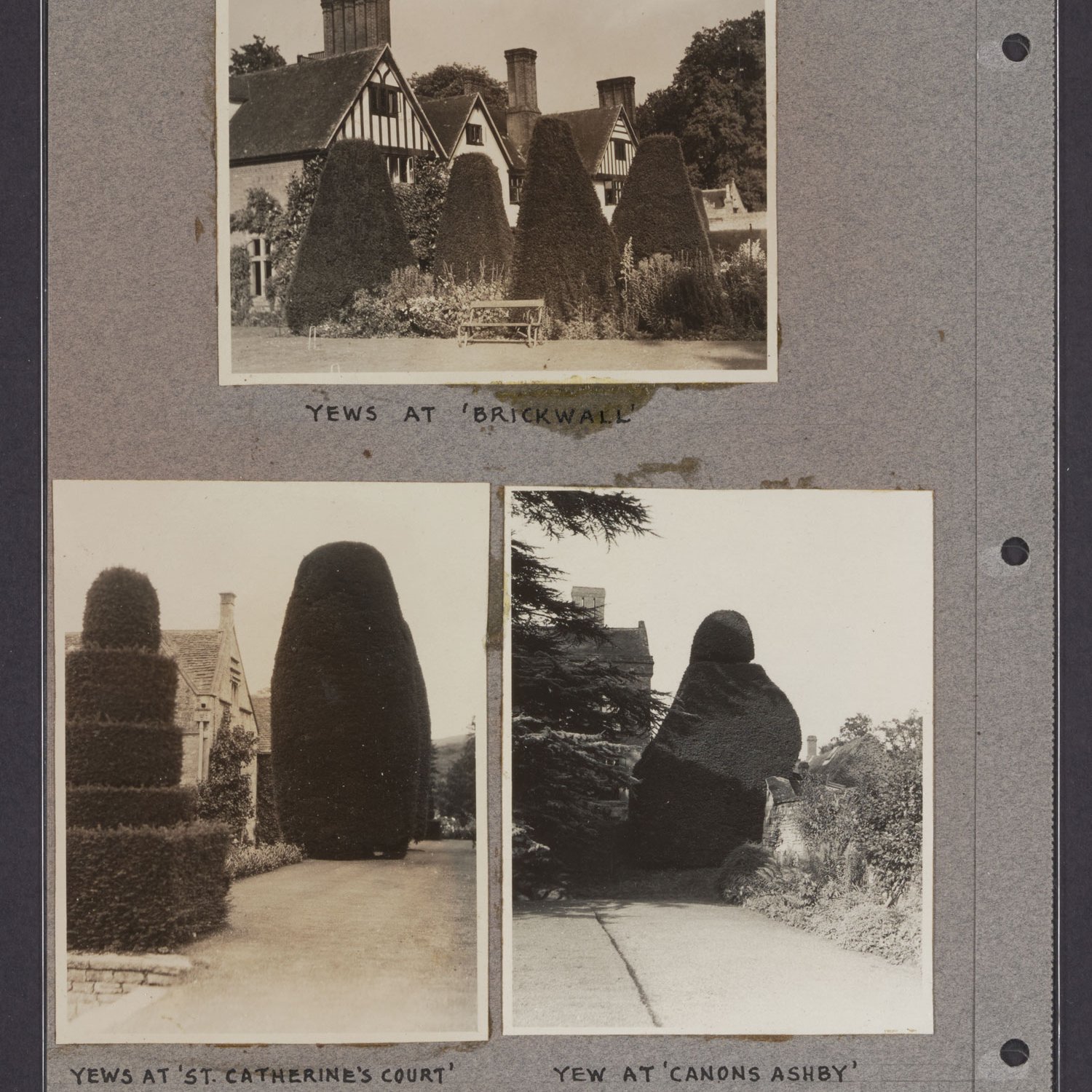
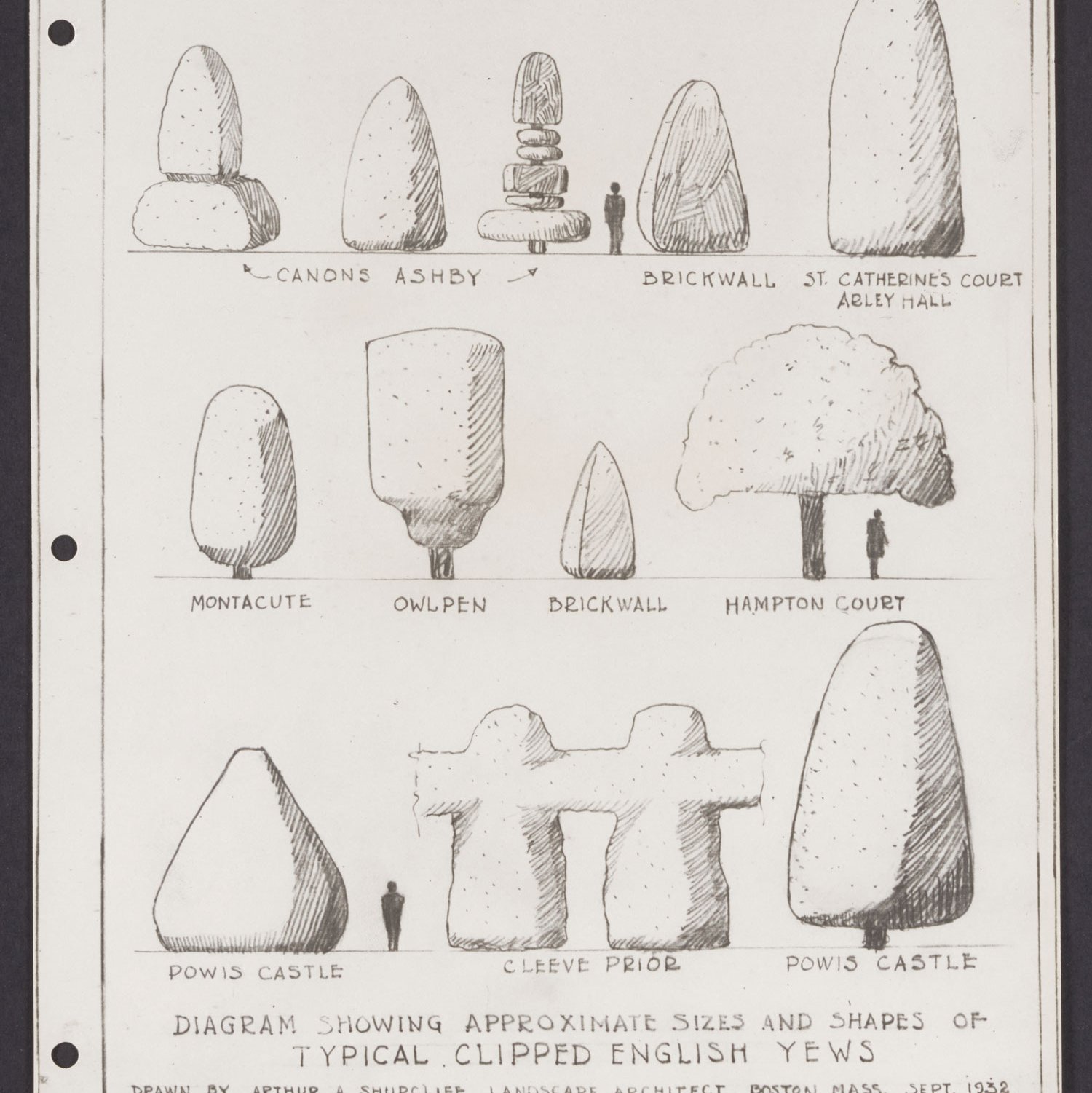
Pictures of Yew
Shurcliff traveled through England seeking examples of old English gardens. His photographs document his fascination with geometric and ornamental designs, especially the use of well-manicured yew trees.
He Loves Yew, Yeah, Yeah, Yeah
In his notebook, Shurcliff neatly sketched different designs of clipped yew trees he encountered in England, including Hampton Court and Powis Castle.
An Earthen Mount
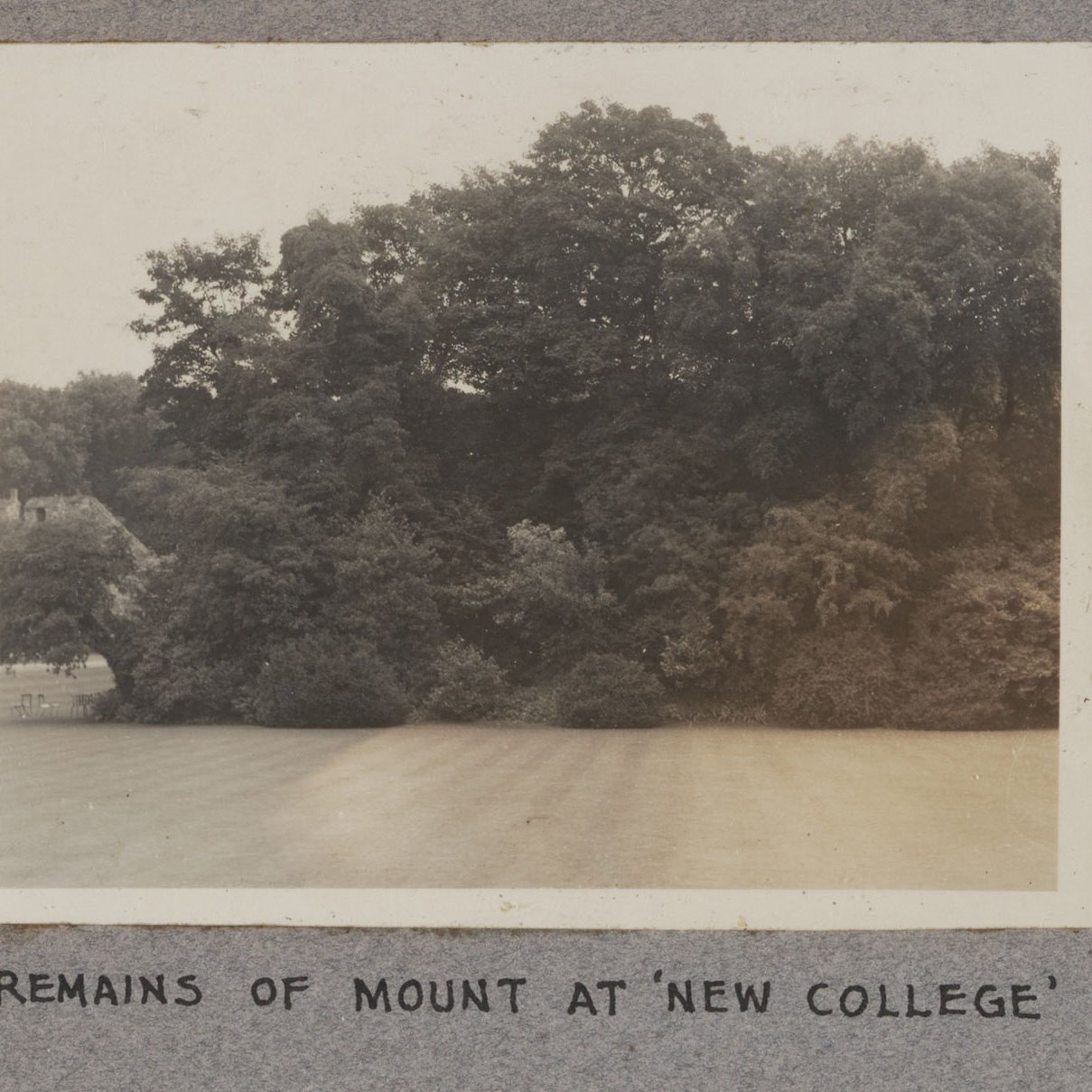
After remains of an earthen mount were discovered in the Governor’s Palace grounds, Shurcliff concluded it was an ice mount, where items were stored partly underground. Photographs like this one of an English earthen mount were points of reference as Shurcliff reconstructed Williamsburg’s eighteenth-century landscape.
Running into Brick Walls
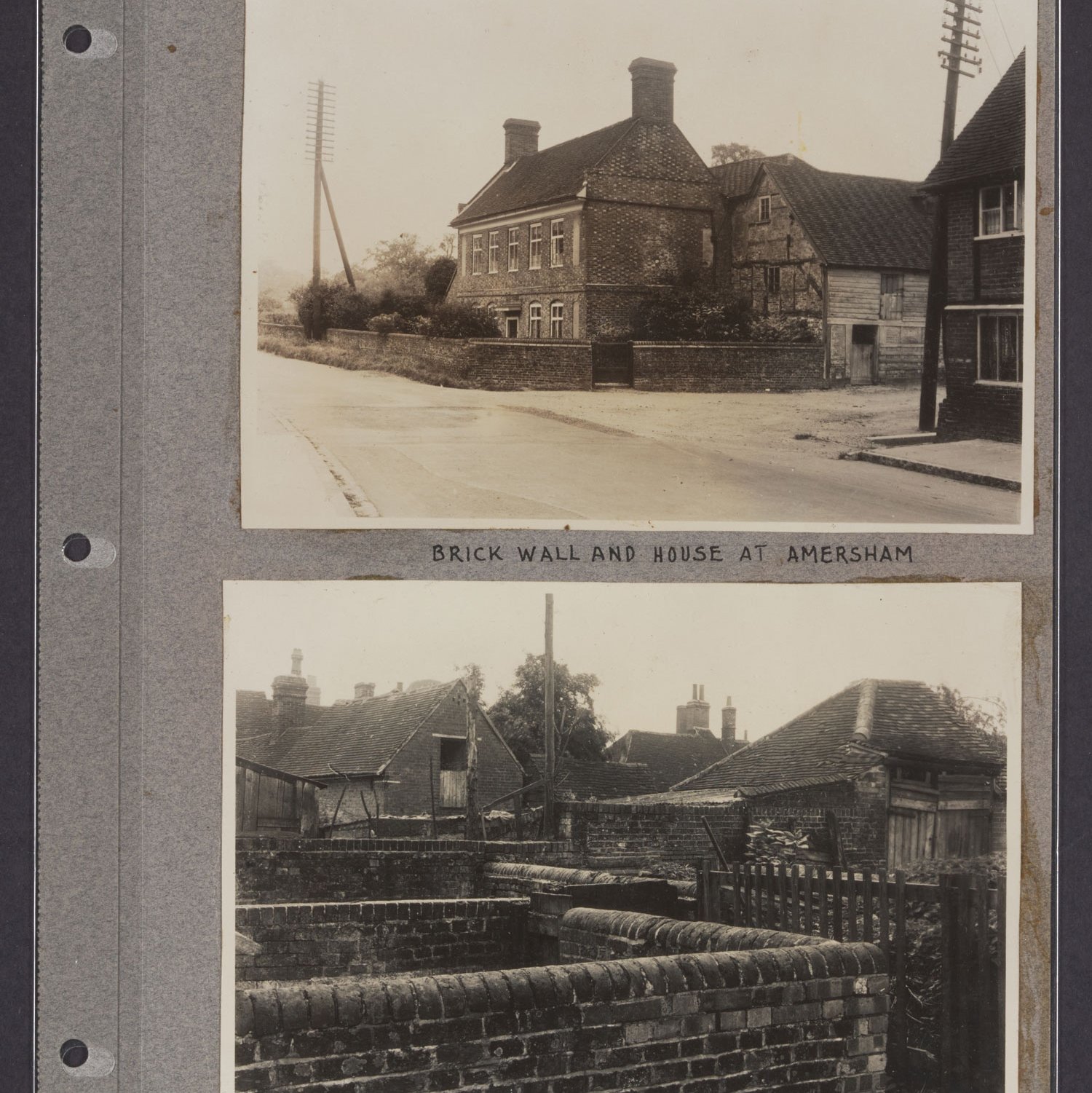
Shurcliff paid close attention not only to plants and features, but also to outbuildings, walls, and fences. The caption of this photograph taken in Amersham, England, shows that Shurcliff’s mind remained back in Virginia: “Williamsburg Type Walls at Amersham.”
On the Fence
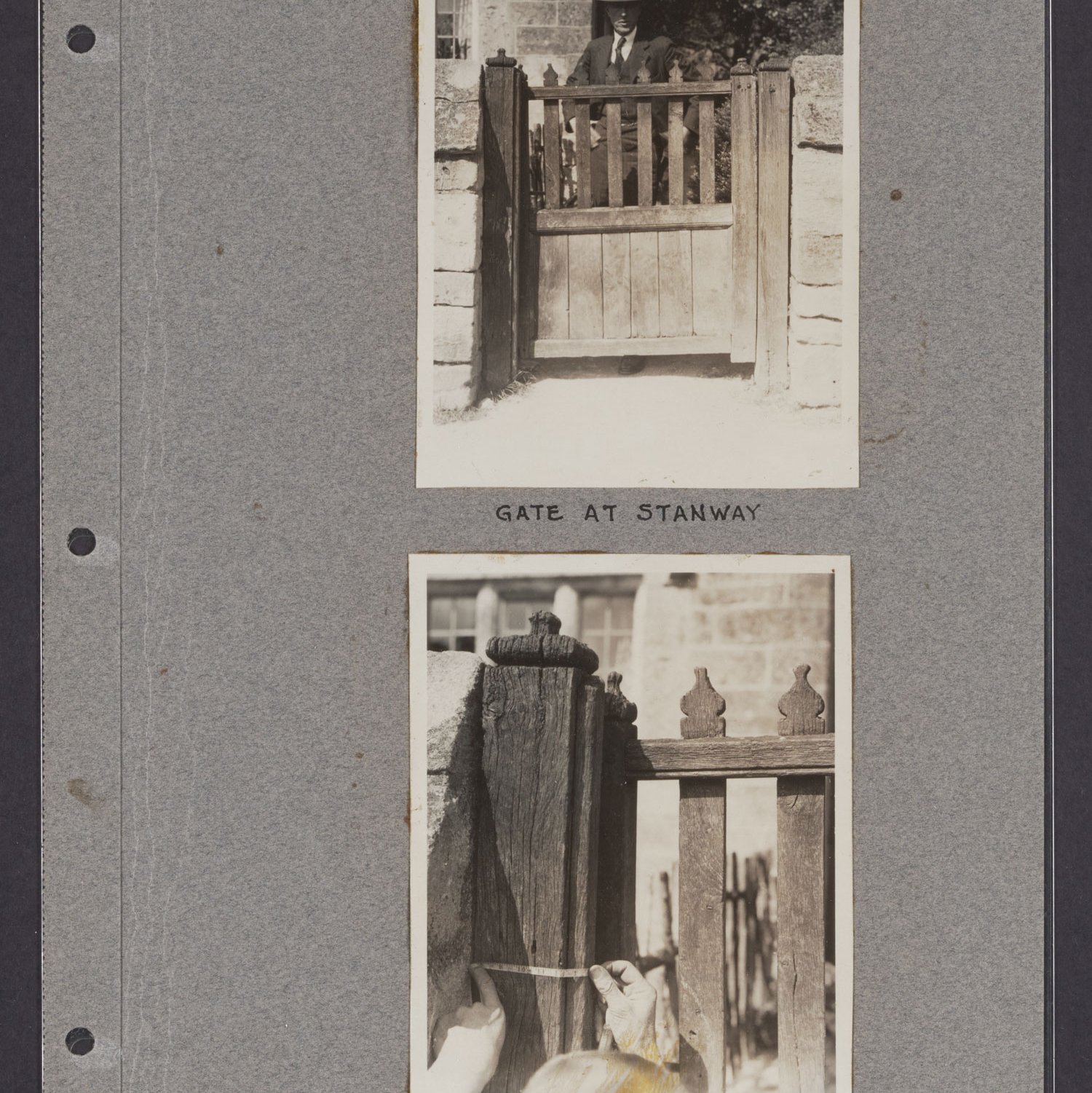
Shurcliff also photographed, measured, and compared details in objects such as fenceposts and gates.
In most cases, Shurcliff had relatively little direct documentary or archaeological evidence of Williamsburg’s gardens to guide his designs. Instead, he and his assistants conducted research in England and across the South to identify a range of eighteenth-century garden designs. They also researched references to gardens in diaries, nursery catalogues, and visitors’ descriptions of these landscapes. The 1767 drawings of a French surveyor in Edenton, North Carolina, proved particularly important.5 Shurcliff and his team also made important discoveries themselves. As they dug up stretches of Williamsburg’s soil, they regularly uncovered artifacts and outbuilding foundations.6
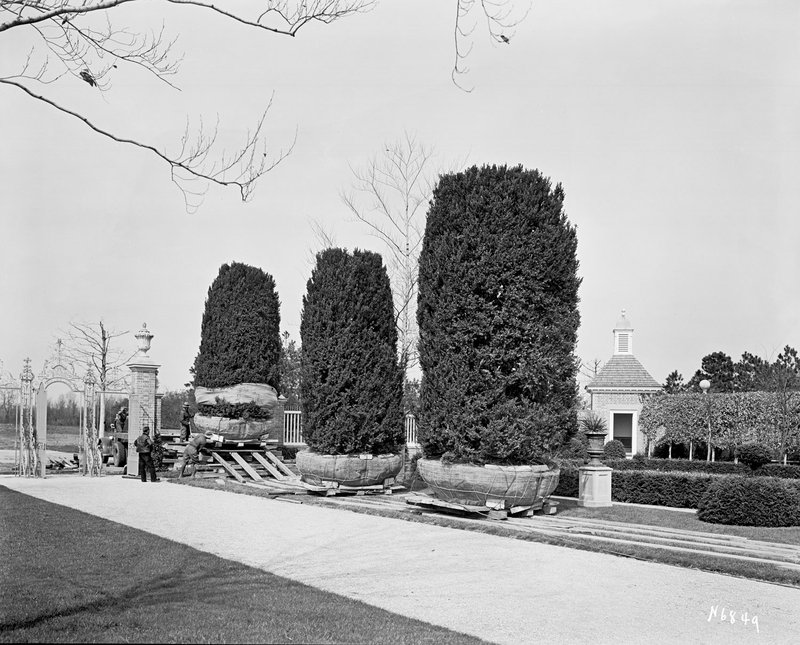
Progress photography of boxwood planting, ca. 1942. Colonial Williamsburg Digital Collections.
Examples from Southern gardens helped convince Shurcliff to include the boxwood plant in many reconstructed landscapes. Once accused by a resident of having “boxwood on the brain,” Shurcliff was responsible for making boxwood an iconic part of the landscape of Colonial Williamsburg’s Historic Area.7
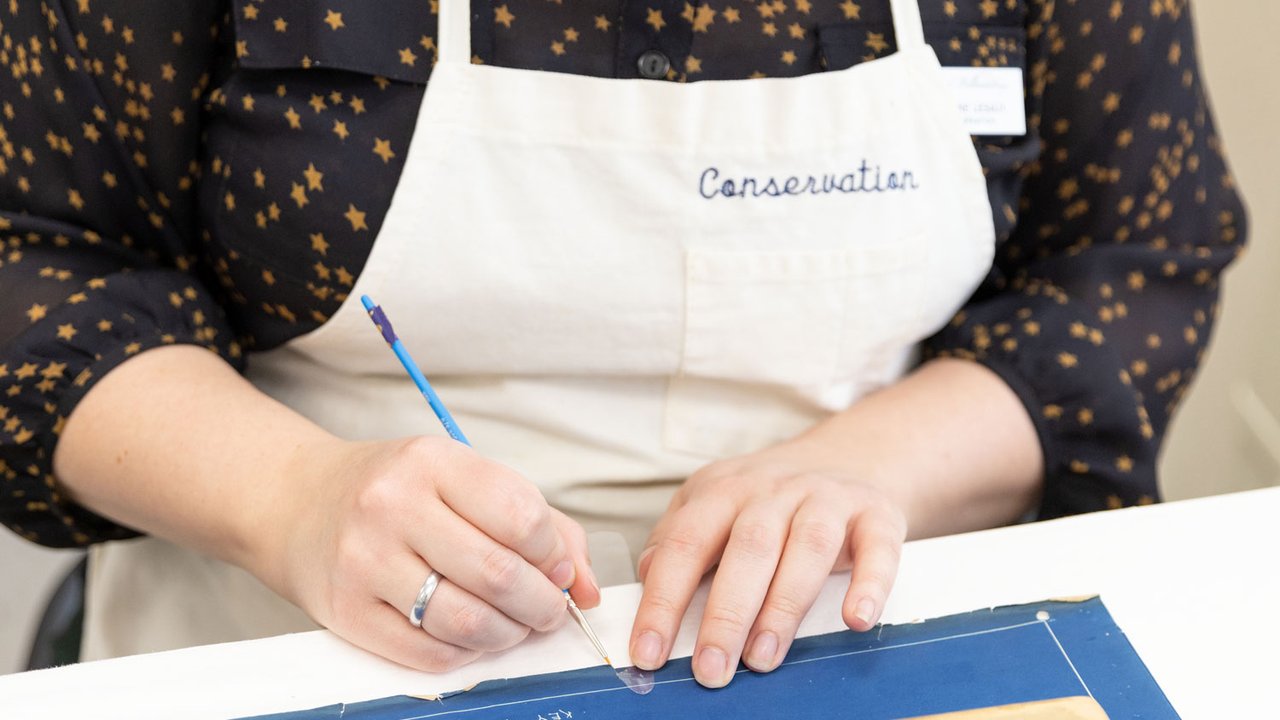
Preserving the “Boxwood Book”
Conserving the book that helped design Colonial Williamsburg’s gardens
Palace Gardens Restoration
Grand landscape visions have taken root in Williamsburg for generations. In the early eighteenth century, Lieutenant Governor Alexander Spotswood designed the grounds surrounding the Governor’s Palace. Pressed by legislators to finish the project and disclose its costs, Spotswood curtly responded, “It is not finisht and I don't know how much it will take.”8 Once finished, the Palace Gardens were some of the most elegant and well-regarded formal pleasure gardens in North America.
Palace Dreams
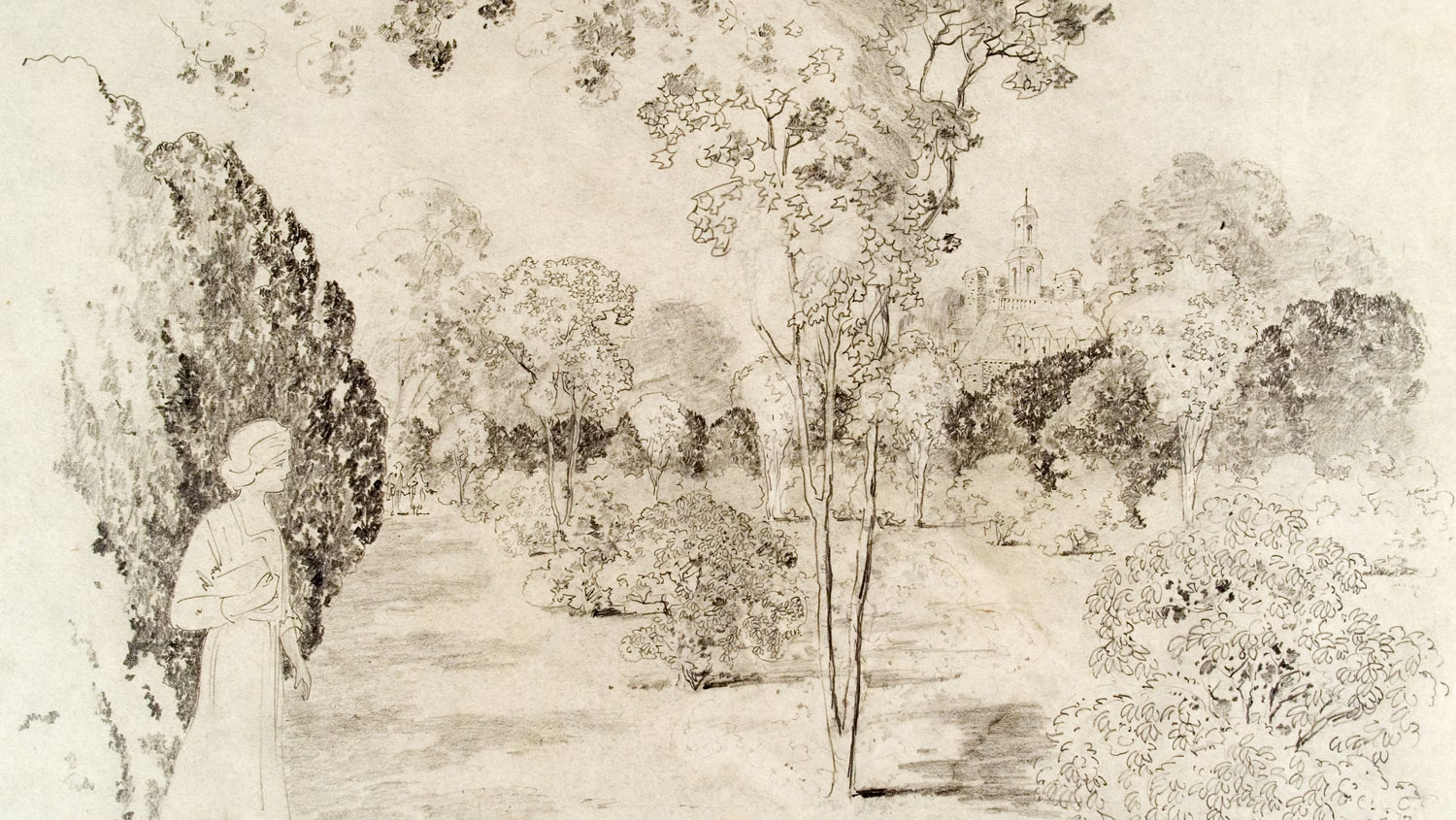
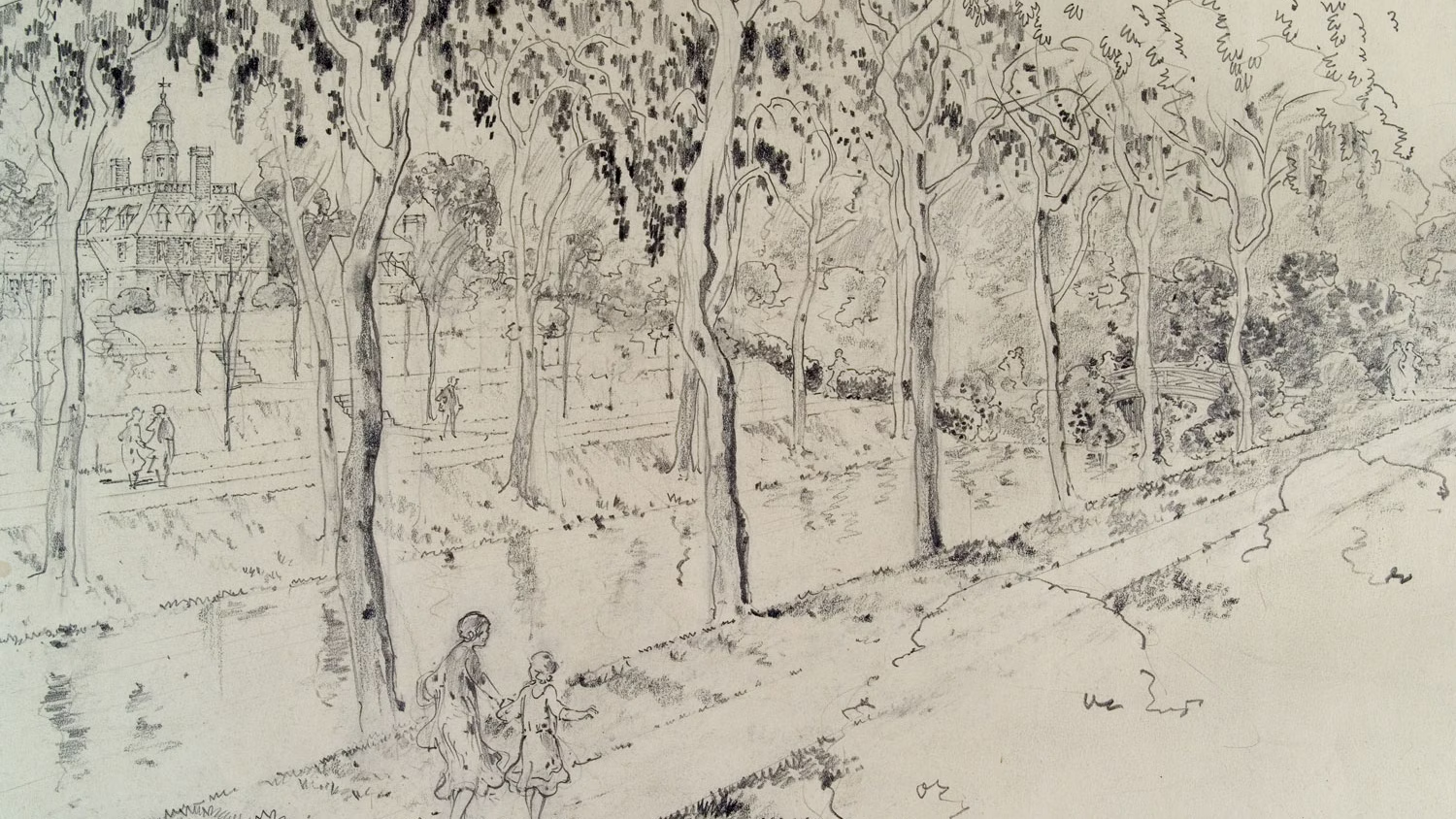
Shurcliff aimed to recreate the gardens of the Williamsburg Governor’s Palace according to the best available evidence. Some of his conceptual sketches from the 1930s reveal his vision for the recreated Palace Gardens.
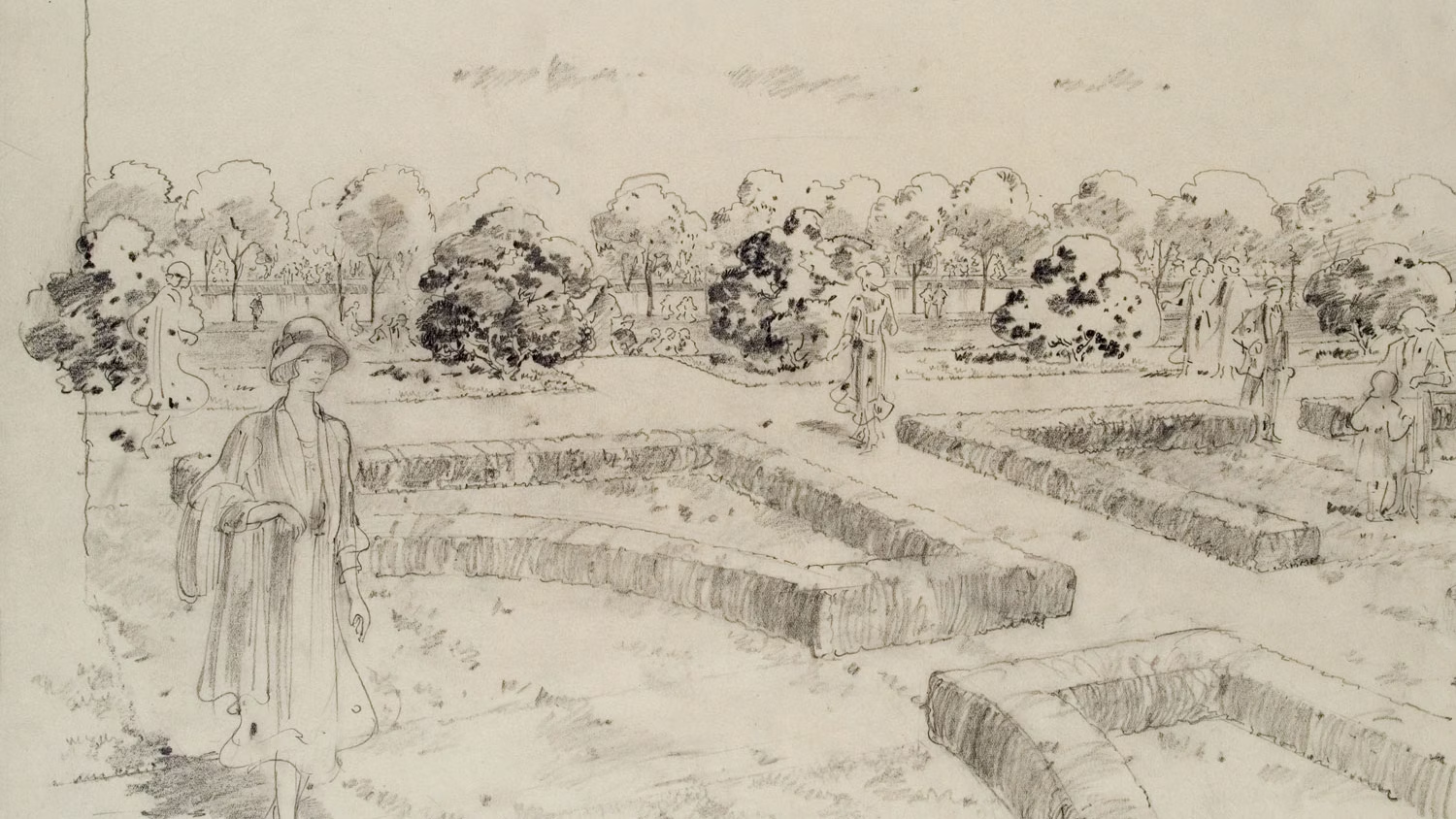
View from the Mount
In October 1932, Shurcliff sketched an imagined reconstruction of the Palace Gardens from the south mount.
Cemetery
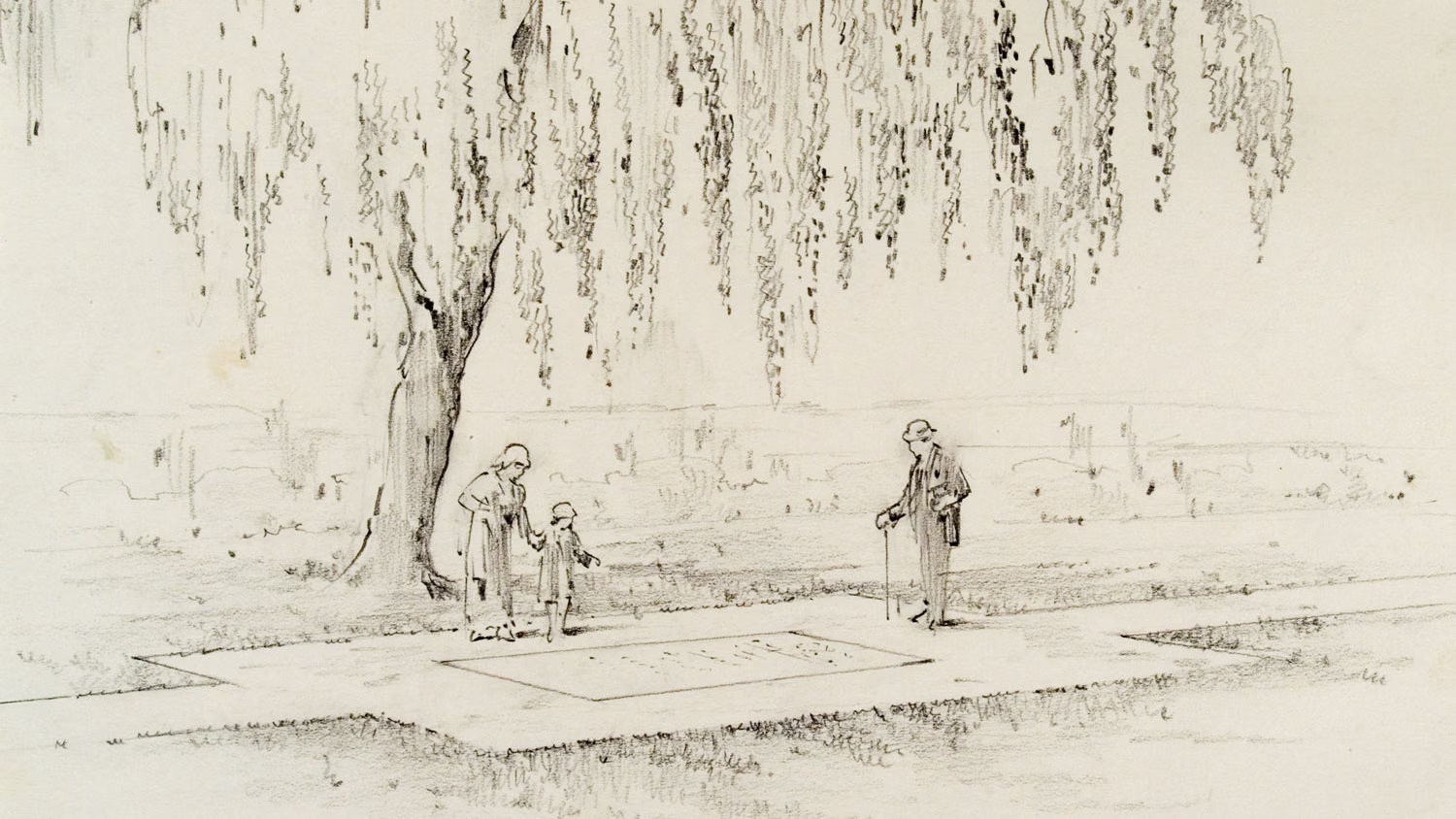
1934 Shurcliff sketch of memorial for Revolutionary War cemetery. This was one of several designs submitted, but was not ultimately selected.
Terraced Garden
1934 Shurcliff sketch of terraced gardens on Governor’s Palace grounds.
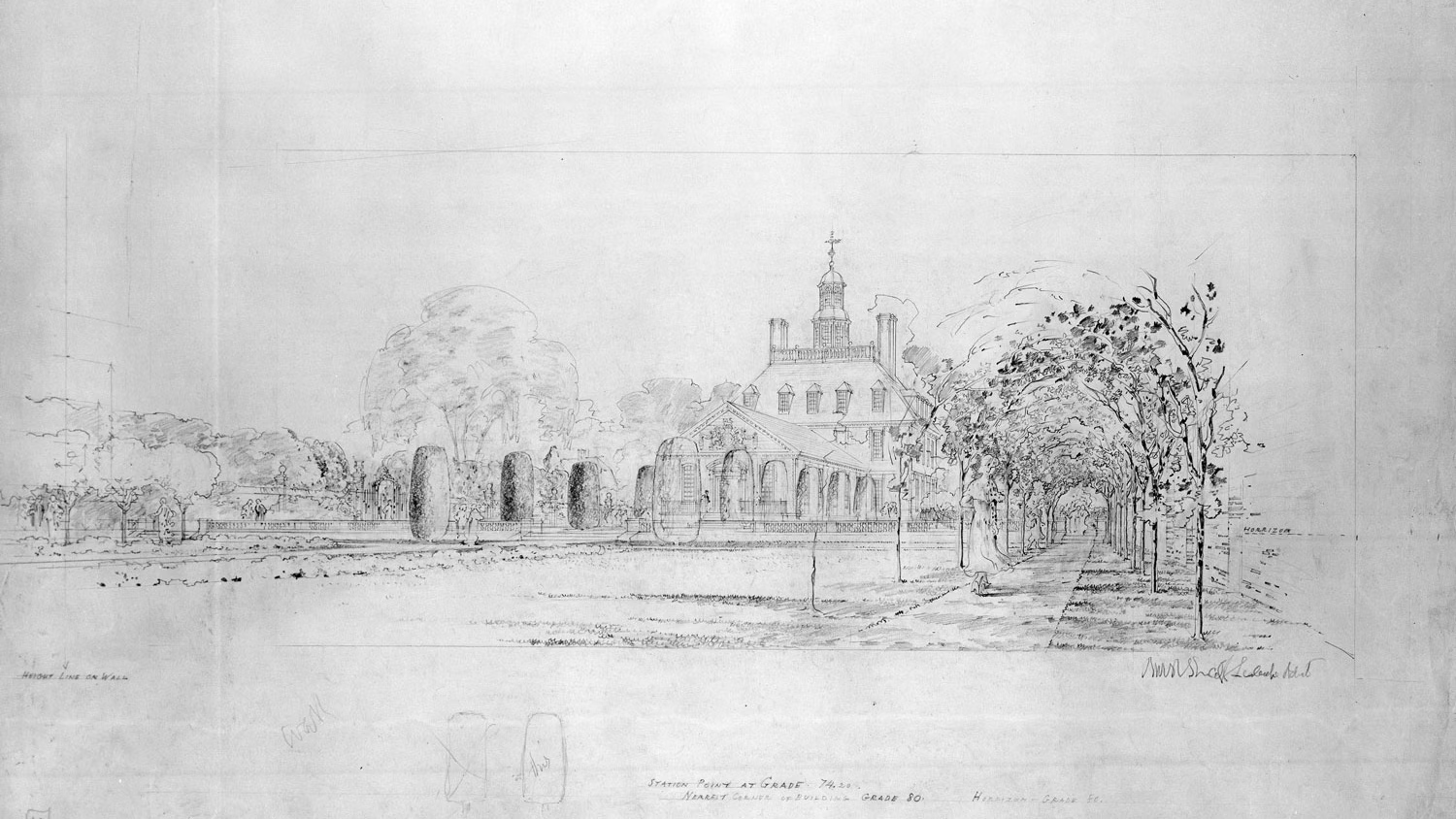
More than two hundred years after they were created, Spotswood’s gardens had disappeared. The canal and fishpond were dry, masked in undergrowth. The geometric parterres and earthen mount had faded beyond memory. When Shurcliff met with restoration leaders about his early designs for the Palace Gardens, he proposed an elaborate plan unrestrained by costs. He ignored their requests for a cost estimate until John D. Rockefeller Jr., the restoration’s financier, demanded a figure. According to one participant’s recollection, Shurcliff’s lackadaisical response that it might cost “between two and five hundred thousand,” drew laughter. Rockefeller was recorded responding sarcastically, “Oh well, let’s just appropriate a million and go to lunch.”9
Indeed, restoring the Palace Gardens was a massive undertaking. The forecourt gardens were based on the designs from the Bodleian Plate. Shurcliff’s designs drew on discoveries during excavations of original features like a canal and an ice mount. The design also accommodated the accidental discovery of a cemetery for Revolutionary War soldiers. But the original Palace lands, which included the gardens as well as woodlands, a park, stables, and pastures spread across hundreds of acres, contained far more than what the physical or documentary record surfaced. Some features, especially the maze, were suppositions on Shurcliff’s part, based on contemporary designs in England and other colonies. As Shurcliff wrote, leaving empty space would be the “most unauthentic thing we could do.”10
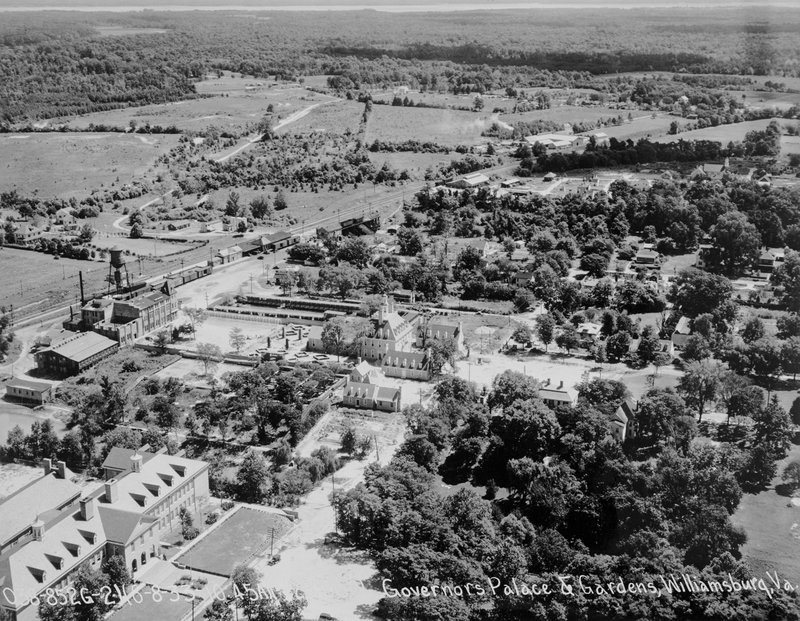
Aerial view of land around Governor’s Palace during reconstruction work, ca. 1933. Colonial Williamsburg Special Collections.
Legacy
Arthur Shurcliff retired from Colonial Williamsburg in 1941. He died in 1957 at age eighty-eight. He was one of the most important figures in Colonial Williamsburg’s first stage of restoration and reconstruction work. He was among the first landscape architects to design and implement a modern, evidence-based historic landscape restoration. And his work was widely admired and copied around the nation, helping to define the “Colonial Revival” style that was popular in 1920s America. His efforts helped to establish Colonial Williamsburg as a leader in the field of historic landscape preservation.
Even so, his design work has been criticized.11 Critics have noted that some of his landscape designs for middling homes, such as Elkanah Deane’s topiary garden, were improbable for their eighteenth-century occupants. Yet Shurcliff was unusual in his time, because his historical landscape designs were always based on the research materials available to him. He lacked the evidence available to modern researchers through advanced archaeological tools and techniques. And while Shurcliff’s visionary designs remain the basis of Colonial Williamsburg’s reconstructed historical landscape today, and have become historically significant in their own right, the museum continues to grow and adapt its 301 acres of buildings and landscapes as new evidence emerges.
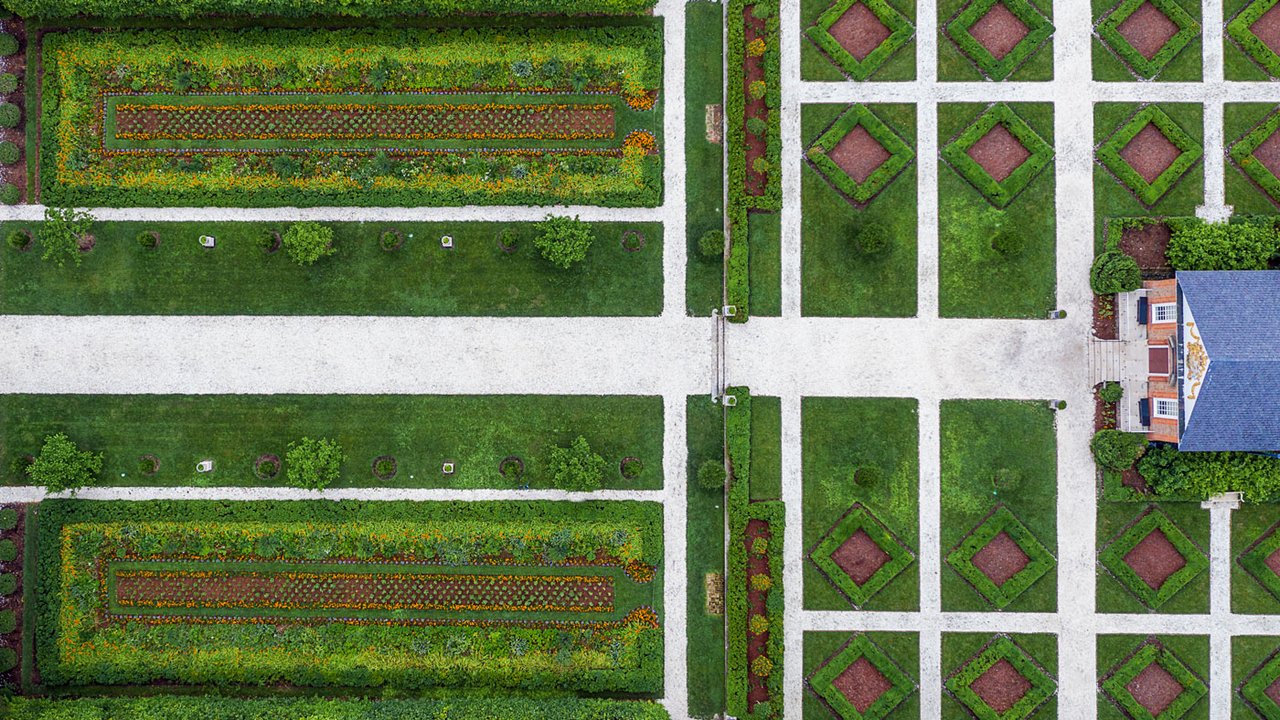
Arboretum & Gardens
More than 30 carefully maintained gardens and 25 period species of oak dot our 301 acre living history museum.
Sources
Cover image: Portrait of Arthur Ashael Shurcliff by Alexander Robertson James, Dublin, New Hampshire, 1928, oil on canvas. Object Number: 1984-64. The Colonial Williamsburg Foundation. Gift of Mr. and Mrs. Arthur A. Shurcliff and Family.
- Elizabeth Hope Cushing, Arthur A. Shurcliff: Design, Preservation, and the Creation of the Colonial Williamsburg Landscape (University of Massachusetts Press, 2014), 218–29.
- Cushing, Arthur A. Shurcliff, 7–21, 31–32.
- Cushing, Arthur A. Shurcliff, 127, 154–165.
- Cushing, Arthur A. Shurcliff, 188, 194. Arthur A. Shurcliff, “Colonial Williamsburg: The Diary (April 1, 1928 to May 21, 1943) of Arthur A. Shurcliff Landscape Architect,” typescript in possession of Colonial Williamsburg John D. Rockefeller Jr. Library.
- Cushing, Arthur A. Shurcliff, 226.
- Cushing, Arthur A. Shurcliff, 205.
- Cushing, Arthur A. Shurcliff, 194–95, 200, 204–6.
- H. R. McIlwaine, ed., Journals of the House of Burgesses of Virginia, 1712–1714, 1715, 1718, 1720–1722, 1723–1726 (Richmond: Colonial Press, 1912), 205, link.
- This story is recounted in Philip Kopper, Colonial Williamsburg (Harry N. Abrams, Inc., 1986), 185.
- Cushing, Arthur A. Shurcliff, 222–28 (quote).
- For one example, see Charles B. Hosmer Jr., “The Colonial Revival in the Public Eye: Williamsburg and Early Garden Restoration,” in Alan Axelrod, Colonial Revival in America: A Winterthur Book (W.W. Norton, 1986), 52–70.