Ivor Noël Hume: Colonial Williamsburg’s Pioneering Historical Archaeologist
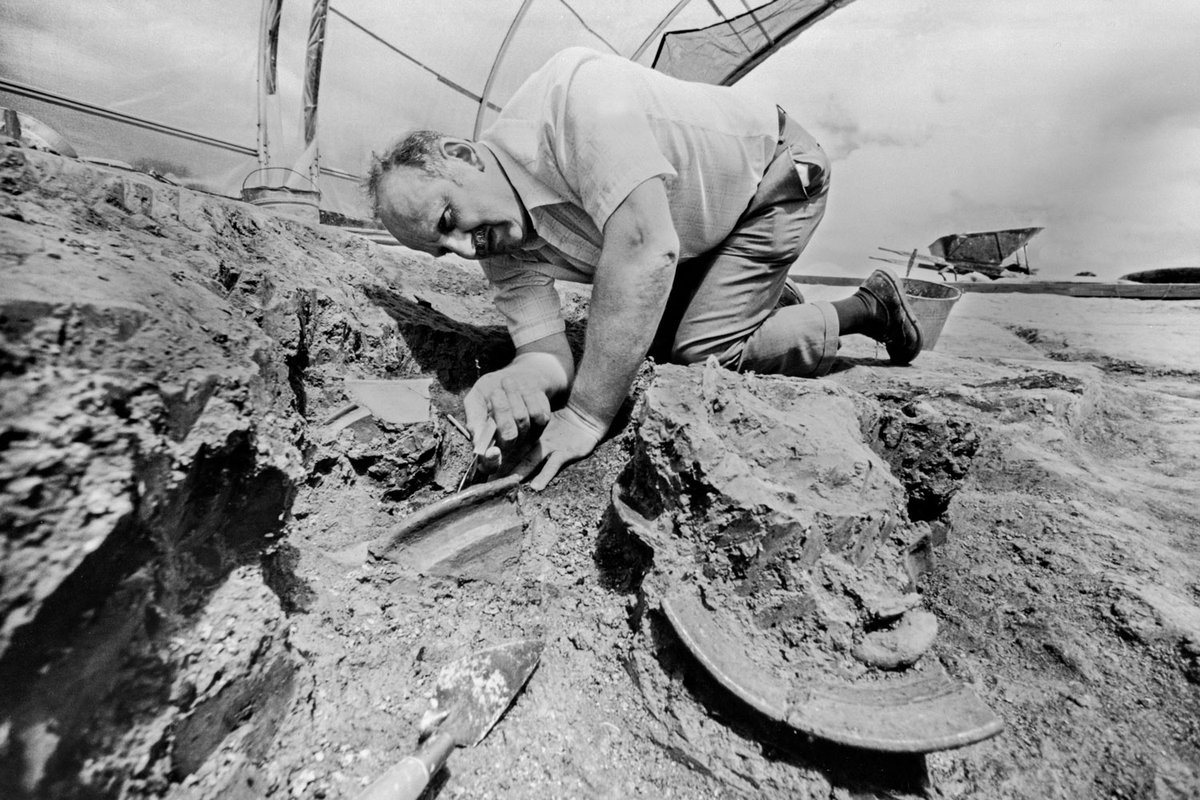
British archaeologist Ivor Noël Hume was the first Director of Archaeology at Colonial Williamsburg, working in that position from 1964 to 1982. He also worked in other roles for CW from 1957 to 1988. In his exhibits, documentary films, countless essays, and more than two dozen books, Noël Hume captivated millions of people with the stories he found beneath Virginia’s ground. While Noël Hume did not invent the craft of historical archaeology, he was one of its foremost early practitioners and popularizers. He is therefore widely regarded as one of the founders of this discipline.
Early Life
Ivor Noël Hume was born in London in 1927. As a young man, he served briefly for the army during World War II. When he returned, he aspired to be a playwright and spent several years struggling for work in theaters. One unemployed day, he later remembered, he was listening to the radio and herd about people who searched for antiquities in the Thames at low tide. He later remembered asking himself, “‘Well, I have nothing else to do. Why don’t I go and do that?’”1 And so he did.
Beginning with this amateur collecting, Noël Hume found his way into London archaeology at an auspicious time. Wartime bombing and postwar rebuilding were unearthing antiquities at construction sites across the city.2 He started as a volunteer but soon found himself in charge of the archaeology program of London’s Guildhall Museum. Never formally trained, Noël Hume learned the craft of archaeology by practicing it. He learned much from a volunteer named Audrey Baines. Audrey was educated at the University of Bristol in Roman history and archaeology. They soon married and became lifelong collaborators. Ivor Noël Hume later commented that during their early years especially, she “knew a hell of a lot more about archaeology than I did.”3 For decades, Audrey supported and advanced Ivor’s work with her expert insight, careful scholarship, and diligent lab work.
Audrey Noël Hume
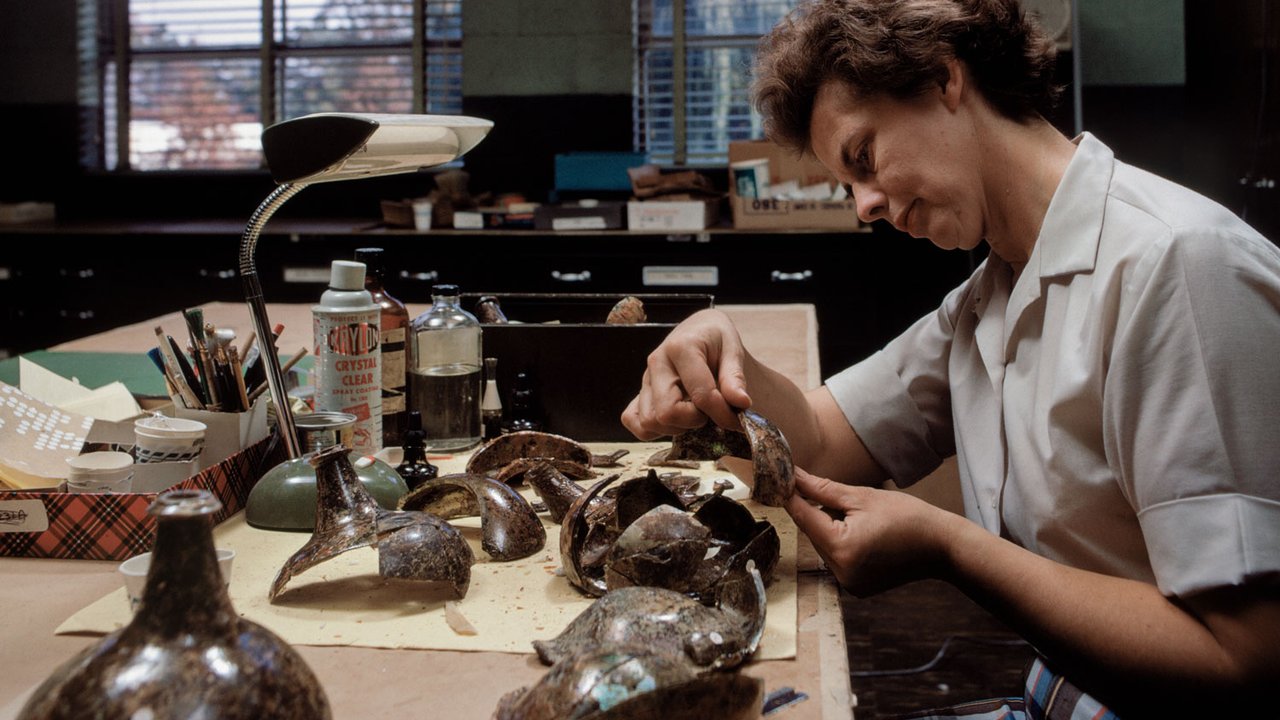
One of the first professionally trained archaeologists at Colonial Williamsburg, Audrey Baines Noël Hume made important contributions to understanding the story of Williamsburg’s complex eighteenth-century community.
Colonial Williamsburg
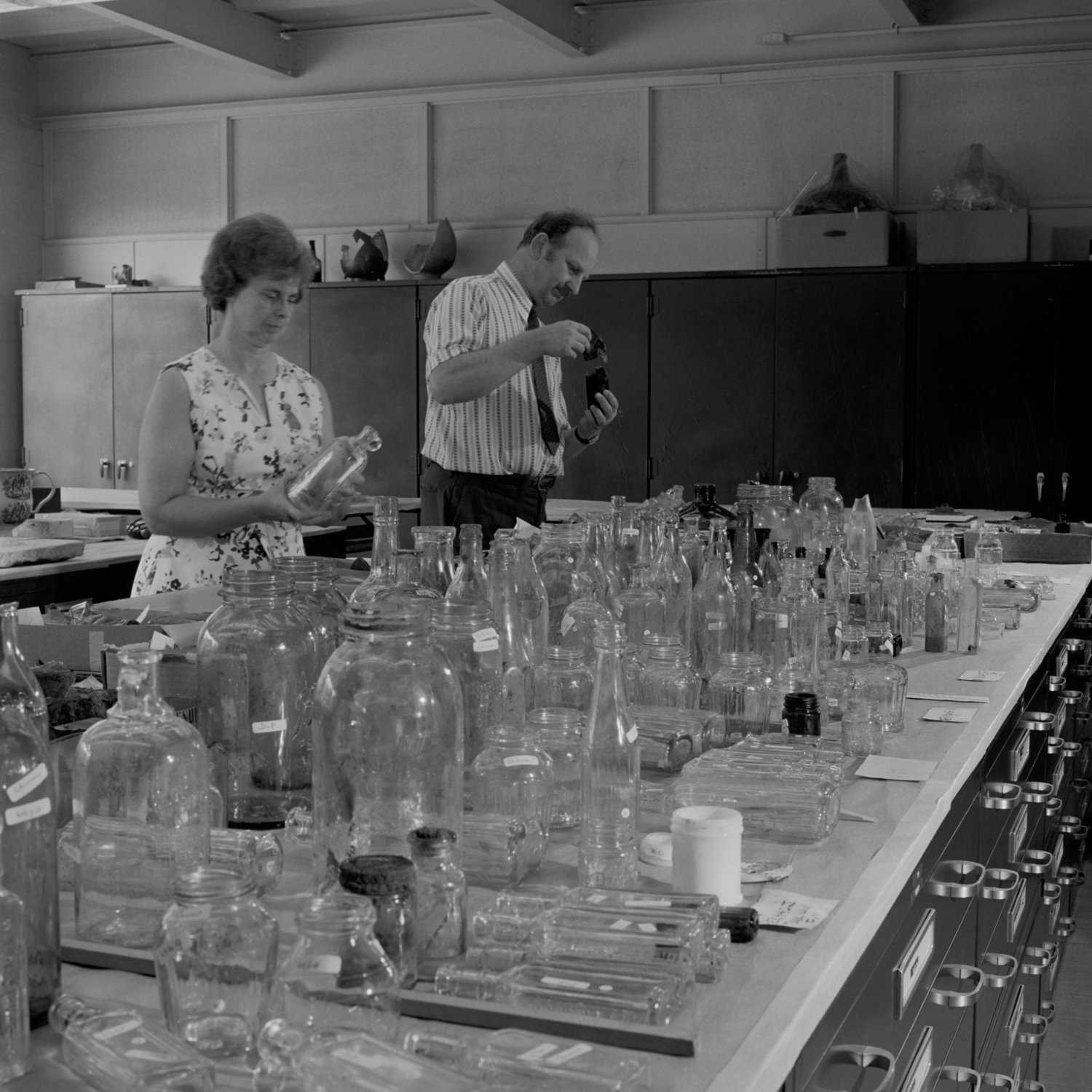
Finding vast amounts of broken glass in its excavations, in 1956 Colonial Williamsburg sought out an expert in eighteenth-century English wine bottle glass. At the time, English archaeologists usually specialized in ancient or medieval sites, rather than the comparatively modern eighteenth century. Ivor Noël Hume was one of the only archaeologists knowledgeable about wine bottle glass. Colonial Williamsburg hired him and Audrey Noël Hume, initially as consultants for three months.4
The Noël Humes were hired permanently in 1957 and worked for Colonial Williamsburg for decades. They slowly transformed how the institution researched its historic sites. Whereas the institution’s earliest excavations had focused on identifying building foundations for architectural reconstructions, the Noël Humes were more interested in collecting and identifying artifacts. Ivor and Audrey Noël Hume helped to build a more professional archaeological operation for Colonial Williamsburg with lab facilities, trained crews, ambitious exhibitions, and extensive public outreach.
Major Excavations
Ivor Noël Hume oversaw dozens of excavations in Williamsburg, including the Anthony Hay site, George Wythe house, George Reid House, John Custis property, Wetherburn’s Tavern, Charlton House, Brush-Everard Site, and James Anderson House.

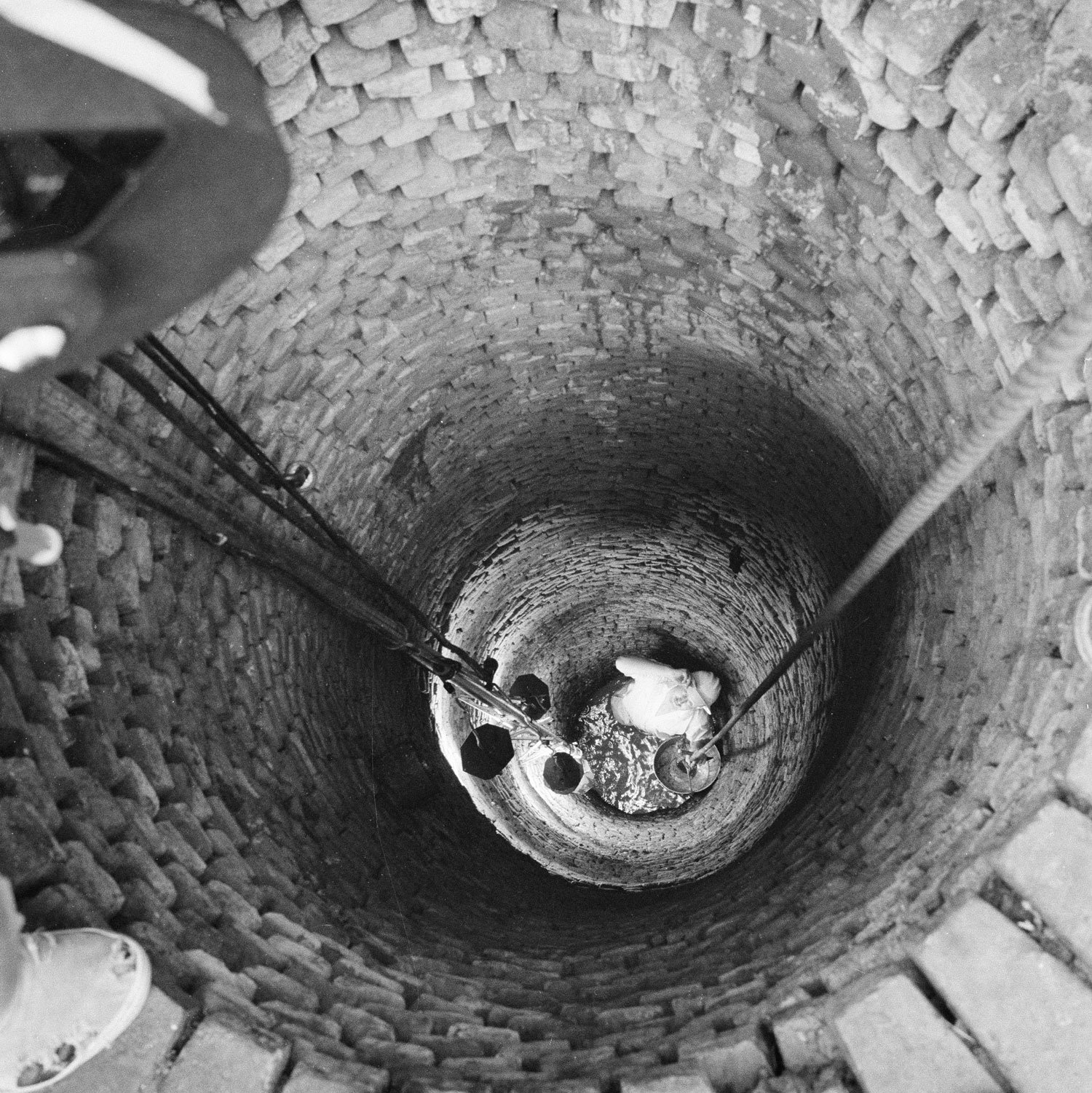
Wythe House
In 1958 and 1959, Noël Hume led excavations of two wells and an outbuilding at the Wythe House. While the wells contained little eighteenth-century material (they were full of tourists’ Coca-Cola bottles and camera flashbulbs), excavations proved the unknown outbuilding was a dairy.(5)
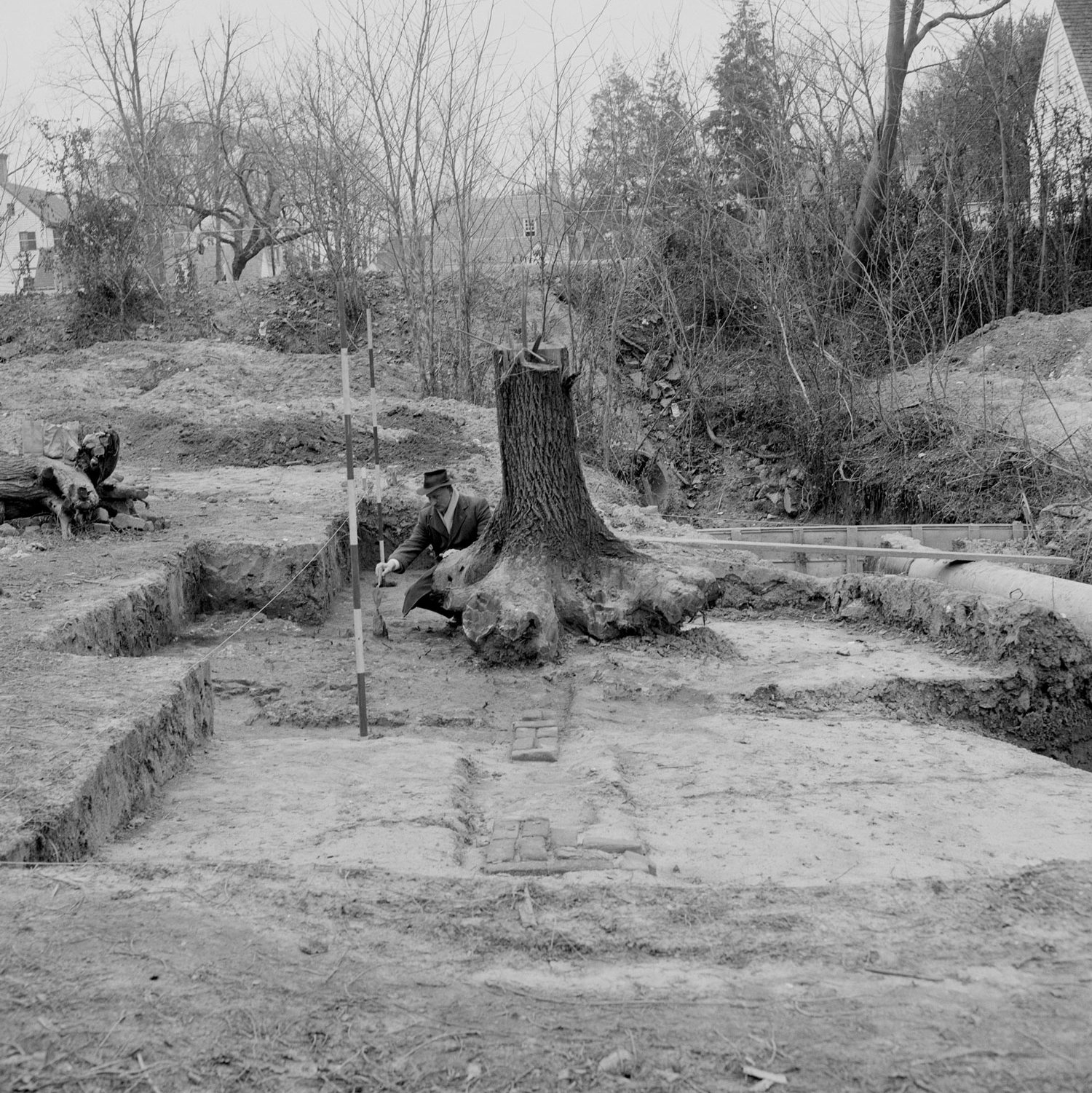
Anthony Hay Cabinet Shop
Archaeological investigation of the site of the Anthony Hay Cabinetmaking Shop from 1959 to 1960 aimed to understand the work performed there and its residents’ standards of living. The excavation uncovered the foundations of a shop, home, and kitchen, landscape features including a well, and thousands of artifacts.(6)
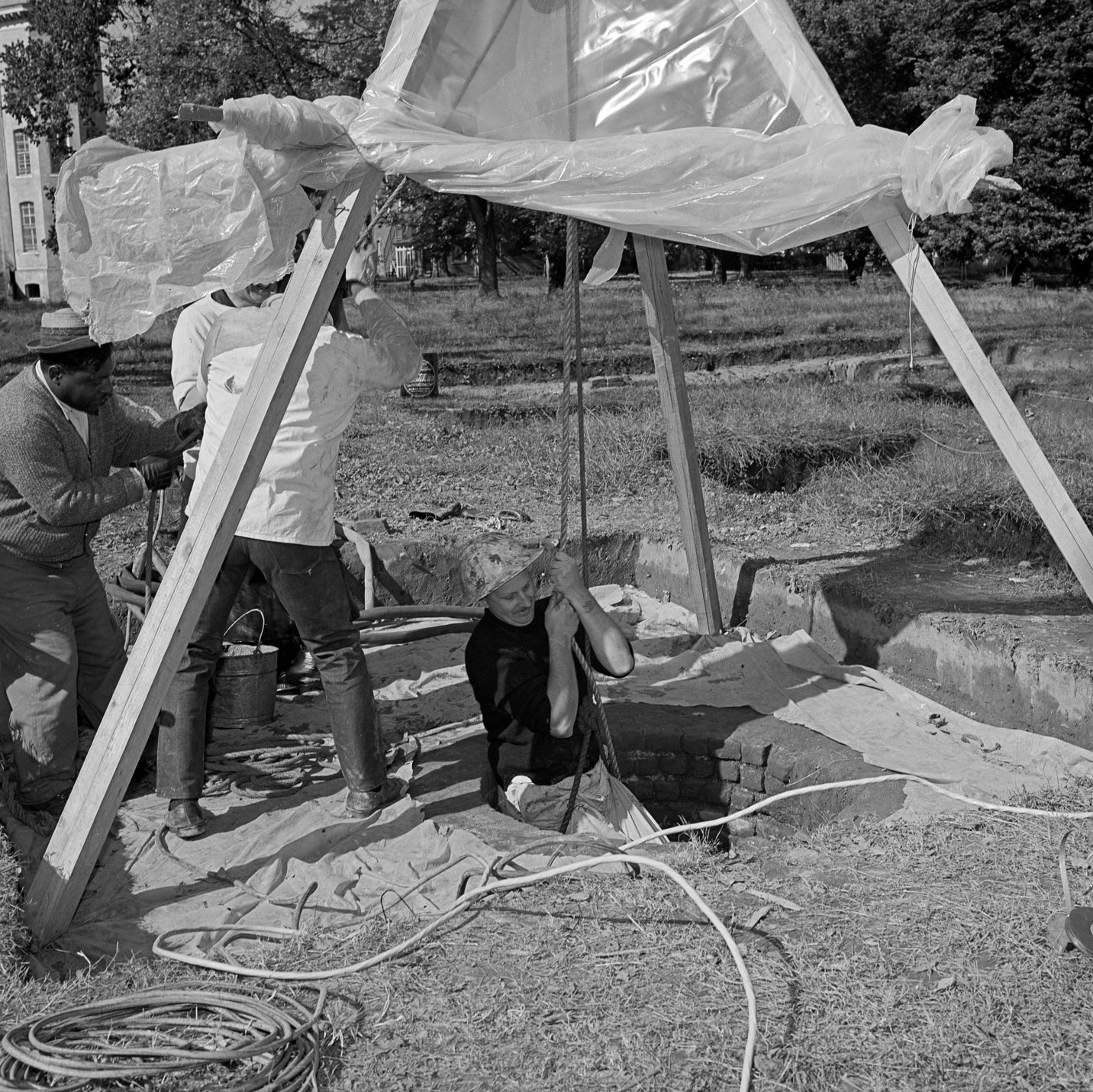
Custis Square
1960s excavations of the land owned by John Custis IV uncovered a cellar, kitchen, dairy, and two wells. Among other findings were decorative flowerpots, reflecting Custis’s deep interest in gardening. Colonial Williamsburg archaeologists built on this work in an excavation that began in 2020.(7)
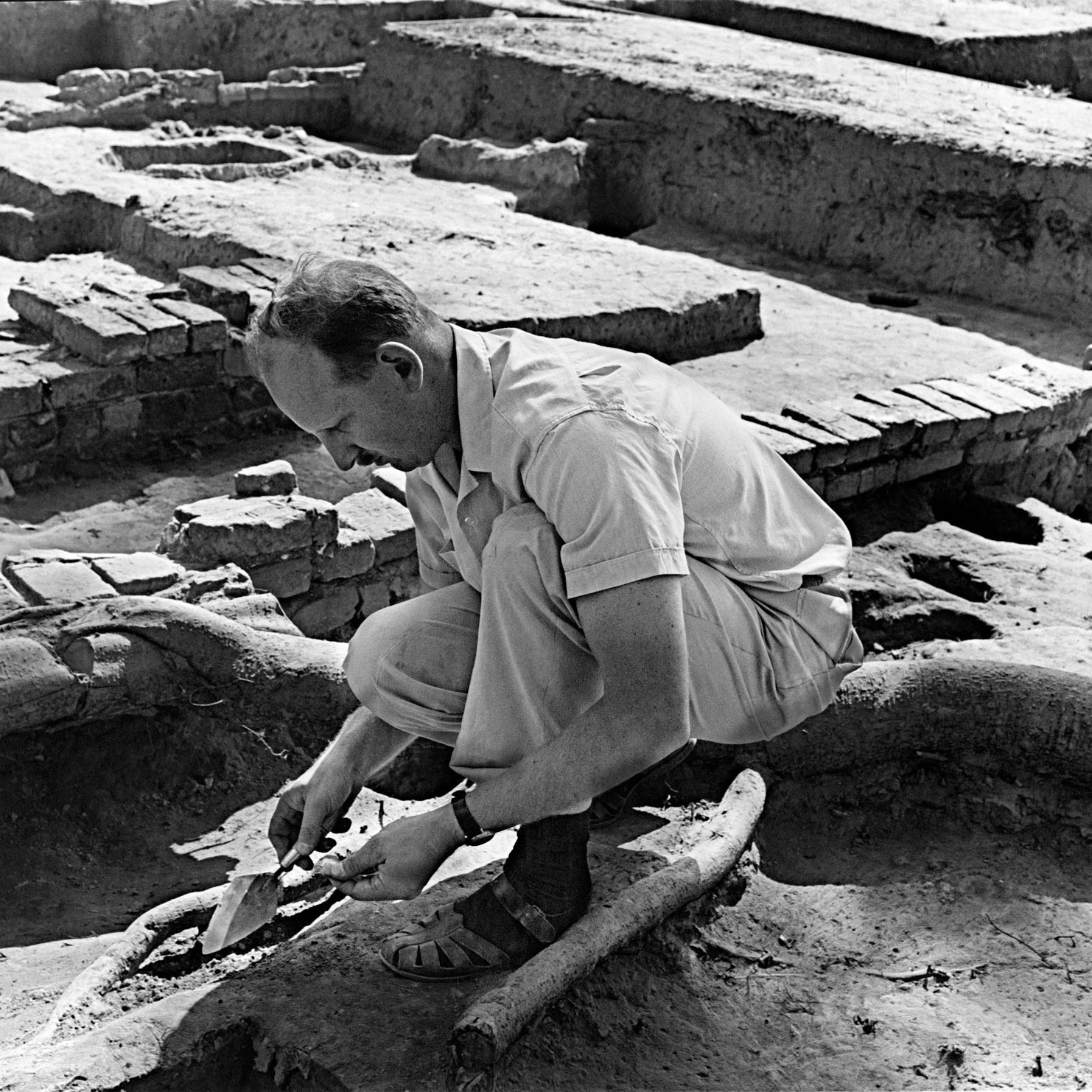
Wetherburn’s Tavern
Excavations at the site of Wetherburn’s Tavern in 1965 and 1966 uncovered about 200,000 artifacts, including numerous decorative Chinese porcelain tea bowls, saucers, and teapots. This raised new questions about Wetherburns’ clientele. Was it an ordinary tavern or more of an elite coffee house?(8)
Public Hospital
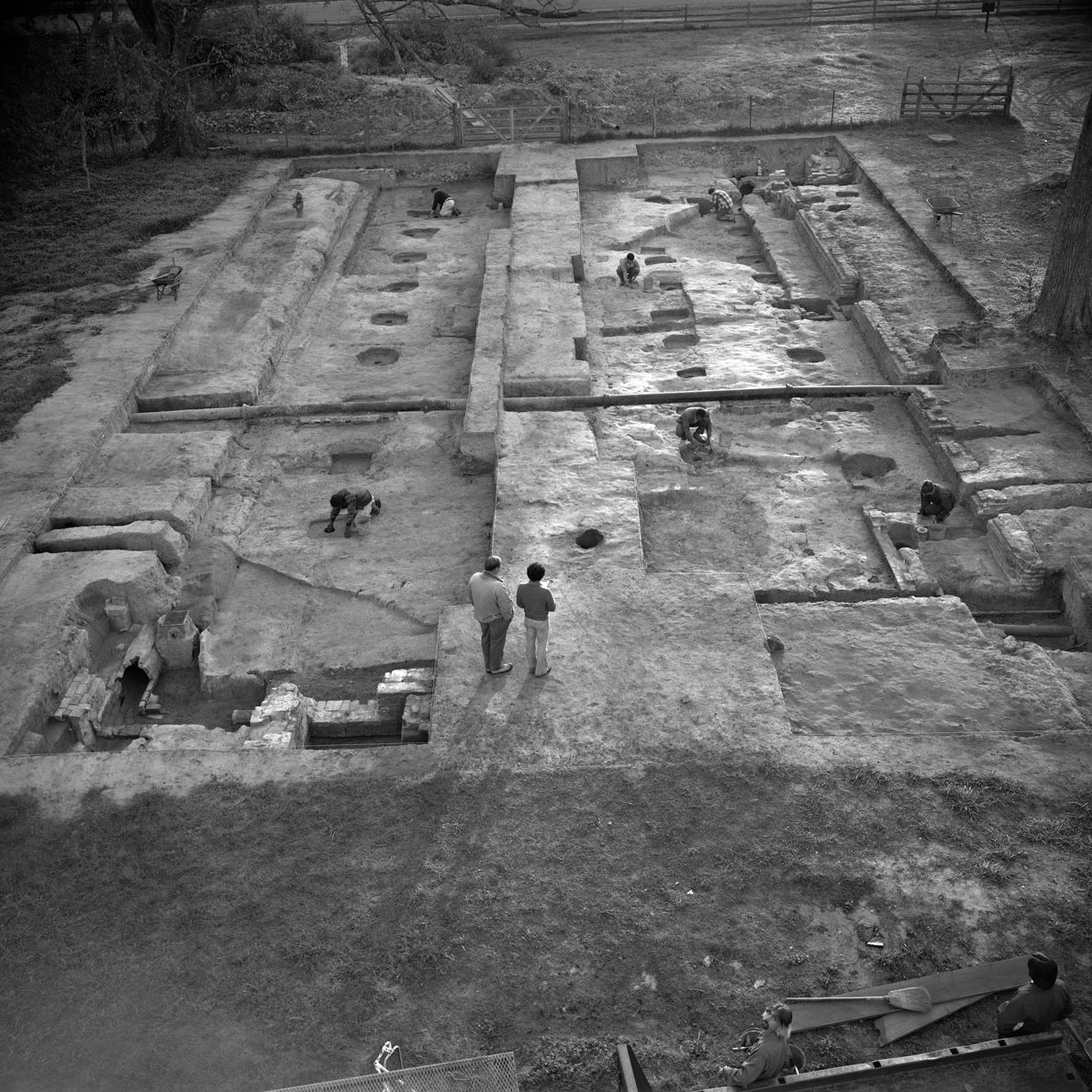
Excavations undertaken in the 1970s and early 1980s discovered evidence of the 1773 Public Hospital building, its outbuildings, boundary fences, and more. In 1985, the hospital was reconstructed on its original foundations.(9)
James Anderson House
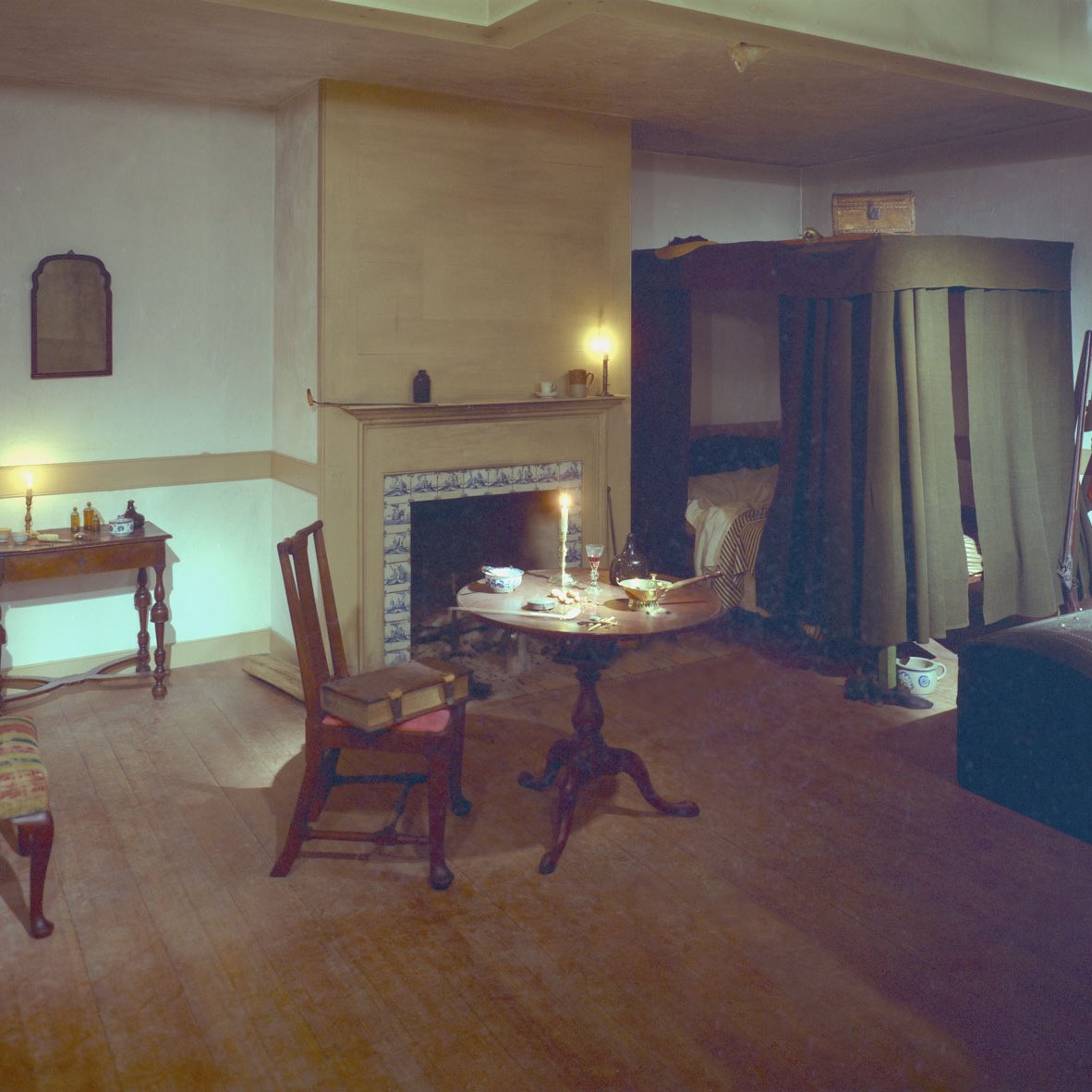
Excavations of the lot occupied by Public Armorer James Anderson during the Revolutionary War found evidence of its growing capacity during the war. Archaeological findings were the basis of this exhibit, called “The Traveler’s Room,” at the Anderson house.(10)
Carter’s Grove
During the 1970s, archaeological research led by Ivor Noël Hume at a plantation site known as Carter’s Grove uncovered numerous important discoveries. While aiming to answer questions about the site’s eighteenth-century history, archaeologists “stumbled into the wrong century,” as Noël Hume later put it.11 The excavation uncovered an early seventeenth-century settlement known as Martin’s Hundred, including its burial grounds, and its central hub Wolstenholme Towne. Built on Powhatan land, the site was one of the earliest English settlements in North America. It had been forgotten since its destruction in 1622 by Powhatan warriors.
Discoveries
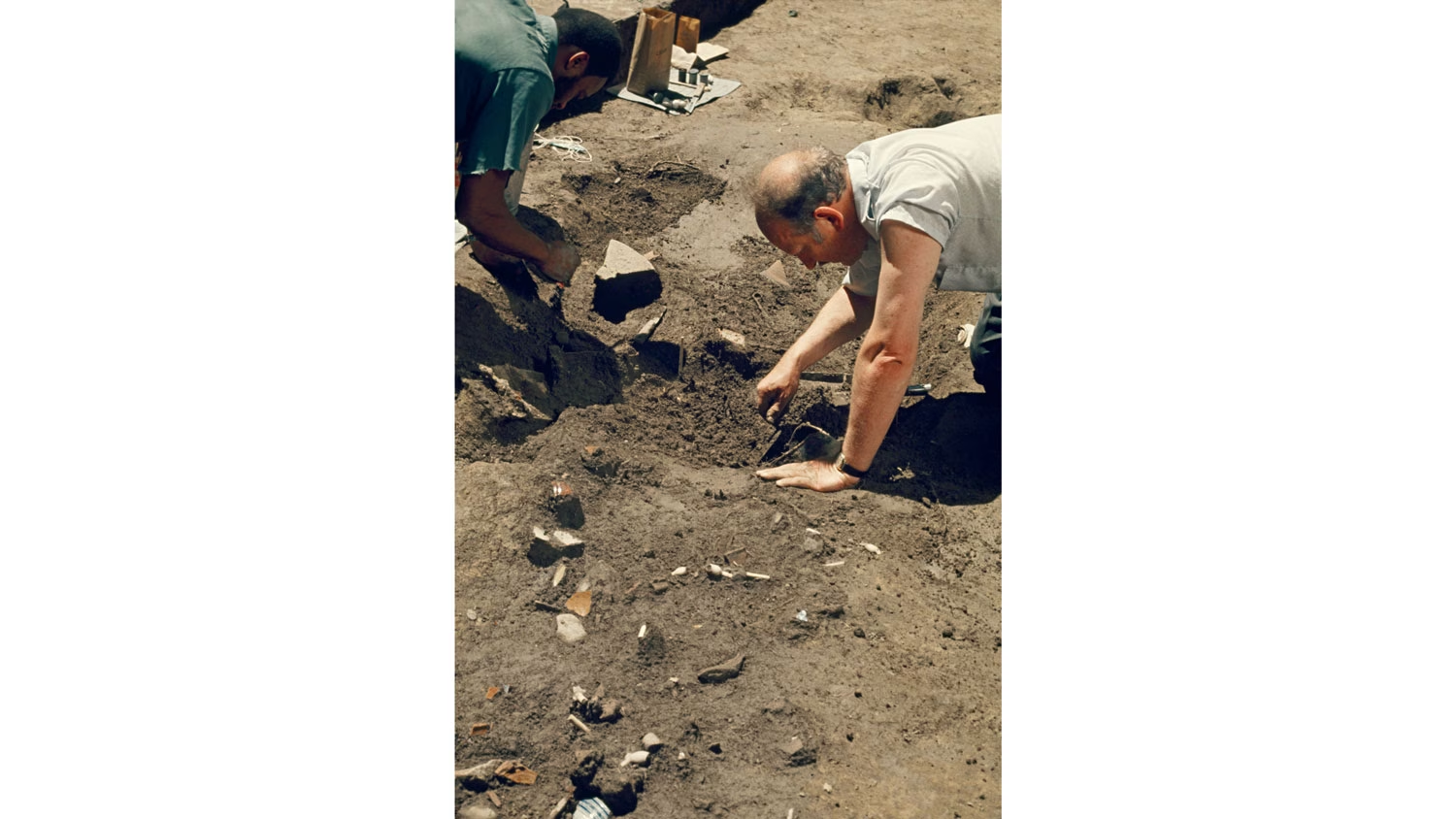
Across decades of excavations, the Colonial Williamsburg archaeology team under Ivor Noël Hume’s direction unearthed numerous artifacts that help us better understand life in early Virginia.
Preserved Cherries
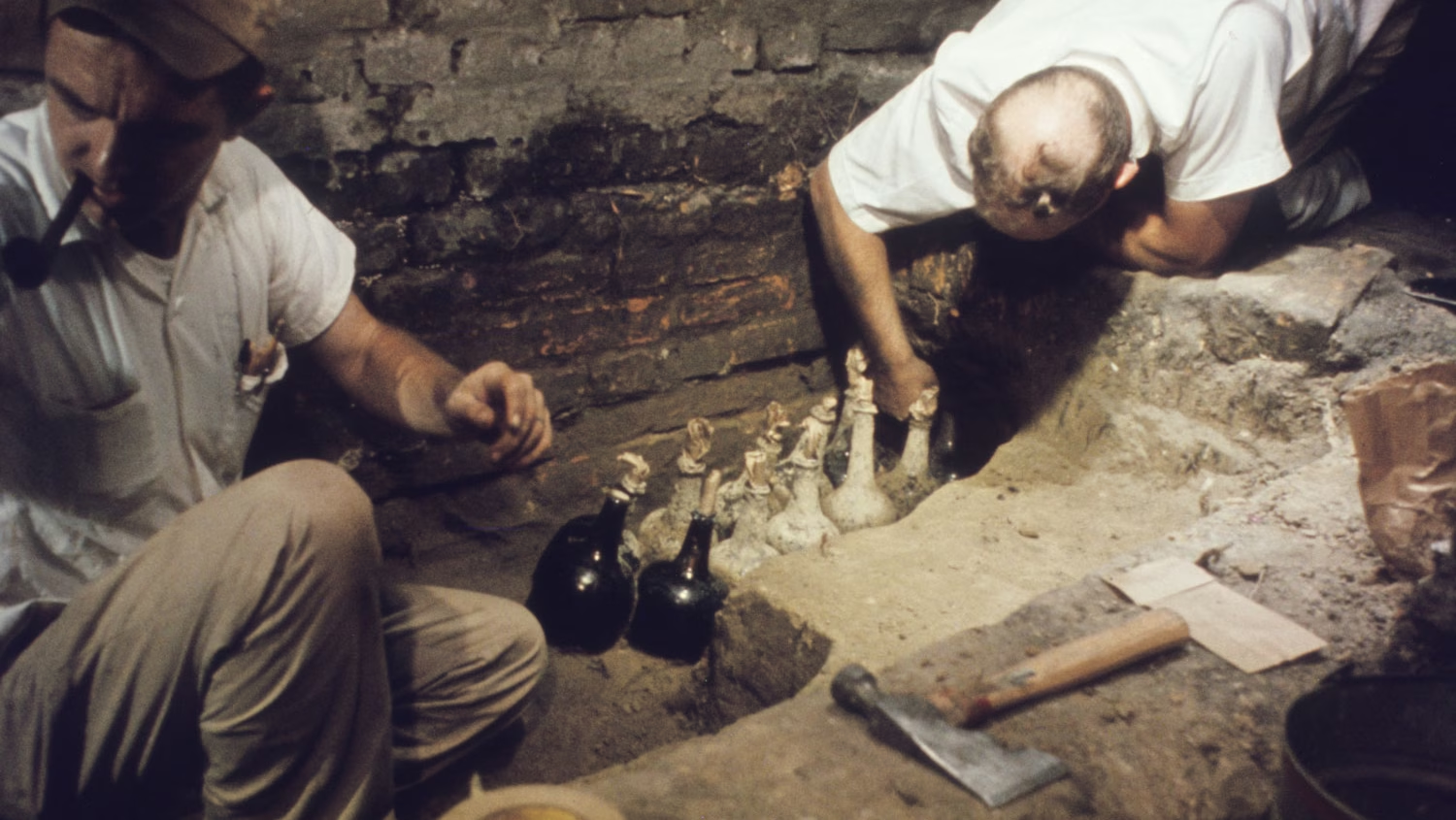
In 1965, archaeologists at Wetherburn’s Tavern found 47 buried wine bottles containing Morello cherries, revealing early food preservation practices.(12)
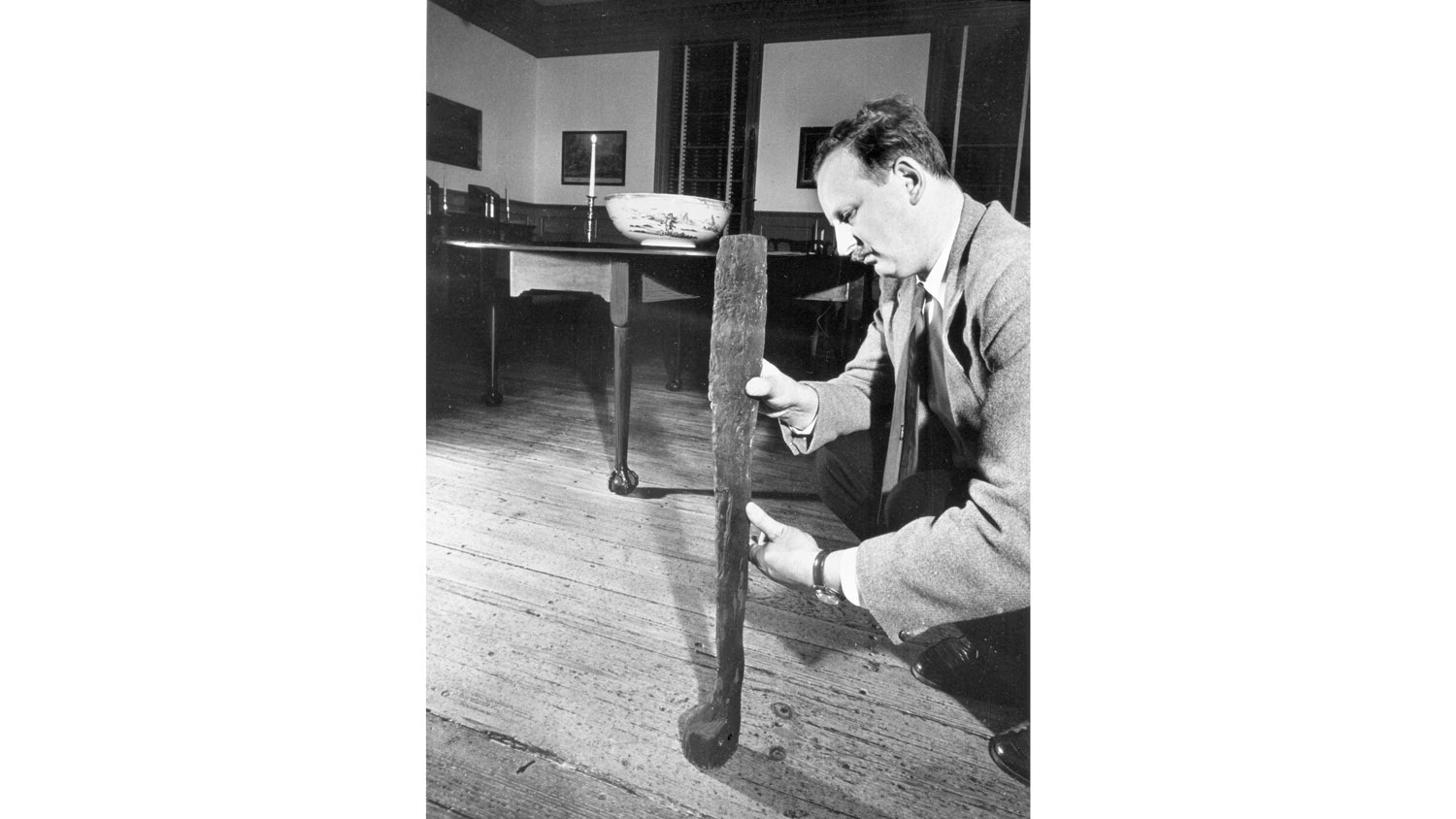
A Table Leg
This unfinished walnut table leg was found at the Hay Cabinetmaking shop. Here, Noël Hume compares it to a table leg in the Raleigh Tavern.
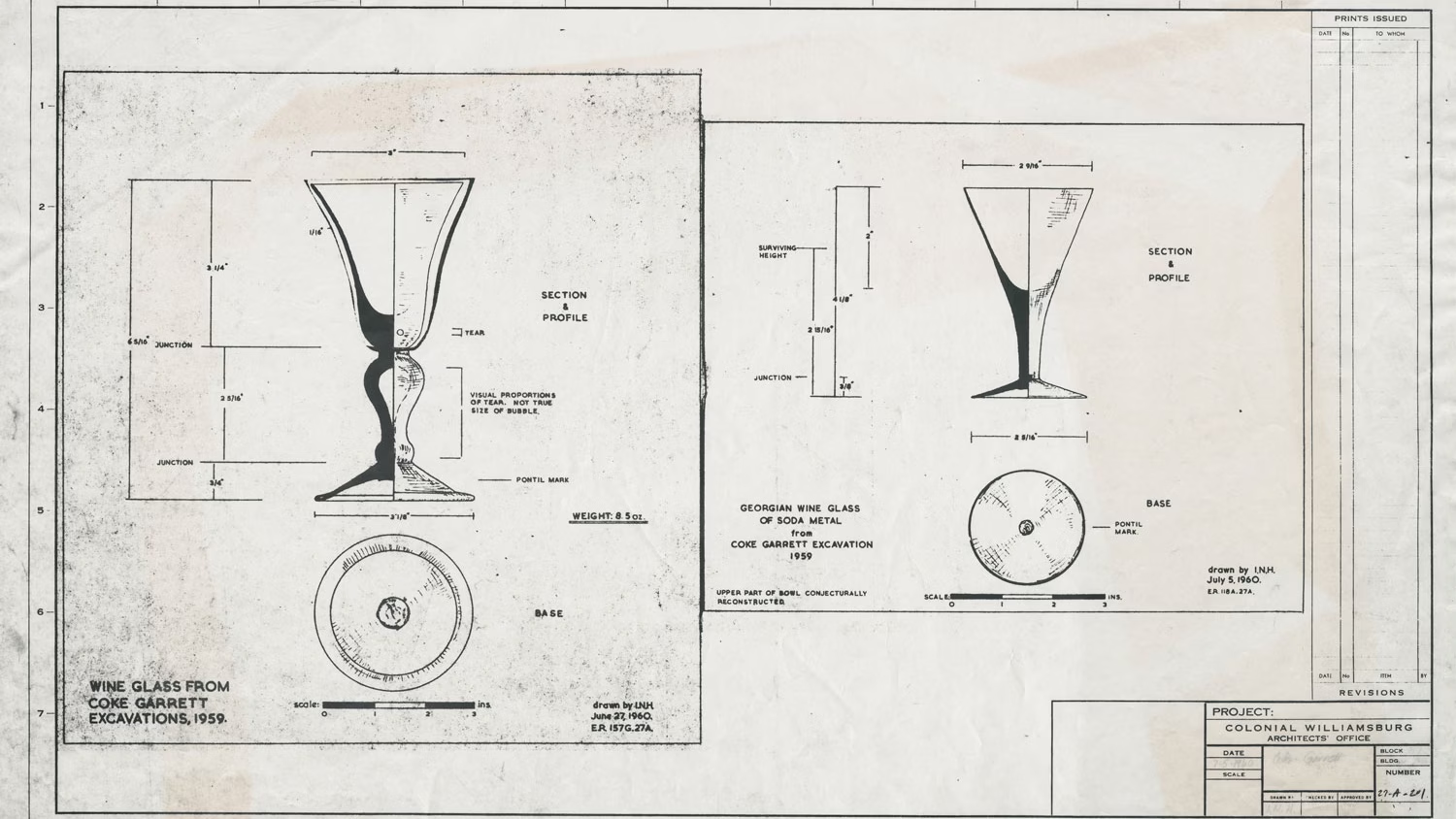
Wine Glasses
1959 excavations at the Coke-Garrett House yielded fragments of over 100 wine bottles and intact glasses from the early 18th century (drawn here).(13)
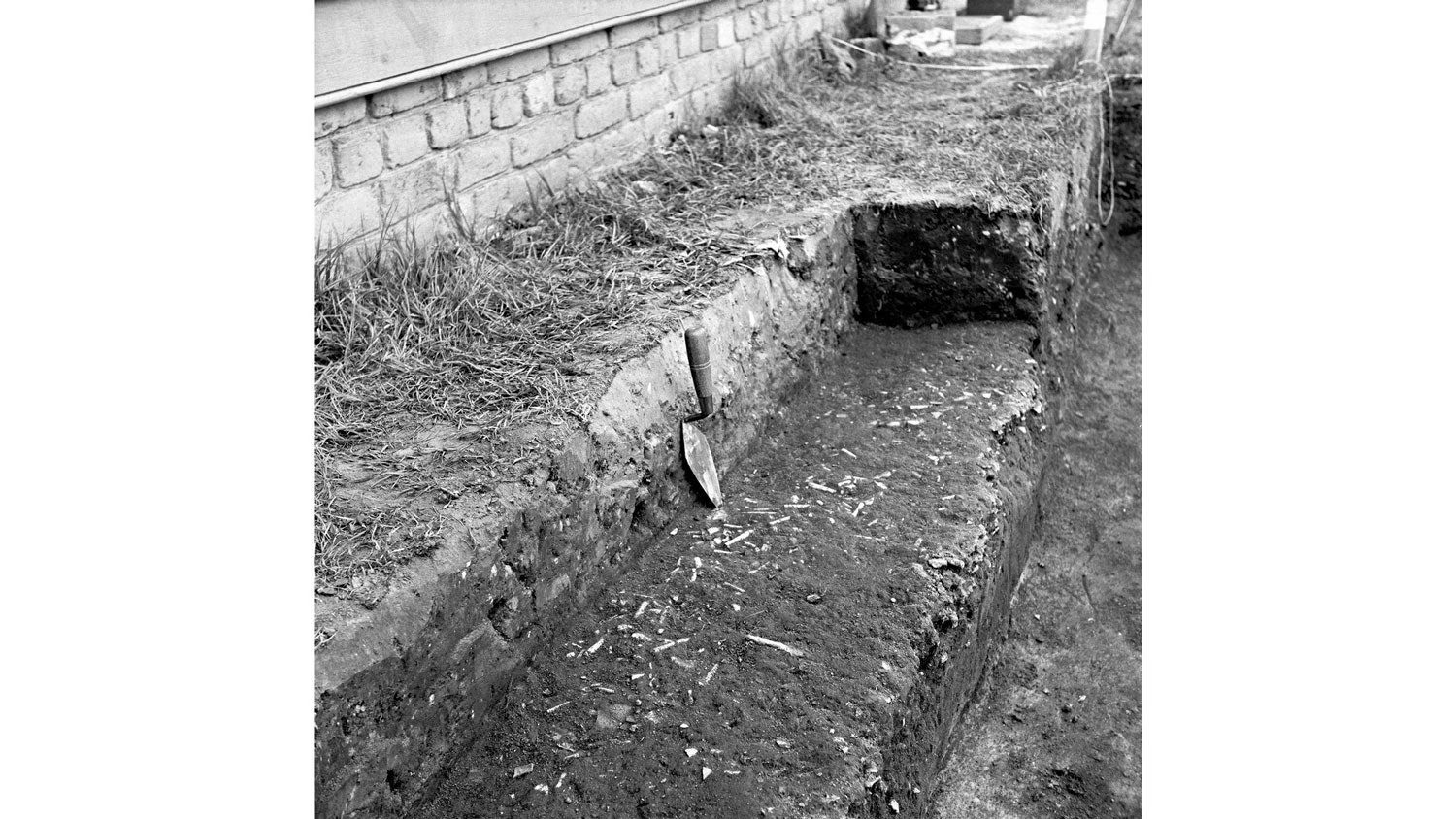
Tobacco Pipes
A 1963 excavation of the George Reid House found an area paved with a mixture of glass, pottery, lead shot, and more than 15,000 pipe fragments.(14)
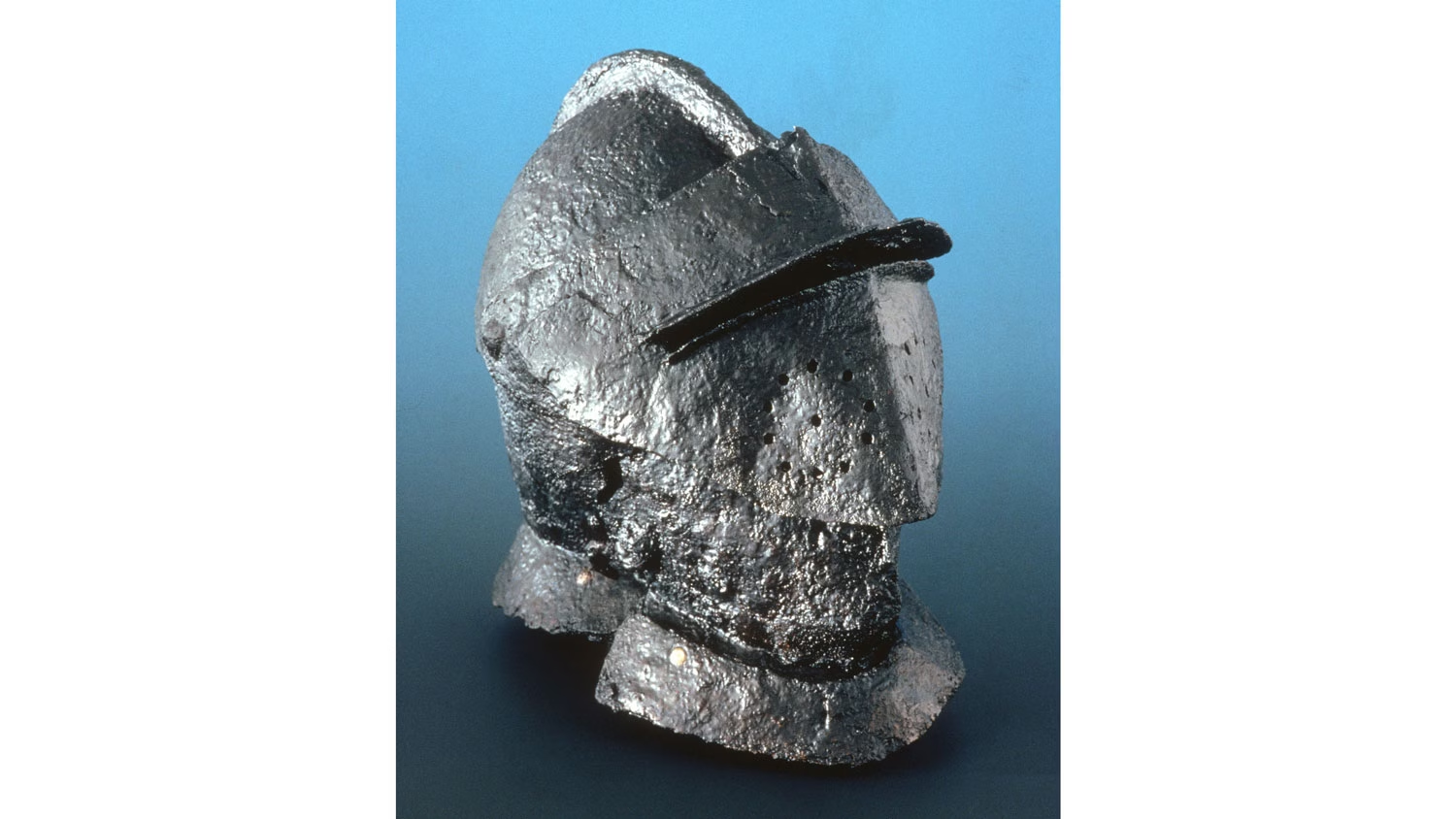
Helmet
Noël Hume’s excavation of Carter’s Grove uncovered this rare helmet, which he described as being “among the treasures of American archaeology.”
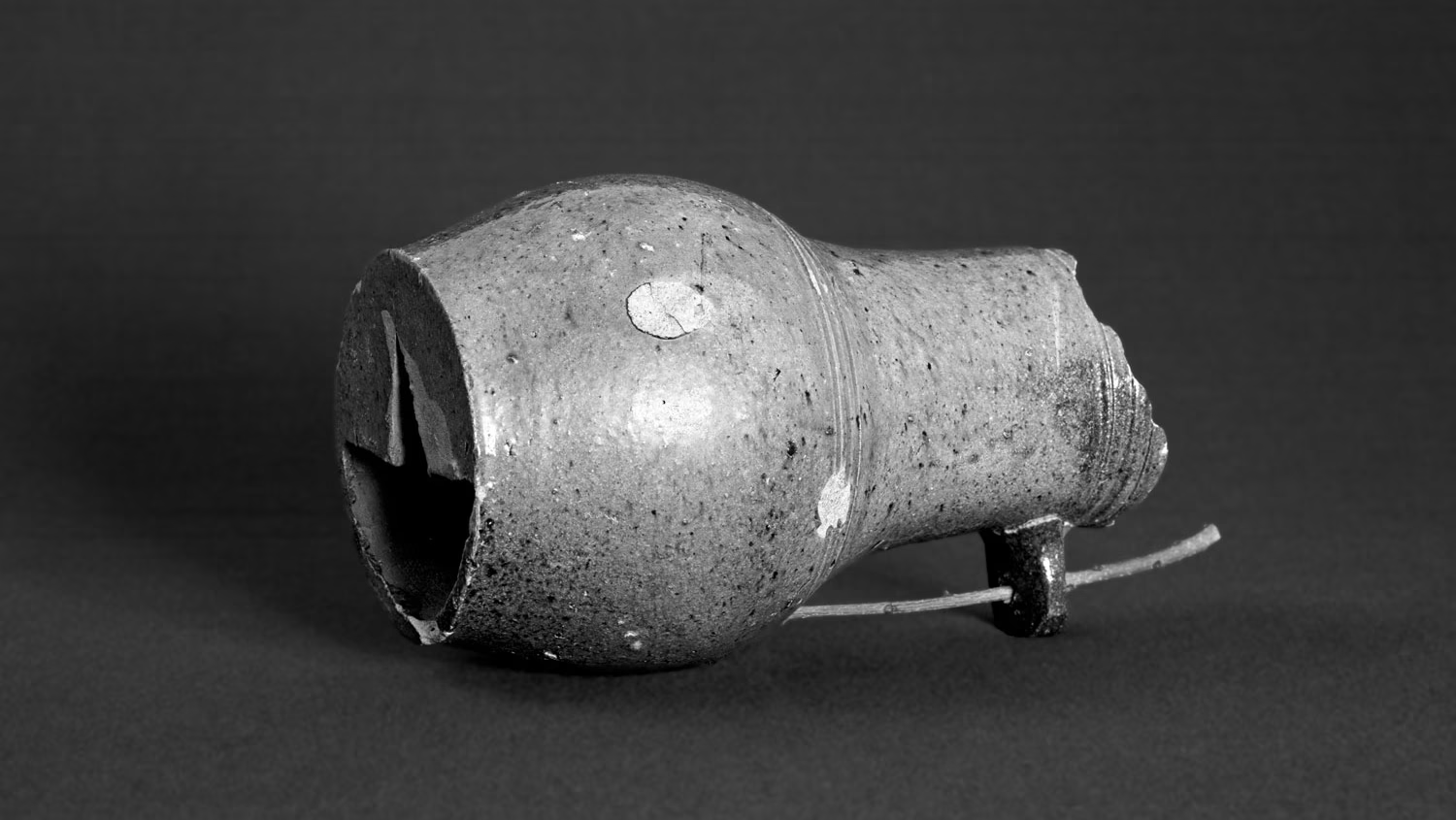
Nesting Bottle
This piece of earthenware, made in nearby Yorktown and discovered near the James Geddy House, was used as a nesting bottle for birds.
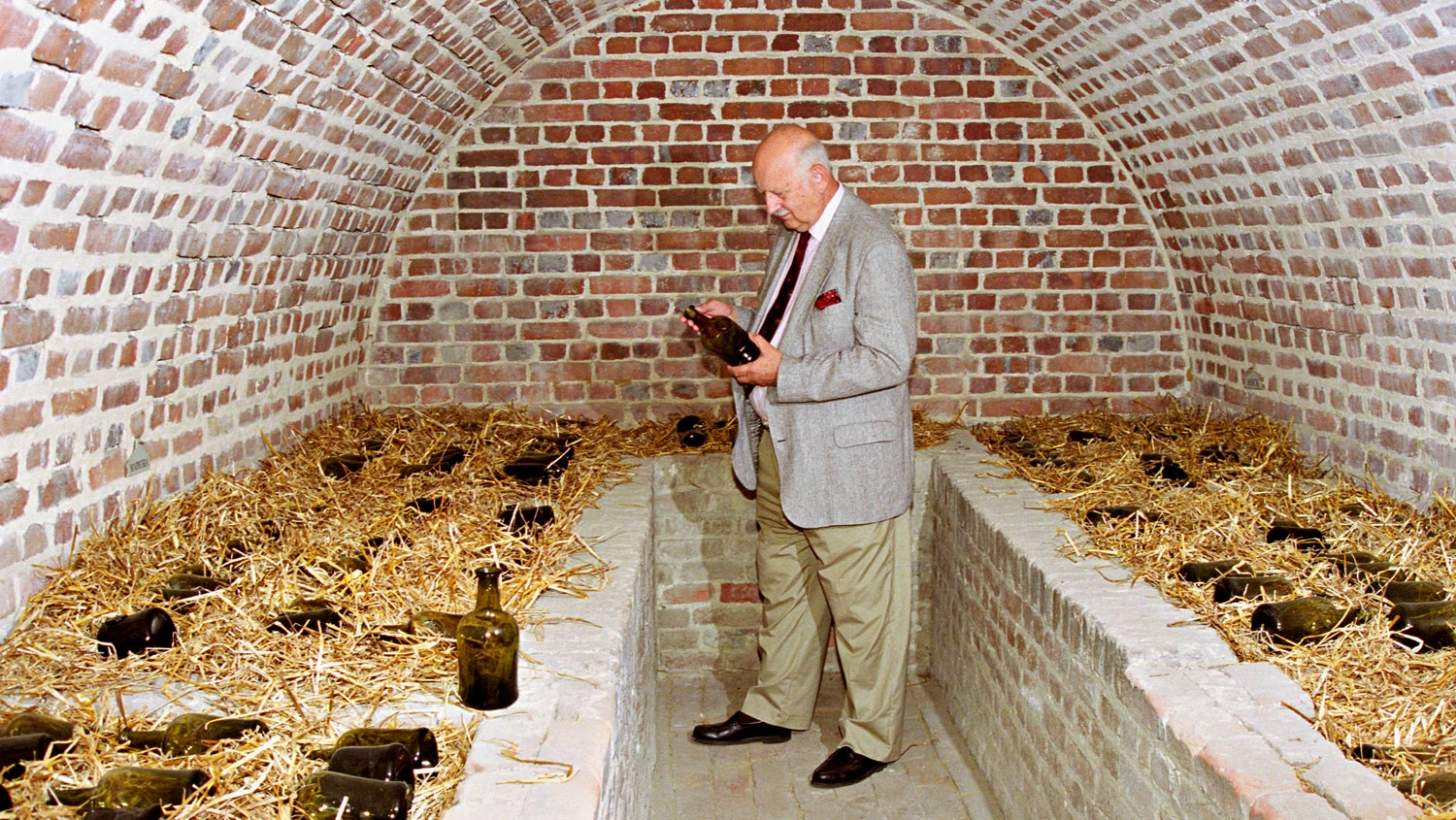
Wine Bottles
And other, less celebrated finds, like the wine bottle glass that first brought Noël Hume to Virginia, continue to tell the story of Williamsburg.
Legacy
“Historical archaeology,” Noël Hume once wrote, “simply means hunting for physical evidence and reviewing it alongside the testimony of people who knew or saw what happened.”15 Ivor Noël Hume’s work, through books, exhibits, and films, helped bring archaeological research to a mass public. He wrote sixteen nonfiction books and co-authored two books with Audrey. His books included Here Lies Virginia (1963), Historical Archaeology (1968), A Guide to Artifacts of Colonial America (1969), and Martin’s Hundred (1982). He also scripted and directed the 1969 short film Doorway to the Past, focusing on archaeology practiced in Colonial Williamsburg, and wrote and starred in the 1980 film Search for a Century, about Carter’s Grove. When asked about his extensive public engagement work, Noël Hume explained, "If you are going to dig up somebody’s past, you better tell them about it.”16
If you are going to dig up somebody’s past, you better tell them about it… We are digging up the past of America, and America has the right to see what we did with it and to learn from it.
— Ivor Noël Hume
Ivor and Audrey Noël Hume retired together in 1988. In 1992, Ivor was named an Officer of the British Empire (OBE) by Queen Elizabeth II for his services to British culture.17 After Audrey died in 1993, Ivor married Carol Grazier. For years after his retirement, Ivor Noël Hume remained a resource for professional colleagues in the region. In retirement, he also returned to his roots in the theater. In 2007, he wrote a play about John Smith and Pocahontas for the bicentennial of the Jamestown settlement.18 He died in 2017 in Williamsburg.
The Restoration
The audacious effort to restore Williamsburg, led by W. A. R. Goodwin and John D. Rockefeller Jr., began a century of research, discovery, and storytelling. Explore the stories of the men and women who have spent decades bringing eighteenth-century Williamsburg alive.
Sources
- Ivor Noël Hume and Henry M. Miller, “Ivory Noël Hume: Historical Archaeologist,” The Public Historian 33 (no. 1, Winter 2011): 12.
- CW News 70 (no. 2, Feb. 9, 2018): 4.
- Noël Hume and Miller, “Ivor Noël Hume,” 15.
- Noël Hume and Miller, “Ivor Noël Hume,” 15.
- Ivor Noël Hume, “George Wythe House Archaeological Report, Block 21 Building 4” (1960), Colonial Williamsburg Digital Collections.
- Ivor Noël Hume, “Anthony Hay House (NB) Archaeological Report Vol, 1, Block 28 Building 71 Lot 263 & 265” (1961), Colonial Williamsburg Digital Collections.
- Patricia Samford, “Custis Garden Archaeological Report, Block 4” (1987), Colonial Williamsburg Digital Collections.
- Ivor Noël Hume, “Wetherburn's Tavern Archaeological Report, Block 9 Building 31 Lot 20 & 21” (1968), Colonial Williamsburg Digital Collections.
- William R. Myzk, “Draft Final Report: Public Hospital Excavation October 1981–January 1983 Archaeological Report Block 4 Building 11” (1983), Colonial Williamsburg Digital Collections.
- Robert Foss, “James Anderson House Archaeological Report, Block 10 Building 22 Lot 18” (1977), Colonial Williamsburg Digital Collections.
- Ivor Noël Hume, Martin’s Hundred (Alfred A. Knopf, 1982), xvi.
- Noël Hume, “Wetherburn's Tavern Archaeological Report.”
- Colonial Williamsburg News 13 (no. 3, Aug. 1959), p. 3, Colonial Williamsburg Digital Collections.
- Ivor Noël Hume and Audrey Noël Hume, “George Reid House (LT) Archaeological Report, Block 11 Building 11 Lot 15” (1963), Colonial Williamsburg Digital Collections.
- Ivor Noël Hume, The Virginia Adventure: Roanoke to James Town: An Archaeological and Historical Odyssey (University Press of Virginia, 1994), xxvii.
- Noël Hume and Miller, “Ivor Noël Hume,” 22.
- Noël Hume and Miller, “Ivor Noël Hume,” 11–12.
- Ivor Noël Hume, A Passion for the Past: The Odyssey of a Transatlantic Archaeologist (University of Virginia Press, 2010), 335–37.