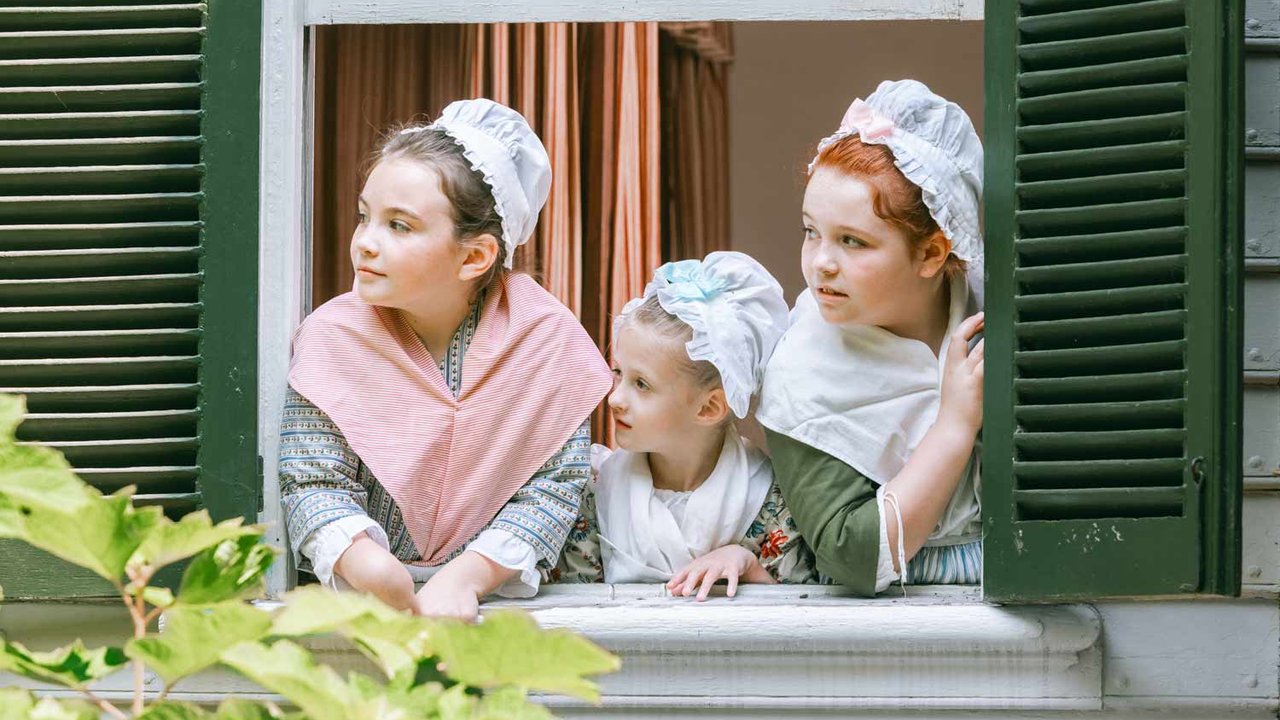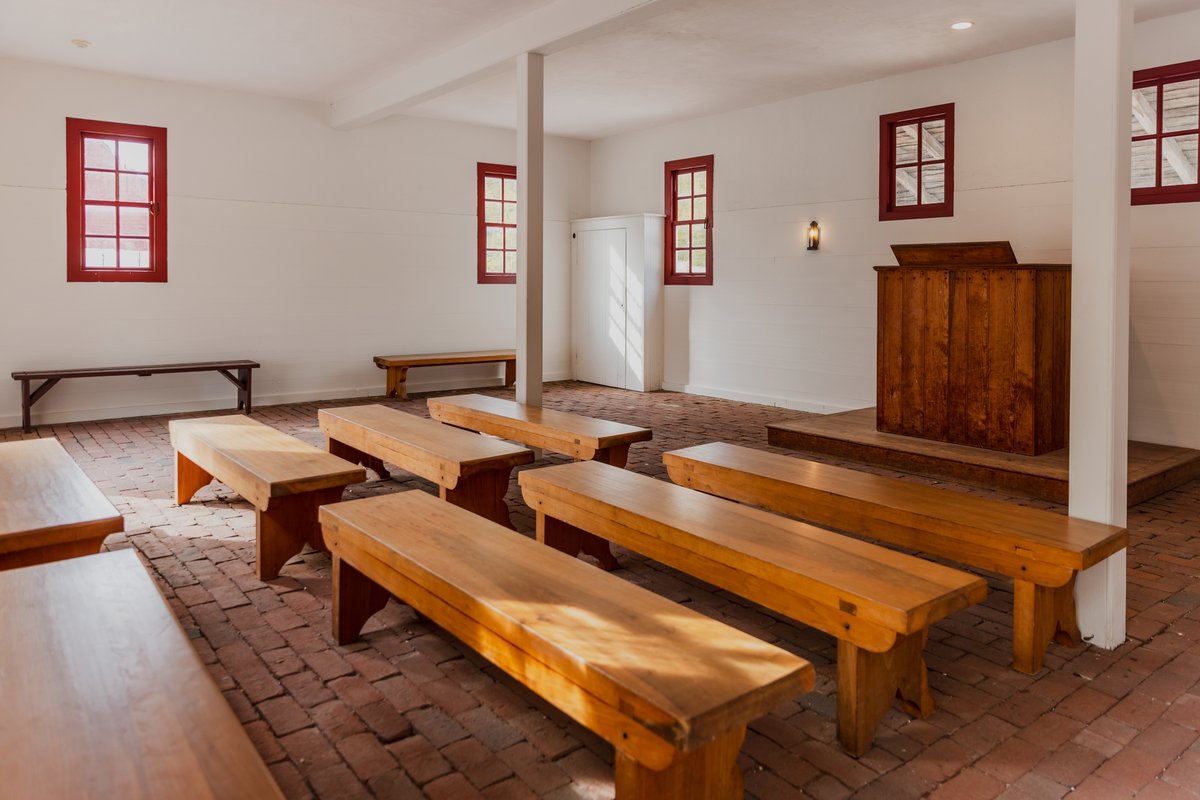
Interior of the Presbyterian Meeting House.
Eighteenth-Century Religion
Religious Diversity in Eighteenth-Century Williamsburg
People of many different faiths lived and worshipped in eighteenth-century Williamsburg. Religion was an important part of the lives of Black, white, and Indigenous residents of the city. It shaped everything in their lives: their worldviews, key life events, and even their legal status.
Virginia's colonial government established the Church of England by law, supported it with taxes, and discriminated against other faiths. This made Williamsburg a place of debate and dialogue, where believers forged new ideas of religious liberty. Over time these ideas were codified into laws protecting the freedom of religion in Virginia and across the United States.
Homes of Faith and Tradition
People experienced and practiced religion at many different places in Williamsburg. Scroll through to learn more about these spaces and their relationship to different faiths.

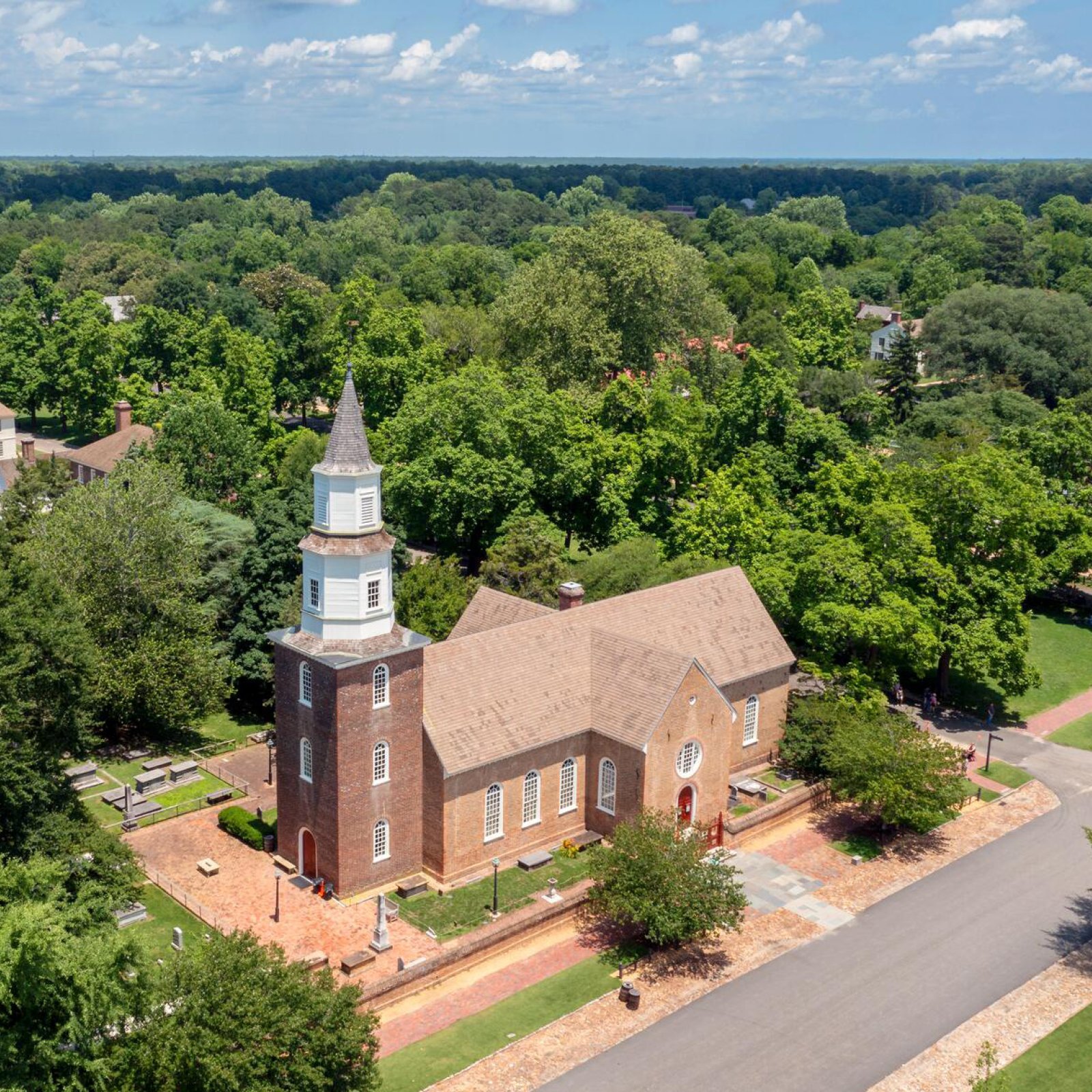
Bruton Parish Church
Bruton Parish Church is the oldest Episcopal Church with uninterrupted service in America. As the home of the established Church of England in the colonial capital, Bruton Parish served as an important seat of spiritual and political power.
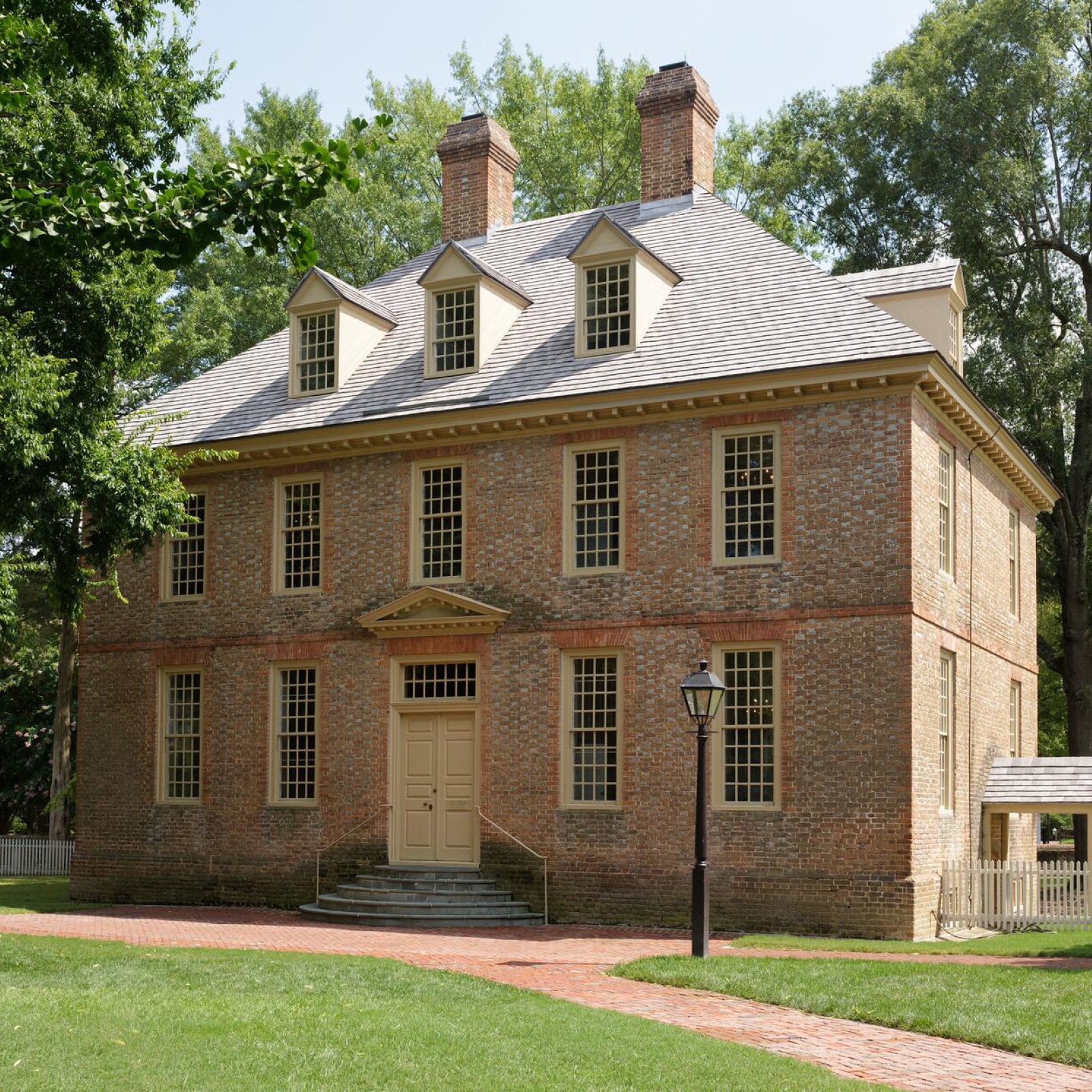
Brafferton Indian School
The Brafferton Indian School was founded in 1711. The school served one of the explicit aims of the founders of the College of William and Mary: to teach Native boys English language, culture, and religion.[1]
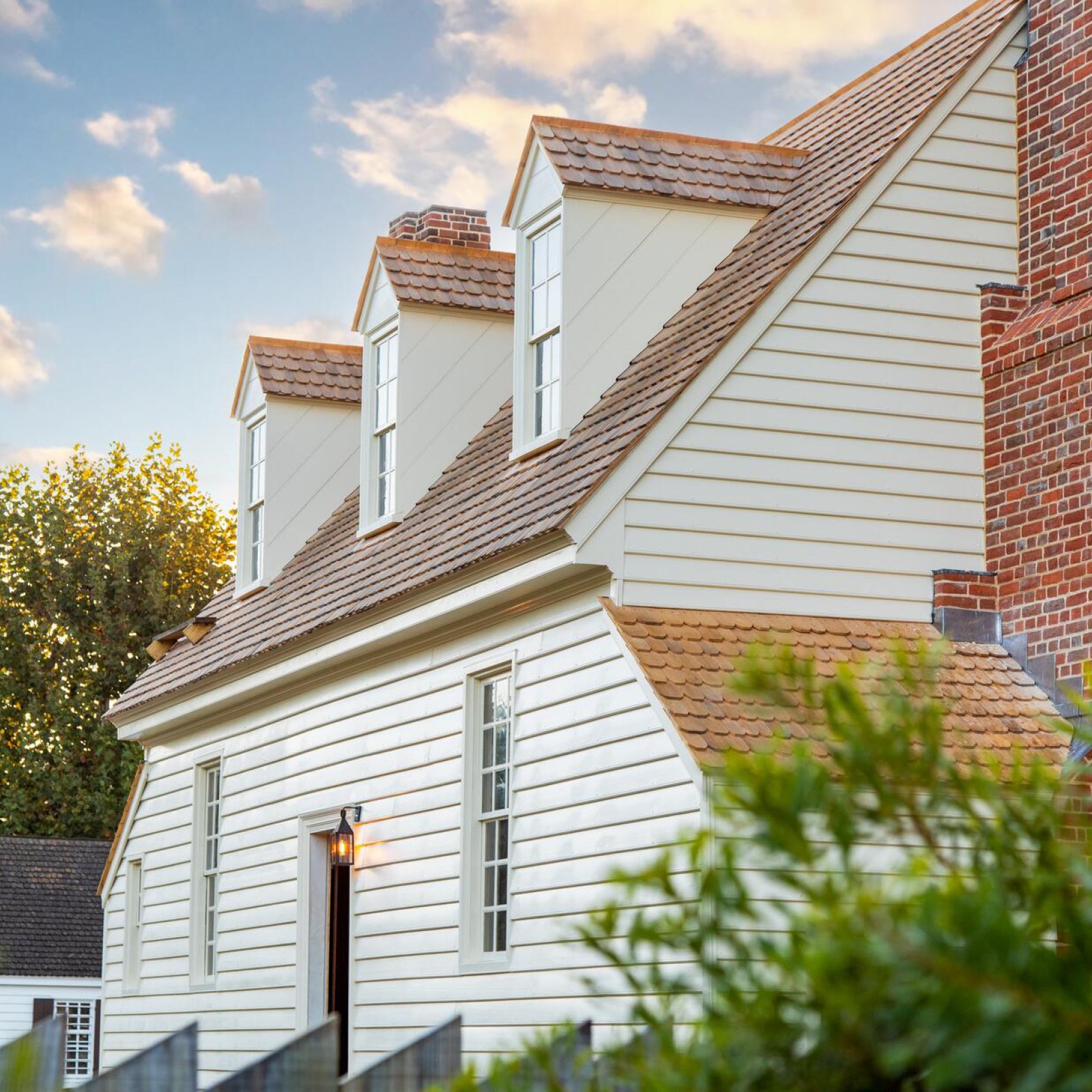
Williamsburg Bray School
The Williamsburg Bray School was one of several schools founded by the Associates of Dr. Bray for the education of the enslaved in and across British North America. Opened in 1760, the school sought to instill Anglican beliefs and deference, using the Bible, the Book of Common Prayer, and a text called A Child's First Book.[2]
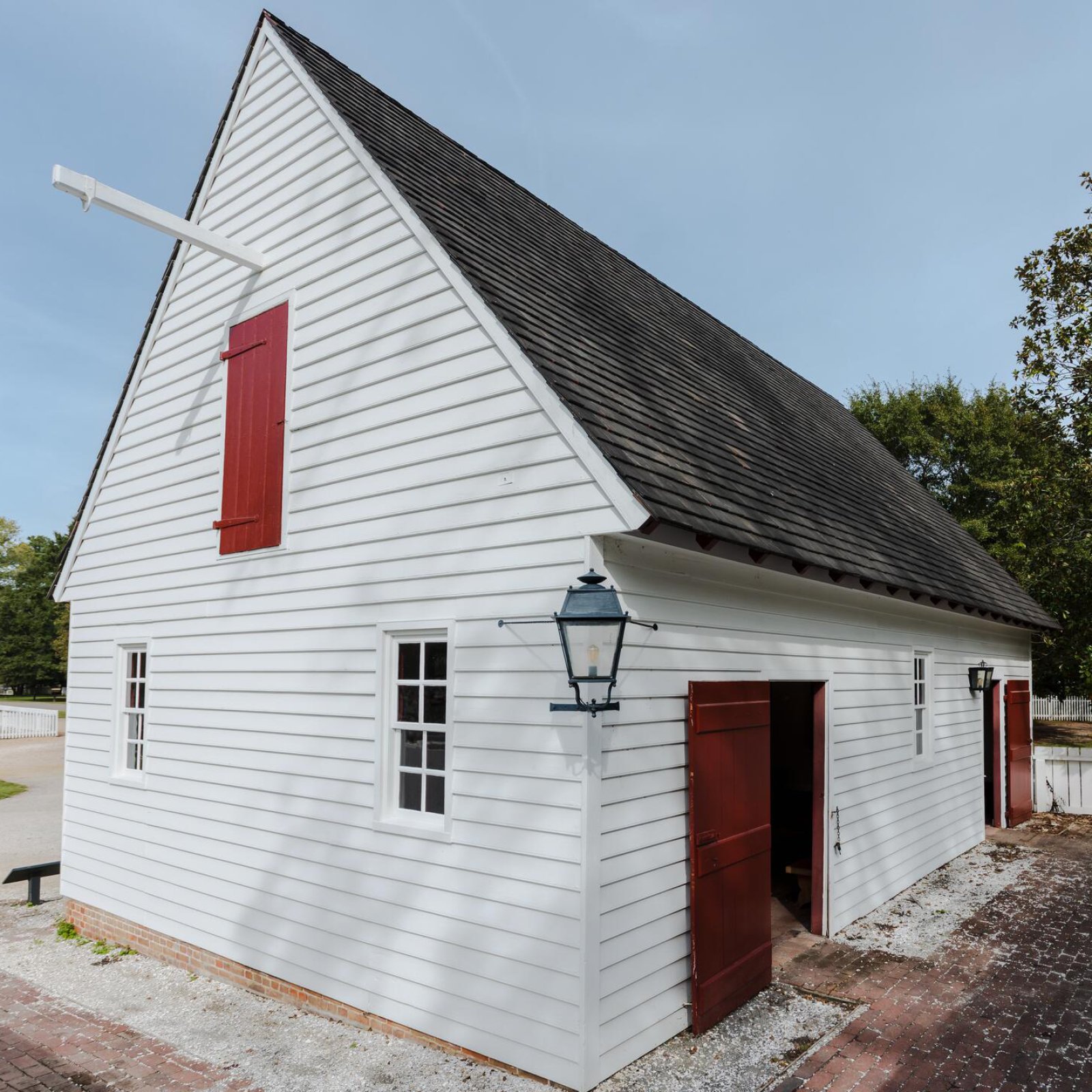
Presbyterian Meetinghouse
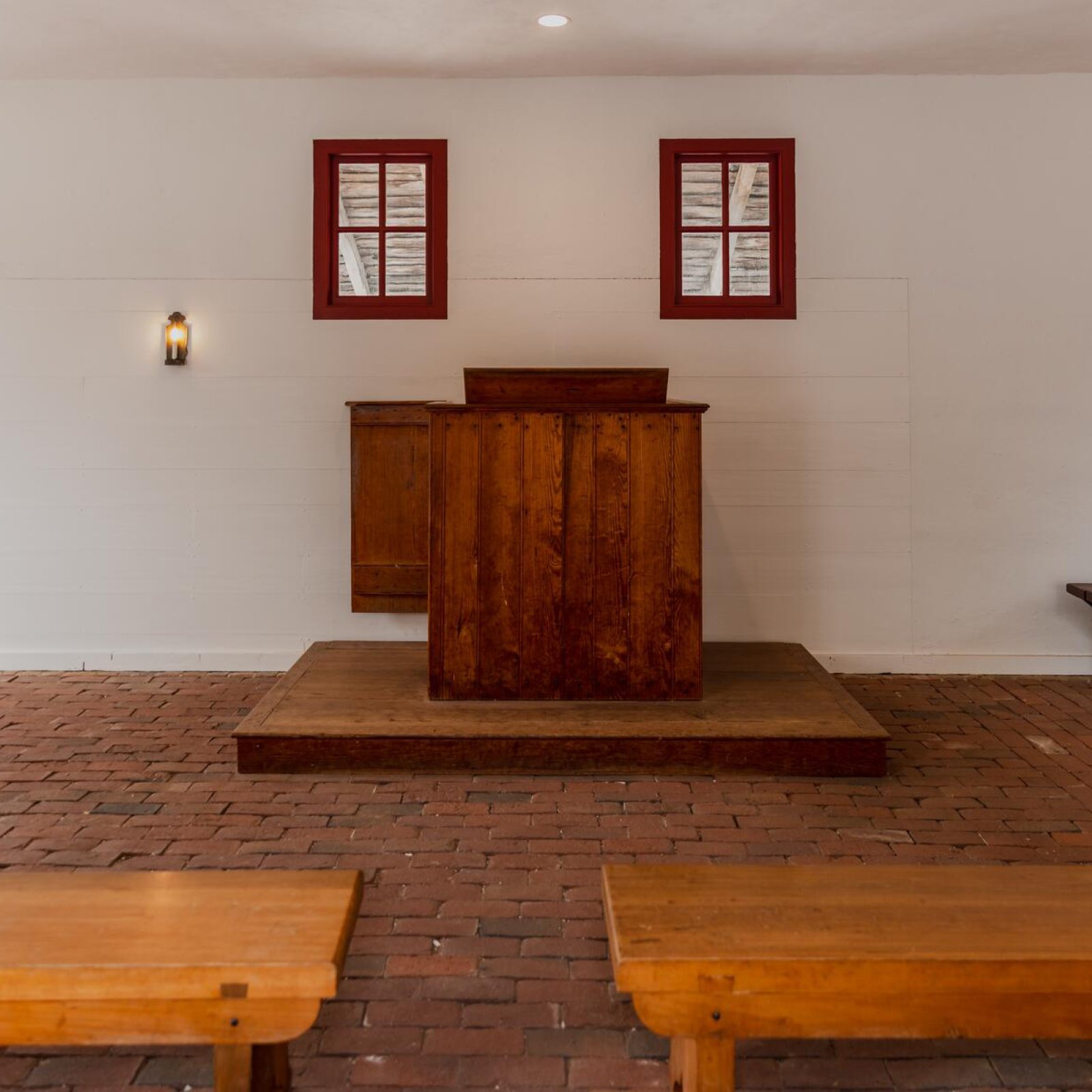
The Presbyterian Meetinghouse was the first legally acknowledged non-Anglican place of worship in Williamsburg. It was founded by tradespeople who rejected Anglican-style worship and governance in 1765. The rectangular floor plan demonstrates the simplicity of Presbyterian worship.
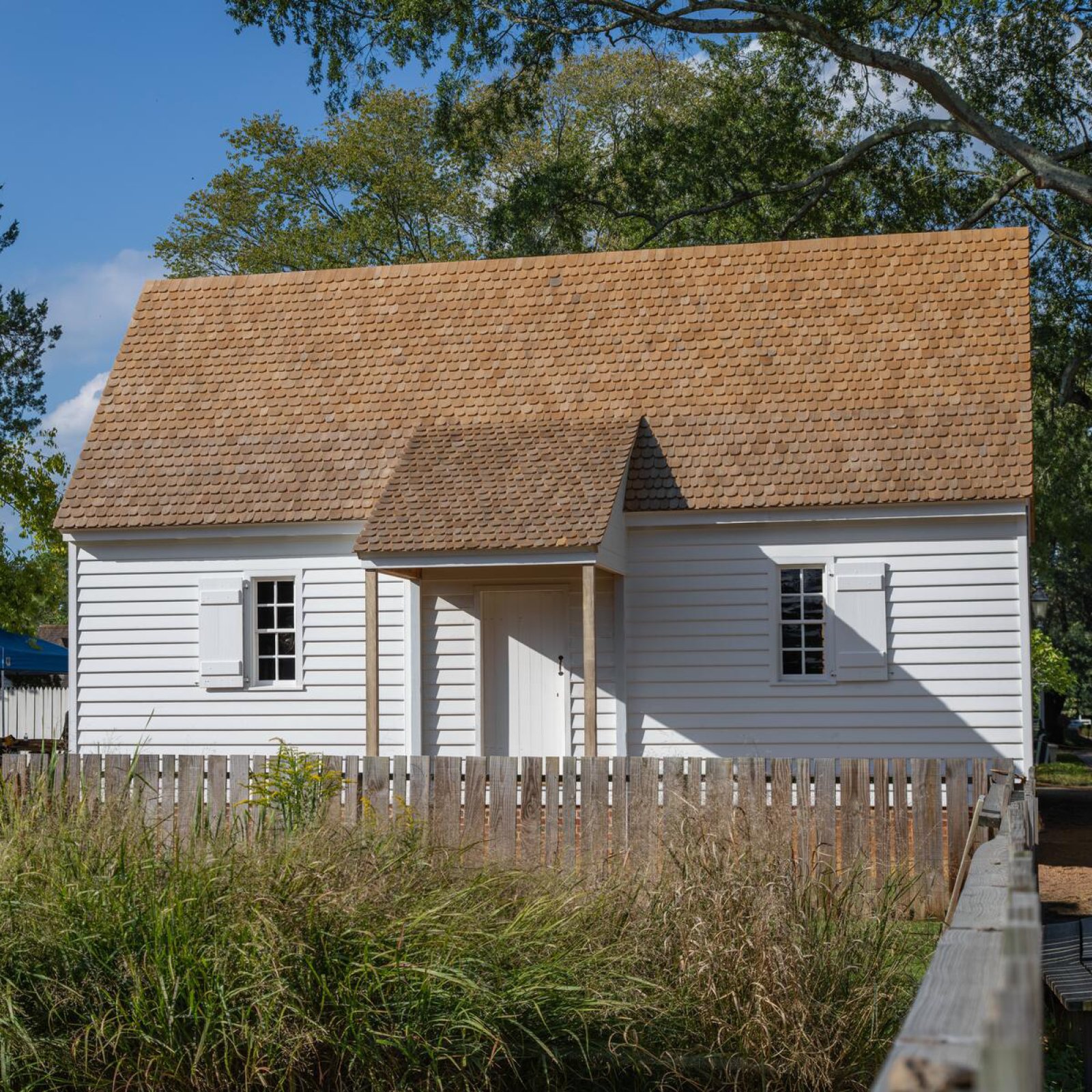
African Baptist Meeting House
The African Baptist Meeting House and Burial Ground was the first building used by the congregation which became the First Baptist Church. It was built around 1805, but the congregation traces its history back to 1776. It was reconstructed through a partnership of the First Baptist Church and Colonial Williamsburg.
Religion in Daily Life
In the Church at Service, prayrs [sic] read over in haste, a Sermon seldom under & never over twenty minutes, ... After Service is over three quarters of an hour spent in strolling round the Church among the Crowd.
— Letter from Philip Fithian to John Peck, 1774 [3]
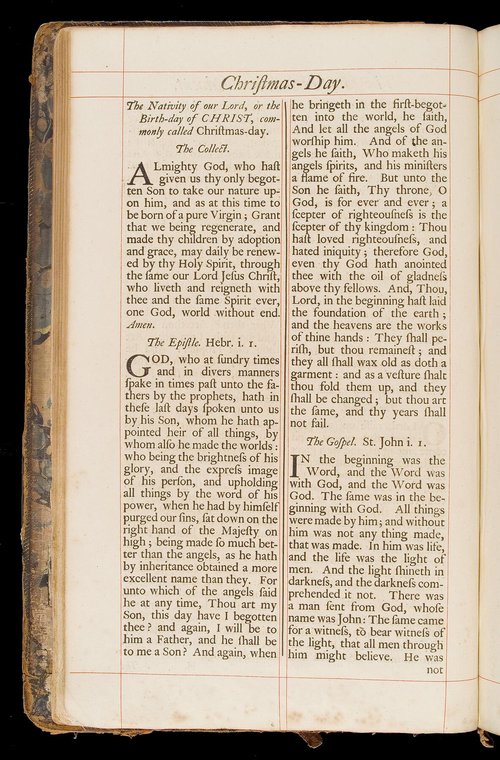
Liturgy for Christmas Day in the Book of Common Prayer.
In his letter to John Peck in 1774, the visiting Evangelical Presbyterian Philip Fithian judged the style of Anglican worship while noting the important role that the Church of England played in the lives of Virginians at all levels of society. The church’s liturgical calendar set the pace of daily life for the year. This liturgical calendar, along with the structure of lay worship, church doctrine, and guides for various services, could be found in the Book of Common Prayer (1662), the fundamental worship book of the Church of England.
Sunday was a weekly day of rest for the entire community, including enslaved people, and everyone was required to attend church at least once every four weeks. Church attendance brought more than spiritual or moral benefits in colonial Virginia. It was also a weekly opportunity for the community to come together to transact business and share gossip.4
Parish church vestries also performed many of the tasks associated with local government today. Vestries were made up of leading local men who collected taxes to pay for church maintenance and local infrastructure, managed the education of children, and administered poor relief. These were considered legal duties of the church which served as an arm of the government in local communities.5
Religion in Tsenacommacah
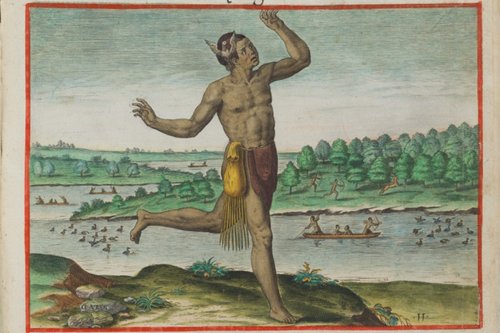
An engraving of an Algonquian medicine man.
Before colonists called the land Virginia, Algonquian-speaking inhabitants knew it as Tsenacommacah or “densely populated land.” Thirty of these tribes were united by a werowance (chief) named Powhatan into the Powhatan Confederacy in the final decades of the sixteenth century.
The Powhatans were polytheists whose chief deities were a distant creator god named Ahone and a sky god associated with justice named Okeus. Priests were entrusted with interceding with these deities, especially Okeus, as well as with practicing medicine and advising political leaders. Powhatan doctor-priests practiced shamanistic, surgical, and herbal medicine with significant success and occasionally performed treatments on English colonists in the seventeenth century. While moments of dialogue like this occurred, Indigenous Virginians largely resisted Christian conversion and many English colonists looked down on Algonquian spiritual and healing practices. Native Americans in the region began to hide their faith in the early 1700s.6
African American Religious Life
At many times Williamsburg’s Black community exhibited greater religious diversity than the English colonists. Kidnapped from across Africa, enslaved people brought Catholicism from the Kongo Kingdom, traditional religions from West Africa, and Islam from Senegal and Gambia.7 Many of their religious practices were restricted by the Anglican government as well as enslavers in Virginia, but some showed interest in the teachings of Protestant Christianity.8
In early Virginia, baptism into the Church of England offered opportunities for some enslaved people to gain their freedom, as was the case for Elizabeth Key.9 This was because it was illegal for a Christian to enslave another Christian before the Baptism Act of 1667, which specified that baptism did not change a person’s enslaved status.10 The Church of England also failed to appeal to many African Americans because of its structured worship style, focus on wealthy white parishioners, and hierarchical structure which supported enslavement.11 This, alongside the belief among enslavers that spiritual equality would lead to calls for freedom or insubordination, meant that Anglican baptism rates remained low.
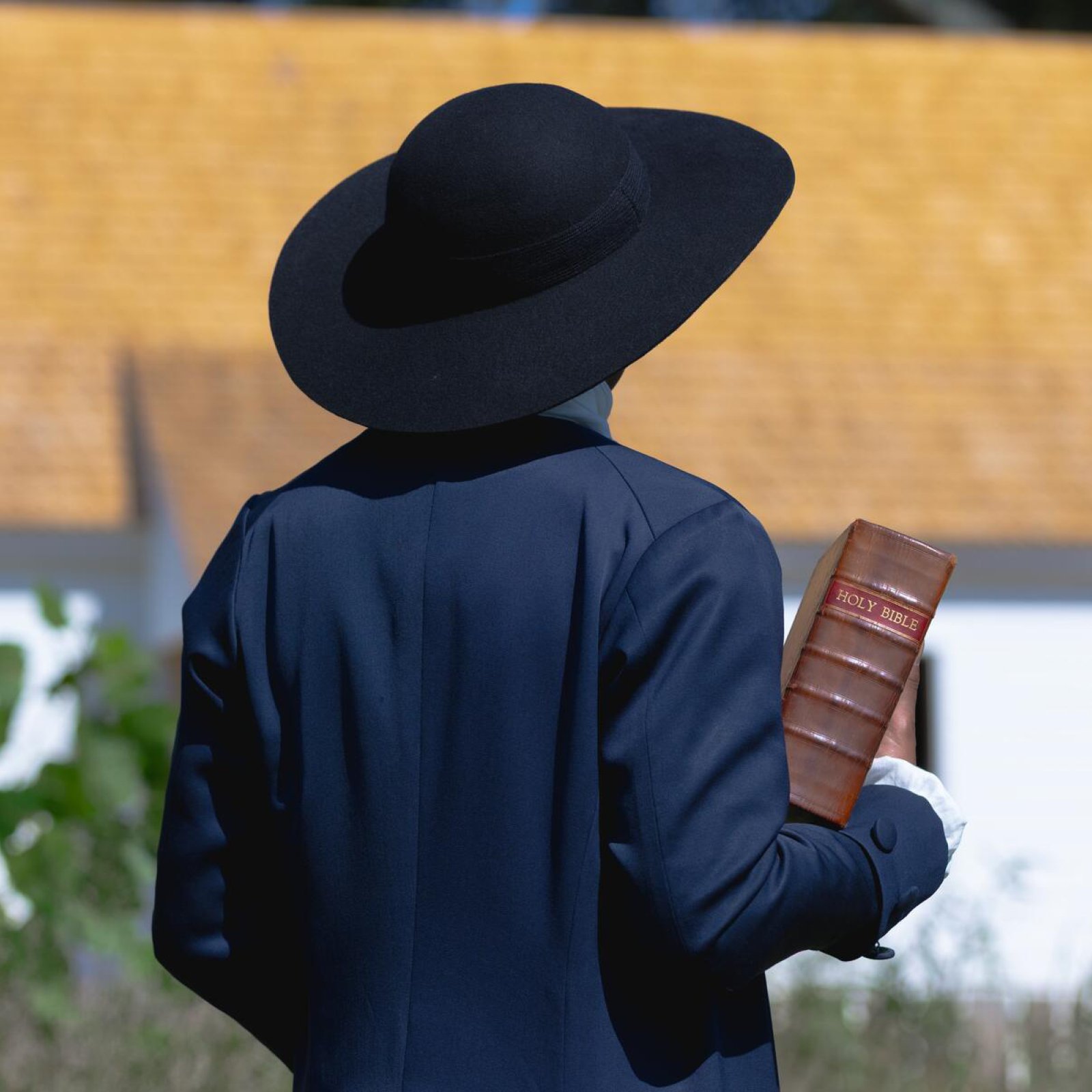
Black Preachers in Williamsburg
African Americans in Williamsburg and across the country sought active participation in church life and spiritual equality in religion. They found it in the churches of the Great Awakening, rather than the structured worship and hierarchy of Anglicans.

Great Awakenings
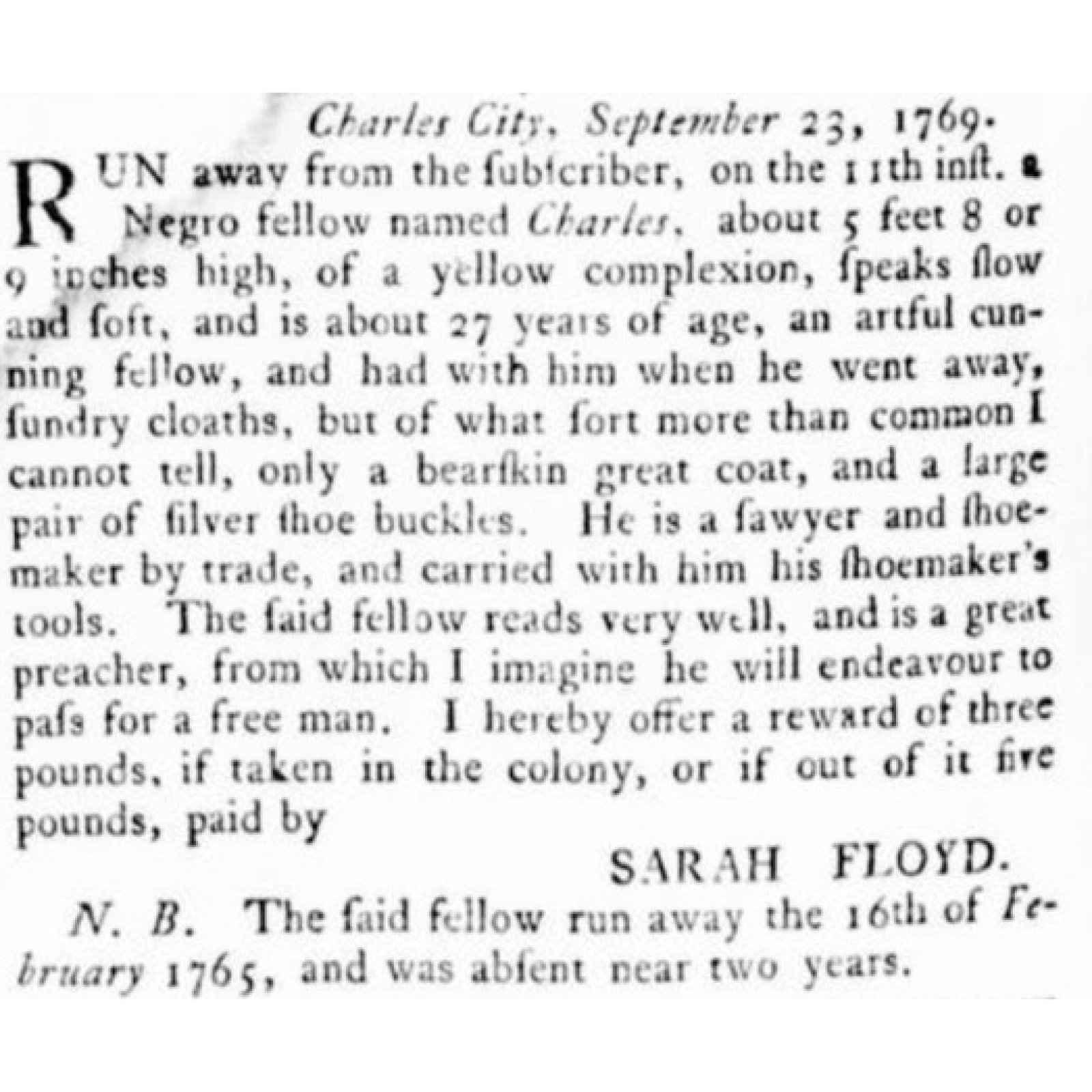
The revivals of the Great Awakening appealed to African Americans because they stressed personal connection to God, active participation in services, and the equality of believers. Many Black people joined Baptist and Presbyterian meetings. As this runaway ad shows, some enslaved people preached.
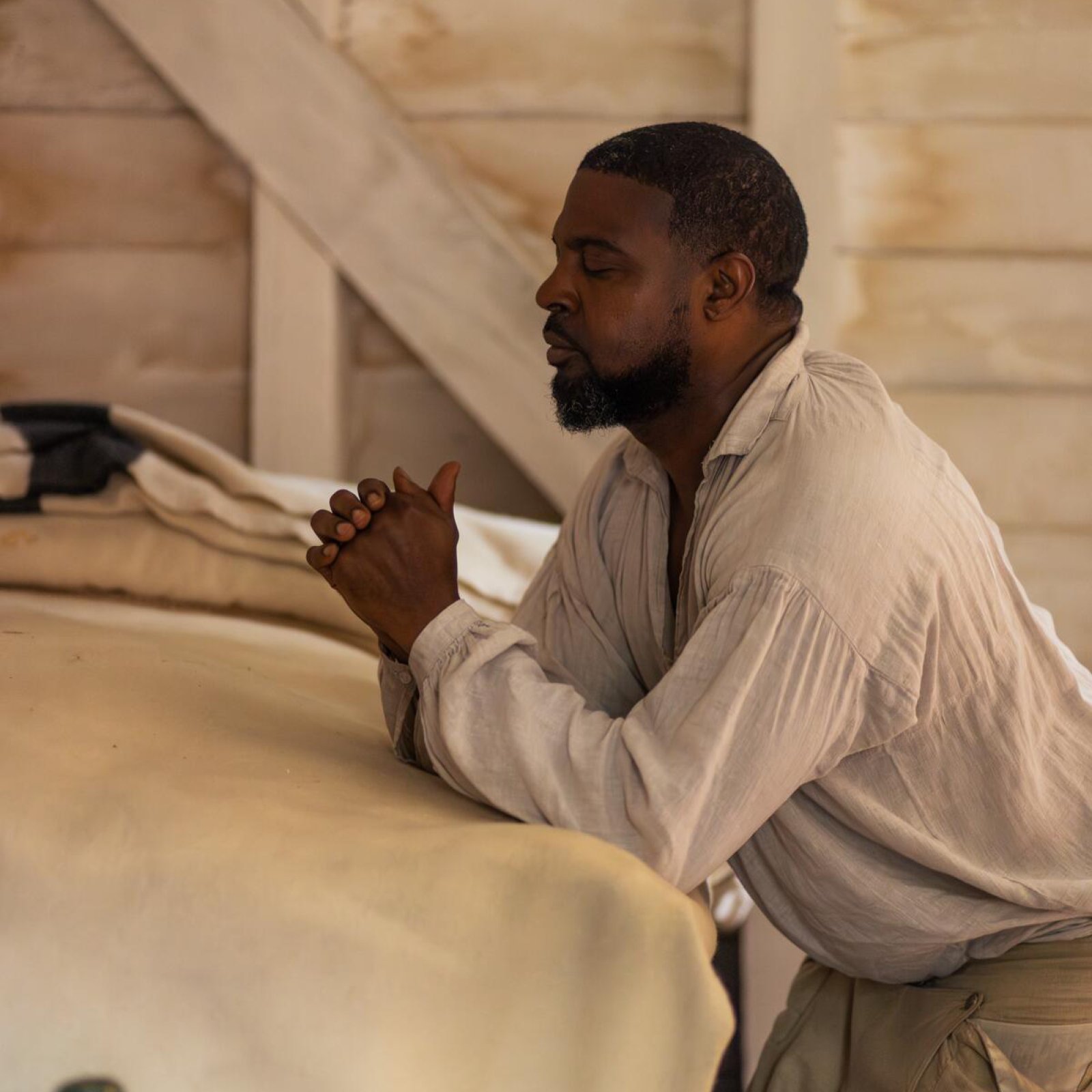
The First Preacher
The first known Black preacher with a congregation was a Baptist called Moses. He preached in the woods near Green Springs Plantation in the 1770s and led a sizeable congregation, despite persecution and violence from colonists.
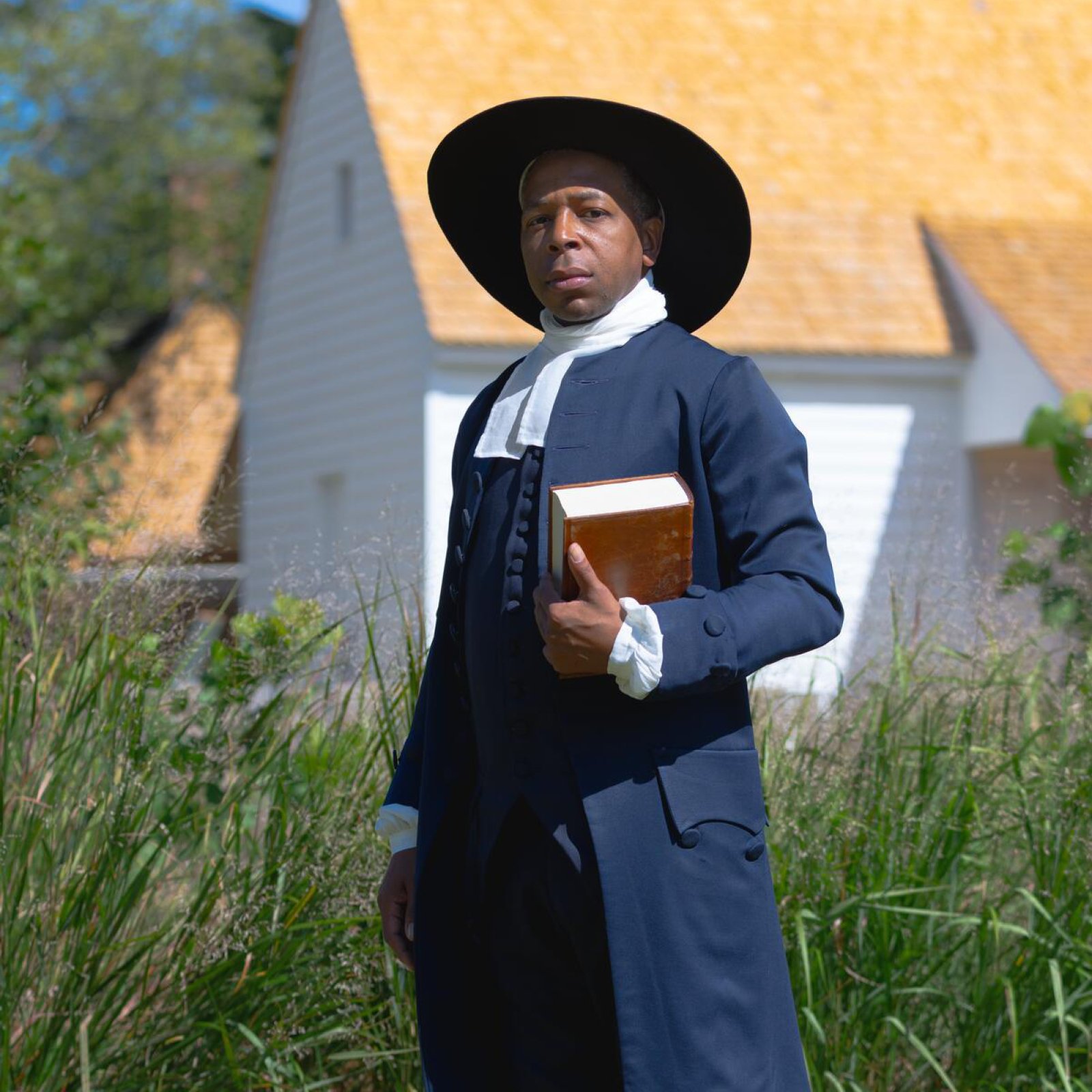
Gowan Pamplet
Gowan Pamphlet was an enslaved man who became a preacher for the congregation founded by Moses around 1781. He cemented the Baptist identity of the congregation by gaining membership the Dover Association, a white-led governing body for Baptists in the region, in 1793.
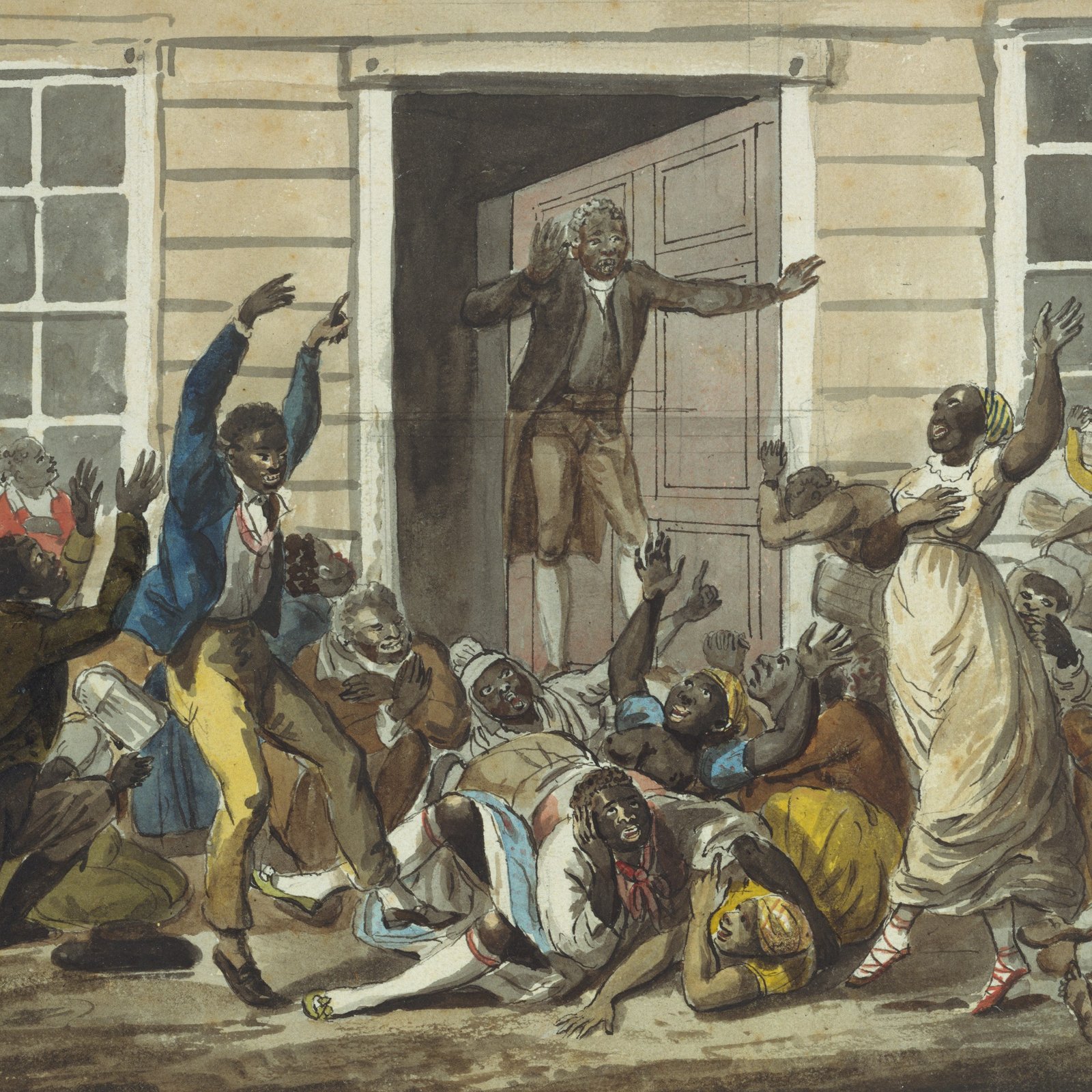
A Lasting Legacy
After joining the Dover Association, Gowan gained his freedom and later helped acquire land to build a meeting house in Williamsburg. The First Baptist Church used this location until 1957 and witnessed the growth of Black congregations across the United States.[12] Image courtesy of the Metropolitan Museum of Art.
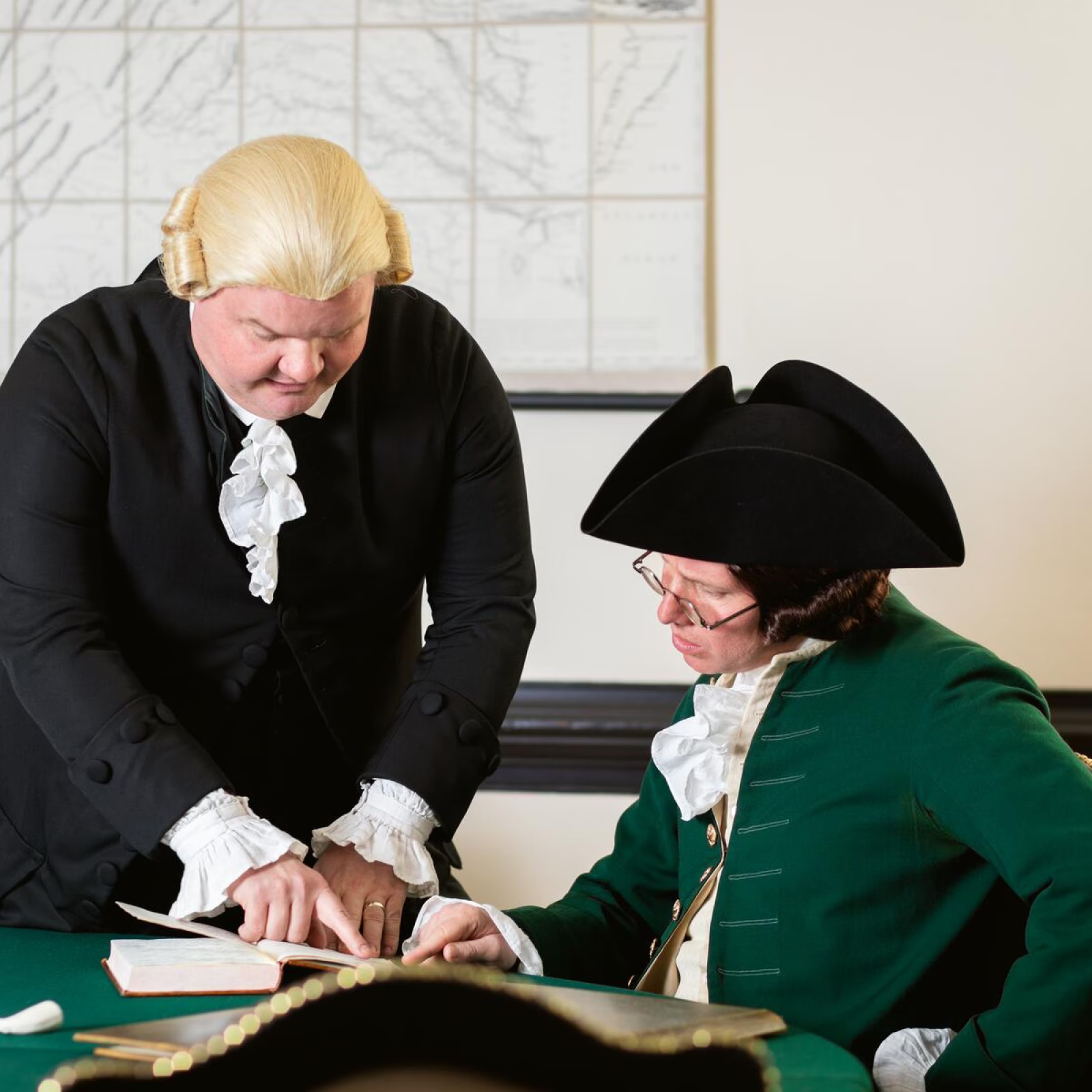
In May 1776, the Fifth Virginia Convention met in Williamsburg to debate independence from Great Britain—and the Church of England. George Mason led a committee to draft a Declaration of Rights. James Madison wrote Article 16, which guaranteed the free exercise of religion.
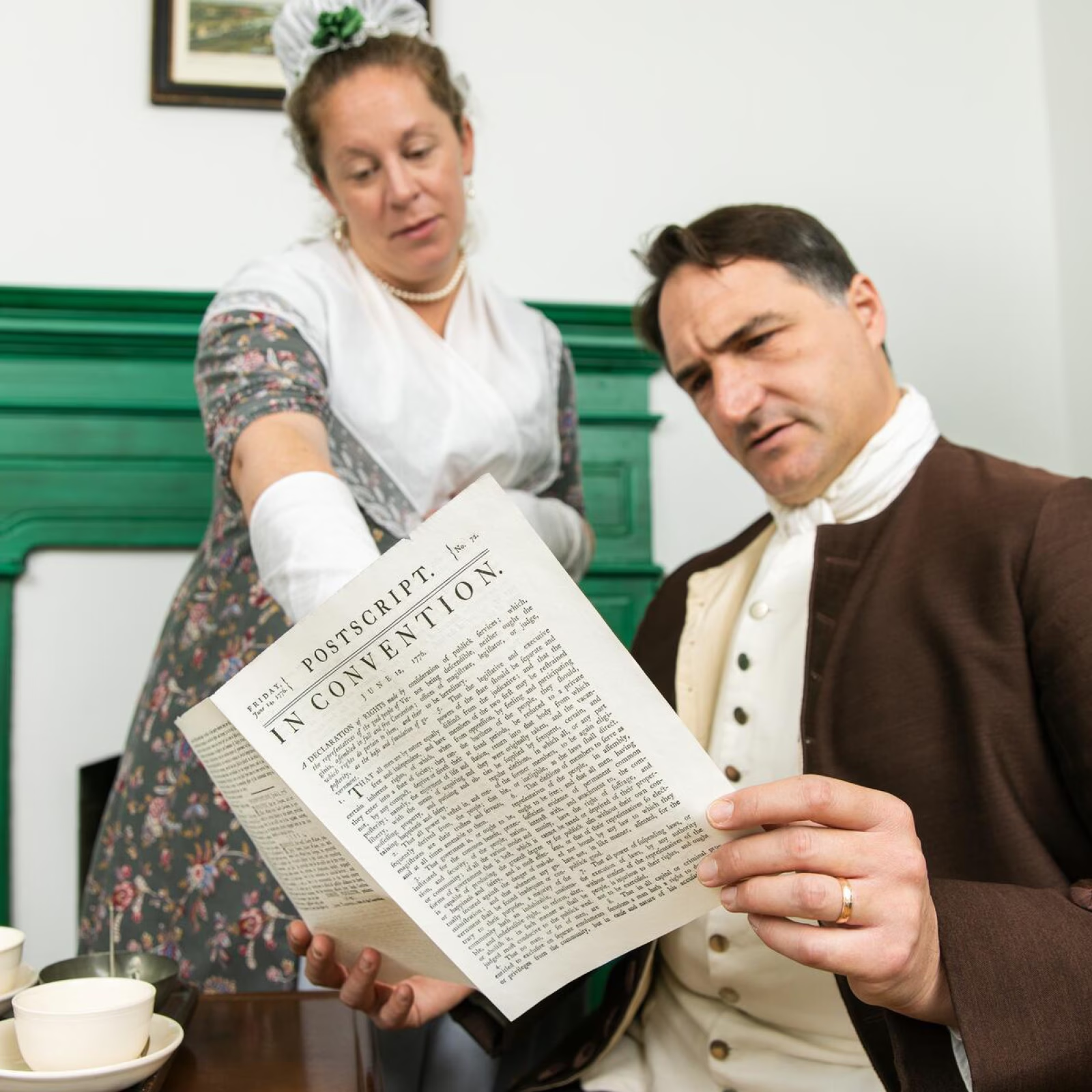
Religious dissenters read the Declaration of Rights and petitioned Virginia’s government for the right to practice and to end Anglican privilege.
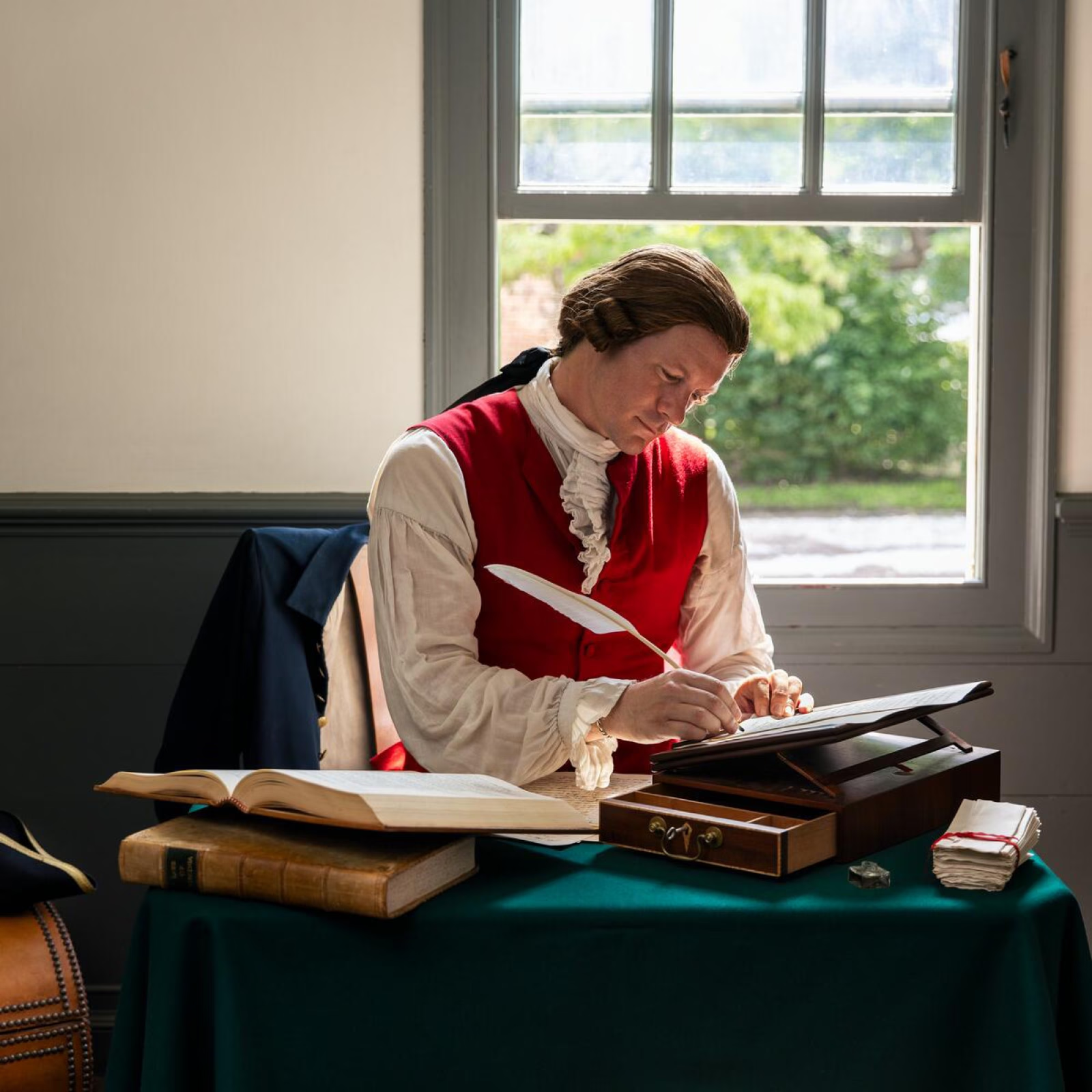
Thomas Jefferson drafted A Bill for Establishing Religious Freedom in 1777, which called for complete separation of church and state in Virginia.
Fighting for Religious Liberty
The Church of England’s authority in Virginia was relatively unchallenged until religious dissenters and Enlightenment thinkers denounced the close ties between church and state in the mid-eighteenth century. With the American Revolution, Virginians cut ties with the Church of England and began to legislate a new relationship between church and state.
Daily Life
In Williamsburg, all kinds of people sacrificed, endured, and achieved. Learn more about the day-to-day lives of ordinary people and how they navigated life in the revolutionary city.